 Bug FAQ
Chestnut cockchafer
Melolontha hippocastani · Order: Coleoptera · Family: Scarabaeidae
Also called: Forest Cockchafer, Northern Cockchafer
Source: Wikipedia
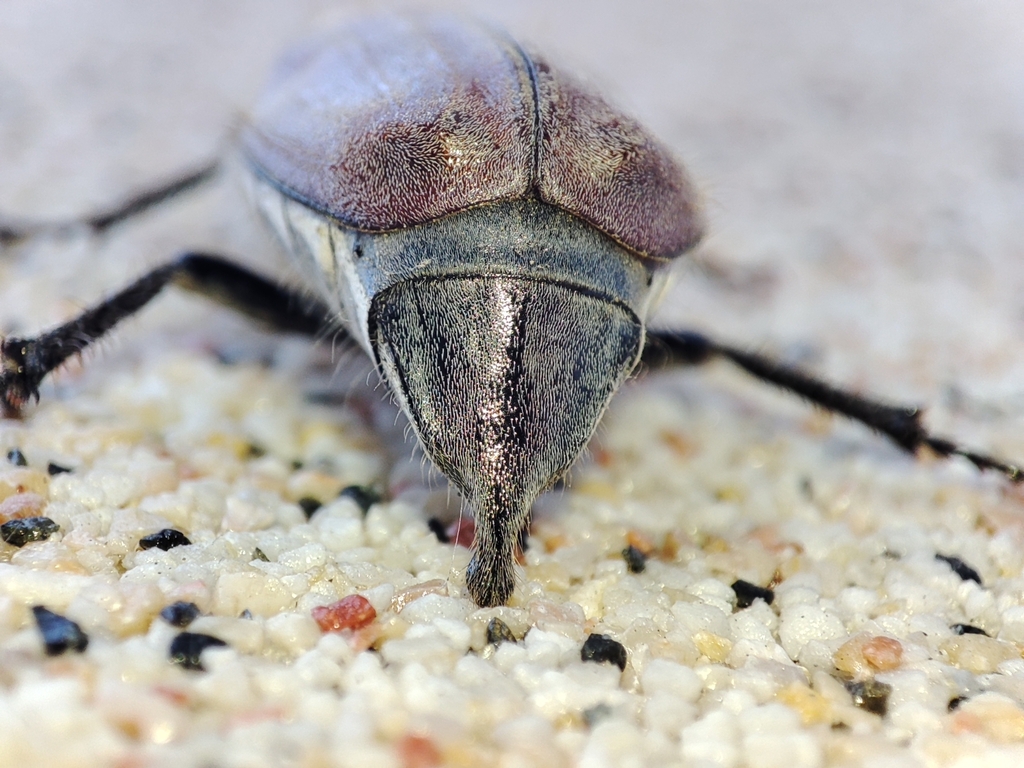
Adults are 20 to 29 mm long and can be told apart from the common cockchafer by a black pygidium. They live in forest habitats across northern Eurasia, from western Europe to China, and emerge from the soil between late April and June. The larvae feed on decaying matter and later on the roots of young trees, and the species is considered a serious pest of oak and other trees.
Source: Wikipedia
How to recognize it
Its pygidium is mainly black, unlike the red pygidium of the common cockchafer.
Source: Wikipedia
Size
Adults measure about 20 to 29 mm in length.
Source: Wikipedia
Is it a pest in the house?
Females lay eggs in the soil, and the feeding larvae can severely damage tree roots.
Source: Wikipedia
Where it lives
It primarily lives in forest ecosystems.
Source: Wikipedia
What it eats
Larvae scavenge on decaying organic matter and later feed on small plant roots, including those of young pines and firs. Both larvae and adults are regarded as serious pests of oak trees and other crops.
Source: Wikipedia
Life cycle
Larval development usually takes three to five years.
Source: Wikipedia
When you see it
Mating occurs during evening flights after emergence.
Source: Wikipedia
Lookalikes
It is one of several Melolontha species known as cockchafers, alongside M. melolontha and M. pectoralis.
Source: Wikipedia
More photos

Questions people ask
How can I tell this beetle apart from the common cockchafer?
Look at the pygidium; this species has a black pygidium, while the common cockchafer’s is red.
Source: Wikipedia
Are they harmful to my garden or trees?
Yes, the larvae feed on the roots of young trees and the species is considered a serious pest of oak and other trees.
Source: Wikipedia
Same family (Scarabaeidae)
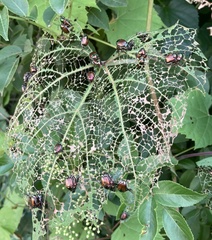 Japanese BeetlePopillia japonicaDamages trees, gardens or crops
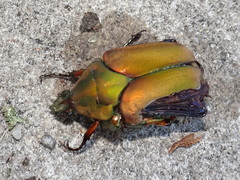 Common Green June BeetleCotinis nitidaDamages trees, gardens or crops
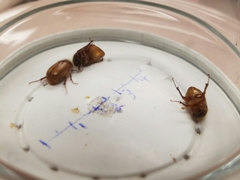 Phyllophaga crinitaPhyllophaga crinitaDamages trees, gardens or crops
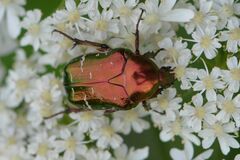 European Rose ChaferCetonia aurata
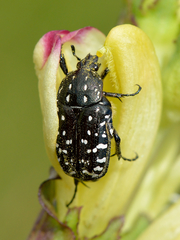 Mediterranean Spotted ChaferOxythyrea funestaDamages trees, gardens or crops
 Oriental BeetleExomala orientalisDamages trees, gardens or crops
Sources
- Wikipedia: https://en.wikipedia.org/wiki/Melolontha_hippocastani
Look it up elsewhere: GBIF · iNaturalist · BugGuide · Wikipedia
Text written 2026-10-22 from the sources above and checked sentence by sentence against them. Data fetched 2026-10-22.