 Bug FAQ
Chequered weevil
Liophloeus tessulatus · Order: Coleoptera · Family: Curculionidae
Also called: Weevil
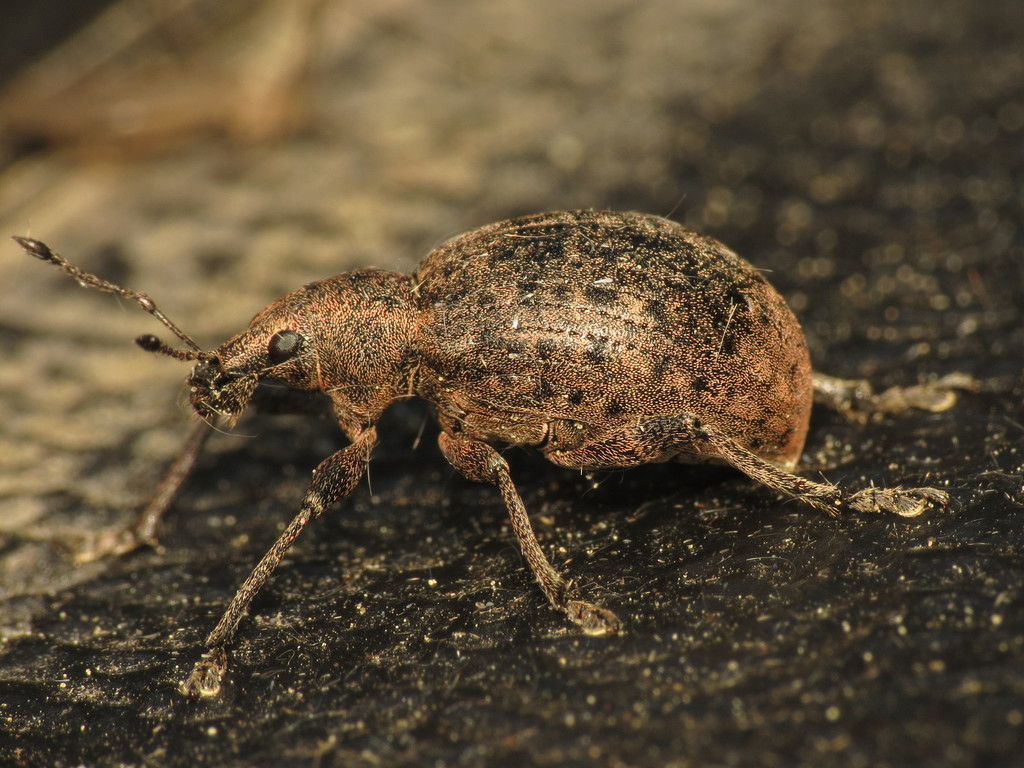
The chequered weevil grows to about 1 cm long and belongs to the true weevil family. Adults appear from spring through late summer and lay eggs that develop into larvae on the roots of various wild plants, where they spend two years before emerging as adults.
Source: Wikipedia
How to recognize it
Liophloeus tessulatus is a true weevil in the family Curculionidae.
Source: Wikipedia
Size
It reaches up to roughly 10 mm in length.
Source: Wikipedia
What it eats
Both adults and larvae consume the listed wild plants; larvae develop on the roots.
Source: Wikipedia
Life cycle
Larvae live on plant roots for about two years before becoming adults. At lower altitudes the beetle can reproduce without males (parthenogenesis).
Source: Wikipedia
When you see it
Adults are most commonly seen from spring until late summer.
Source: Wikipedia
Where it comes from
The species is widespread across Europe.
Source: Wikipedia
Lookalikes
It has also been described under the name Liophloeus schmidti.
Source: Wikipedia
Status: introduced in Canada. Source: iNaturalist
Questions people ask
When can I expect to see adult chequered weevils?
Adults are usually present from spring through late summer.
Source: Wikipedia
Same family (Curculionidae)
 Green Immigrant Leaf WeevilPolydrusus formosusDamages trees, gardens or crops
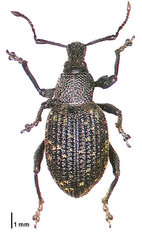 Black Vine WeevilOtiorhynchus sulcatusDamages trees, gardens or crops
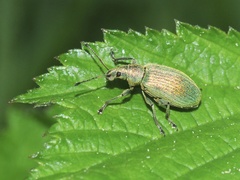 Nettle weevilPhyllobius pomaceusDamages trees, gardens or crops
 Asian Oak WeevilCyrtepistomus castaneusDamages trees, gardens or crops
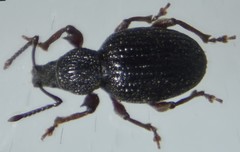 Strawberry Root WeevilOtiorhynchus ovatusDamages trees, gardens or crops
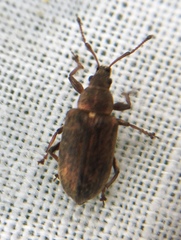 Common Leaf WeevilPhyllobius pyriDamages trees, gardens or crops
Sources
- Wikipedia: https://en.wikipedia.org/wiki/Liophloeus_tessulatus
Look it up elsewhere: GBIF · iNaturalist · BugGuide · ITIS · Wikipedia
Text written 2026-10-22 from the sources above and checked sentence by sentence against them. Data fetched 2026-10-22.