 Bug FAQ
Chalky Percher
Diplacodes trivialis · Order: Odonata · Family: Libellulidae
Also called: Blue Percher, Blue Ground Skimmer
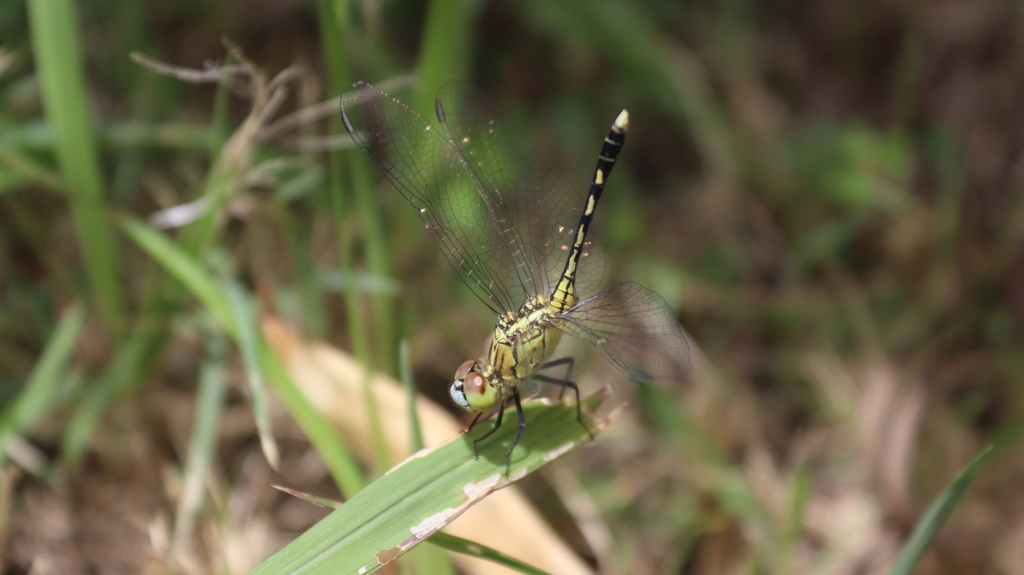
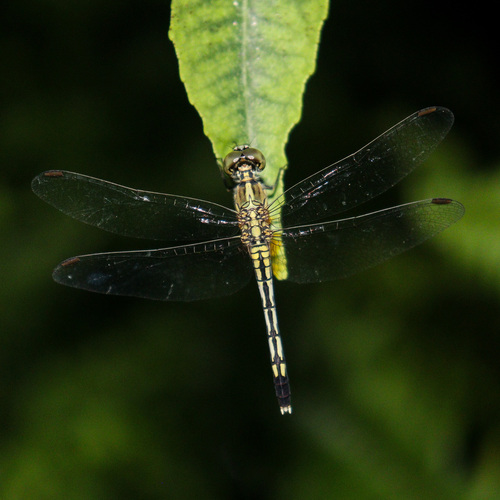
The Chalky Percher is a small dragonfly with bluish eyes and a greenish-yellow to olive body marked with black spots; its clear wings lack any markings and the adult’s anal appendages are creamy white with a dusty blue-gray sheen. It breeds in shallow water bodies such as ponds, rice fields, lakes, and drainage ditches, and is one of the most common dragonflies across plains and hills in both dry and wet areas of Asia.
Source: Wikipedia
How to recognize it
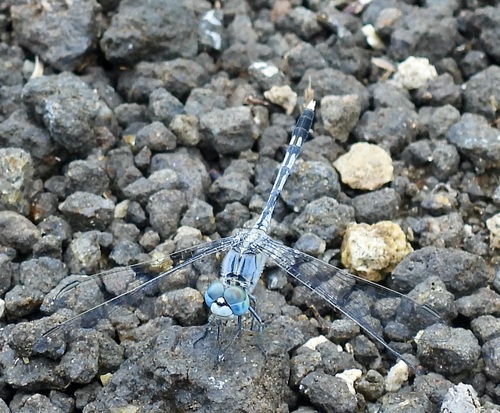
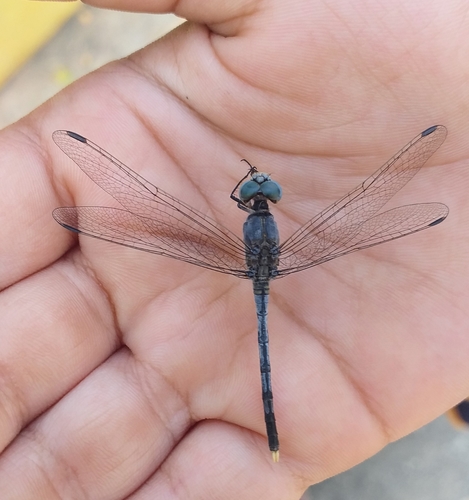
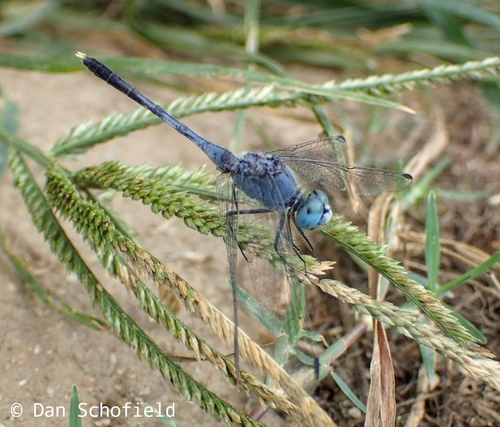
Small dragonfly with bluish eyes, greenish-yellow or olive thorax and abdomen with black marks; clear wings without apical or basal spots; creamy white anal appendages and a dusty blue-gray pruinescence in adults.
Source: Wikipedia
Where it lives
Very common throughout Asia, found in both plains and hills and in dry as well as wet areas.
Source: Wikipedia
More photos
Questions people ask
What habitats does the Chalky Percher use for breeding?
It breeds in shallow water places like ponds, wet rice fields, shallow lakes and drainage ditches.
Source: Wikipedia
Where can I find Chalky Percher dragonflies?
They are widespread in Asia, from the Seychelles and the Middle East through China, Japan, India and the Maldives, extending down to New Guinea and Australia.
Source: Wikipedia
Same family (Libellulidae)

Sources
- Wikipedia: https://en.wikipedia.org/wiki/Diplacodes_trivialis
Look it up elsewhere: GBIF · iNaturalist · BugGuide · Wikipedia
Text written 2026-10-22 from the sources above and checked sentence by sentence against them. Data fetched 2026-10-22.