 Bug FAQ
Ceraunus Blue
Hemiargus ceraunus · Order: Lepidoptera · Family: Lycaenidae
Also called: Antillean Blue

The Ceraunus blue is a small butterfly with a wingspan of about 20 to 30 mm. Adults sip flower nectar, while larvae eat flowers and seedpods of various woody legumes such as Chamaecrista fasciculata, Abrus precatorius and Prosopis species.
Source: Wikipedia
How to recognize it
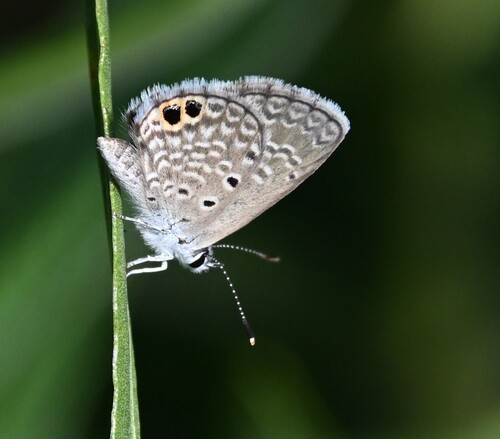
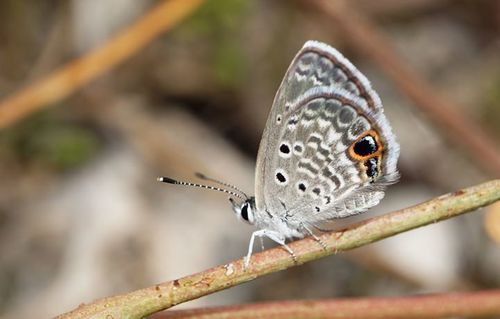
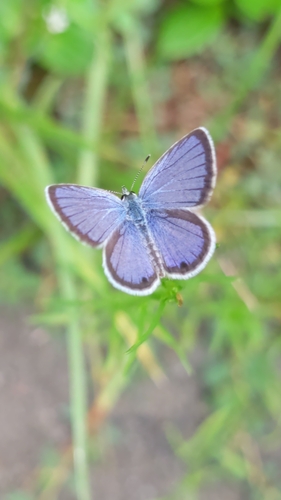
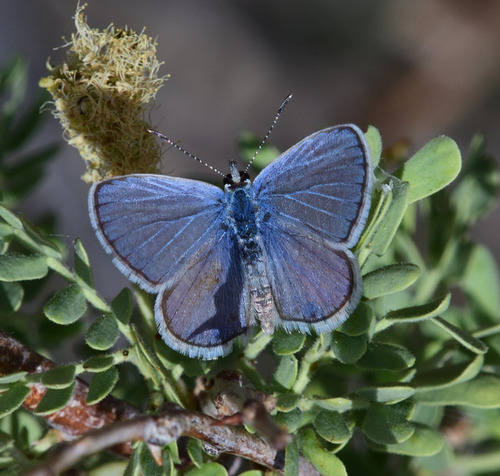
Hemiargus ceraunus, known as the Ceraunus blue, belongs to the Lycaenidae family of butterflies.
Source: Wikipedia
Size
Its wingspan ranges from 20 to 30 mm.
Source: Wikipedia
What it eats
Adults feed on nectar from flowers.
Source: Wikipedia
Where it comes from
The species is found from the southwestern United States and southern Texas through Florida and the Florida Keys, extending through the West Indies, Mexico, Central America to South America.
Source: Wikipedia
Where it is found in the US
Recorded in 19 of 51 states and DC. Most records: Texas, Florida, Arizona, California, Georgia, New Mexico, South Carolina, Nevada.
Darker = more records. Counts are museum and citizen-science records, not population size.
Source: GBIF
Status: native in North America; native in United States. Source: iNaturalist
Months it is reported in the US
Source: GBIF
More photos
Questions people ask
Are Ceraunus blues a pest for gardens or crops?
They feed on legumes as larvae, but there is no information indicating they cause significant damage to gardens or crops.
Source: Wikipedia
Same family (Lycaenidae)

Sources
- Wikipedia: https://en.wikipedia.org/wiki/Hemiargus_ceraunus
Look it up elsewhere: GBIF · iNaturalist · BugGuide · ITIS · Wikipedia
Text written 2026-10-22 from the sources above and checked sentence by sentence against them. Data fetched 2026-10-22.