 Bug FAQ
Ceanothus Silk Moth
Hyalophora euryalus · Order: Lepidoptera · Family: Saturniidae
Also called: Ceanothus Silkmoth
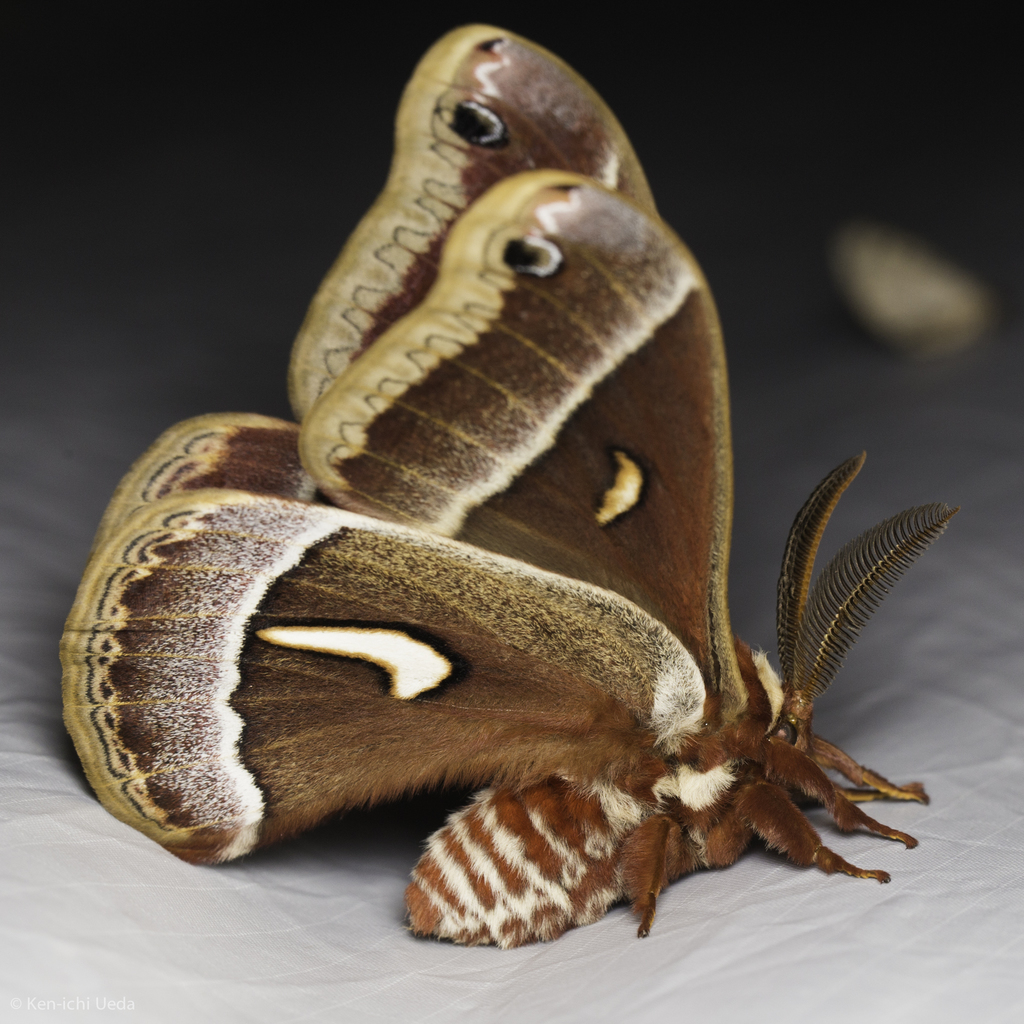
It inhabits dry intermontane valleys and a variety of forest types from British Columbia down to Baja California, and its larvae feed on many native trees and shrubs.
Source: Wikipedia
How to recognize it
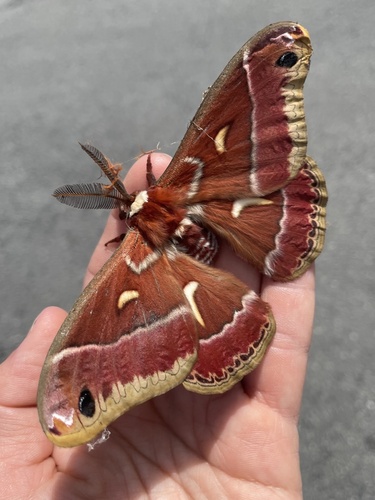
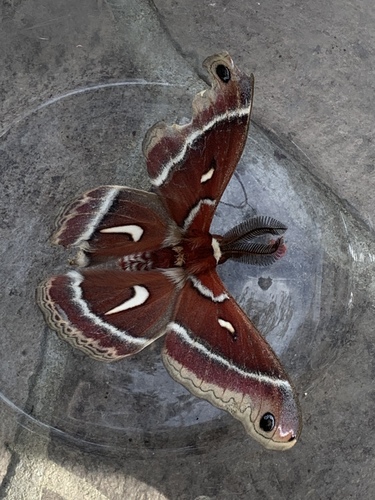
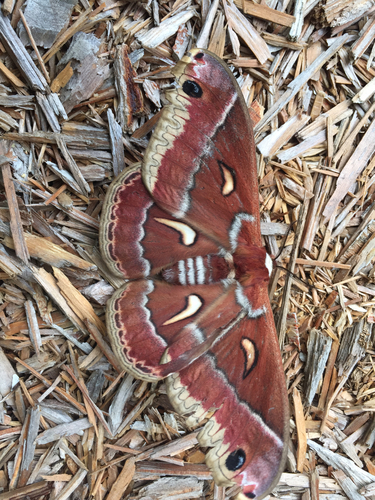
The moth shows a reddish-brown background with black and white spots and a postmedial band of the same colors.
Source: Wikipedia
Size
Its wingspan ranges from about 9 to 13 cm.
Source: Wikipedia
Where it lives
It lives in dry intermontane valleys of British Columbia down to Baja California, and also in coastal rainforests, hardwood, montane forests and juniper woodlands.
Source: Wikipedia
What it eats
Caterpillars feed on many plants such as Ceanothus, Rhamnus, Arctostaphylos, Arbutus, alder, birch, Prunus, Ribes, willow and Douglas-fir, while adult moths have no functional mouthparts and do not feed.
Source: Wikipedia
Life cycle
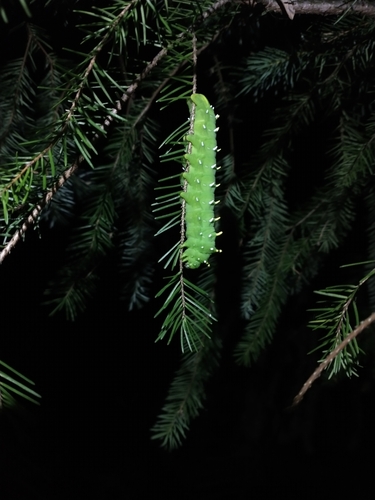
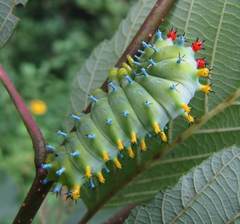
The species has one generation per year, with larvae passing through five instars and changing colour as they grow.
Source: Wikipedia
When you see it
Adults can be seen flying from January through July, depending on location.
Source: Wikipedia
Where it comes from
It is native to the Pacific Northwest forests and valleys, extending as far south as Baja California.
Source: Wikipedia
Lookalikes
In the Sierra Nevada a hybrid with H. columbia gloveri occurs, known as H. kasloensis.
Source: Wikipedia
Where it is found in the US
Recorded in 10 of 51 states and DC. Most records: California, Oregon, Washington, Idaho, Montana, Nevada, Colorado, Florida.
Darker = more records. Counts are museum and citizen-science records, not population size.
Source: GBIF
Status: native in North America; native in Canada; native in United States. Source: iNaturalist
Months it is reported in the US
Source: GBIF
More photos
Questions people ask
What plants do the caterpillars eat?
Caterpillars feed on a wide range of host plants including Ceanothus, Rhamnus, Arctostaphylos, Arbutus, alder, birch, Prunus, Ribes, willow and Douglas-fir.
Source: Wikipedia
When are the adult moths active?
Adults are on the wing from January to July, depending on where they live.
Source: Wikipedia
Where is the Ceanothus silk moth found?
It occurs in dry valleys and various forest habitats from British Columbia in Canada down to Baja California in Mexico.
Source: Wikipedia
Same family (Saturniidae)


Sources
- Wikipedia: https://en.wikipedia.org/wiki/Hyalophora_euryalus
Look it up elsewhere: GBIF · iNaturalist · BugGuide · ITIS · Wikipedia
Text written 2026-10-23 from the sources above and checked sentence by sentence against them. Data fetched 2026-10-23.