 Bug FAQ
Caribbean Fruit Fly
Anastrepha suspensa · Order: Diptera · Family: Tephritidae
Source: Wikipedia
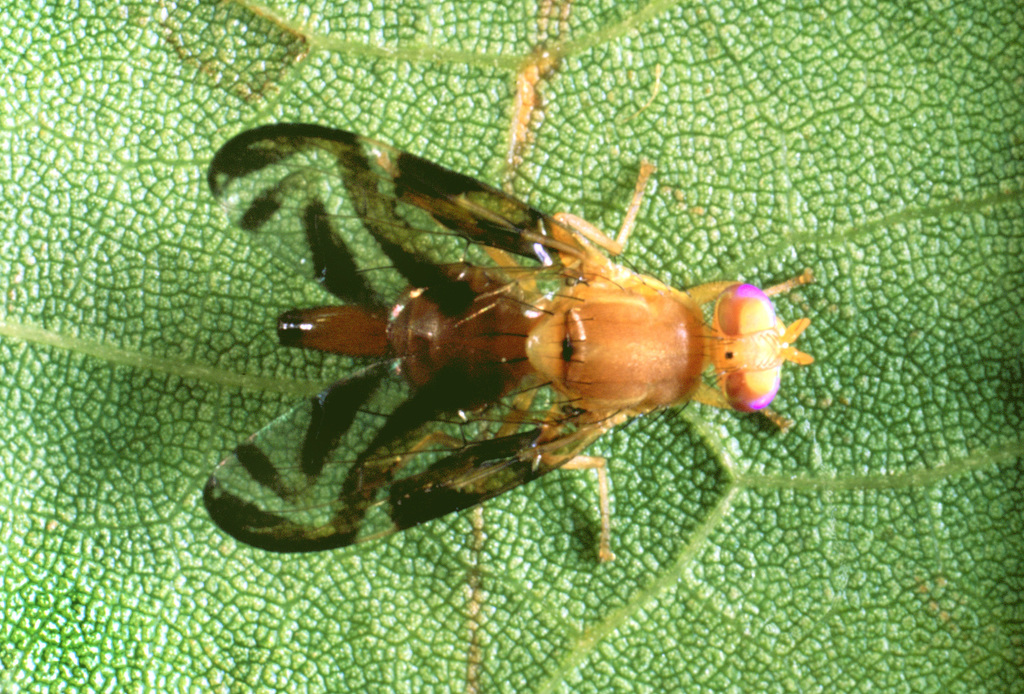
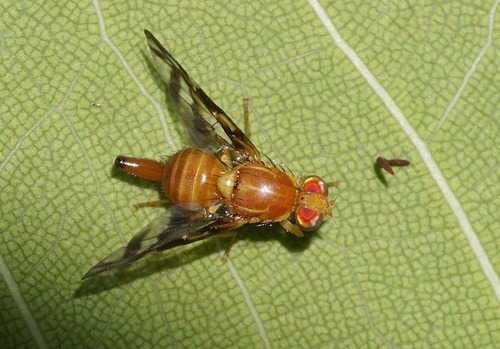
Adult Caribbean fruit flies are 11 to 14 mm long and have a yellow-orange thorax with dark brown hairs. They thrive in tropical, consistently wet climates of the Caribbean and have spread to Florida and other parts of the U.S. The flies feed on many fruit hosts such as guava, orange, grapefruit and other tropical fruits, making them a serious agricultural pest.
Source: Wikipedia
How to recognize it
Their hairs are red-brown to dark-brown, giving the fly a darker overall look. The thorax is mainly yellow to orange-brown with slender colored bands running down to the scutum.
Source: Wikipedia
Size
Adults measure between 11 and 14 mm in length.
Source: Wikipedia
Is it a pest in the house?
The species is a pest with negative agricultural and economic impacts. It is considered highly invasive because of its broad range and adaptability.
Source: Wikipedia
How to get rid of it
- Chemical bait using torula yeast and borax in McPhail traps is a common control method.
- Biological control with entomopathogenic nematodes is being studied in Florida.
Source: Wikipedia
Where it lives
They prefer tropical climates with steady precipitation.
Source: Wikipedia
What it eats
In Florida they feed on 84 plant hosts across 23 families.
Source: Wikipedia
Life cycle
Their life cycle includes egg, three larval instars, pupa and adult stages.
Source: Wikipedia
Where it comes from
Originally thought to be from Cuba, they are now also found in Florida, Hispaniola and Puerto Rico. They have been identified on many Caribbean islands including the Bahamas, Jamaica and Puerto Rico.
Source: Wikipedia
Lookalikes
Differences in the ovipositor and wing patterns can separate it from other Anastrepha species.
Source: Wikipedia
Where it is found in the US
Recorded in 2 of 51 states and DC. Most records: Kansas, Florida.
Darker = more records. Counts are museum and citizen-science records, not population size.
Source: GBIF
Months it is reported in the US
Source: GBIF
More photos
Questions people ask
How can I trap Caribbean fruit flies?
Use a McPhail trap baited with torula yeast and borax.
Source: Wikipedia
Are there biological controls for this fly?
Researchers are testing entomopathogenic nematodes as a biological control in Florida.
Source: Wikipedia
What fruits do they damage?
They feed on guava, oranges, grapefruit and other tropical fruits, causing crop damage.
Source: Wikipedia
Same family (Tephritidae)
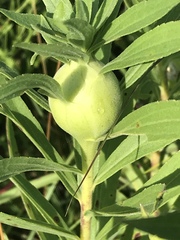 Goldenrod Gall FlyEurosta solidaginis
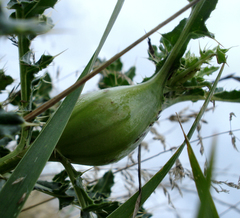 Thistle Stem Gall FlyUrophora cardui
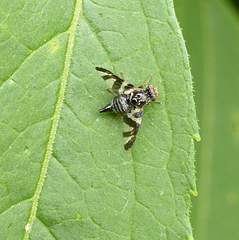 Goldenrod Brussels Sprout Gall FlyProcecidochares atra
 Mediterranean Fruit FlyCeratitis capitataDamages trees, gardens or crops
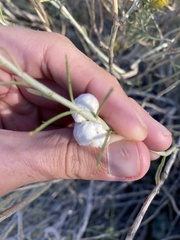 Cotton-gall TephritidAciurina bigeloviae
 Oriental Fruit FlyBactrocera dorsalisDamages trees, gardens or crops
Sources
- Wikipedia: https://en.wikipedia.org/wiki/Anastrepha_suspensa
Look it up elsewhere: GBIF · iNaturalist · BugGuide · ITIS · Wikipedia
Text written 2026-10-28 from the sources above and checked sentence by sentence against them. Data fetched 2026-10-28.