 Bug FAQ
Cardinal Butterfly
Argynnis pandora · Order: Lepidoptera · Family: Nymphalidae
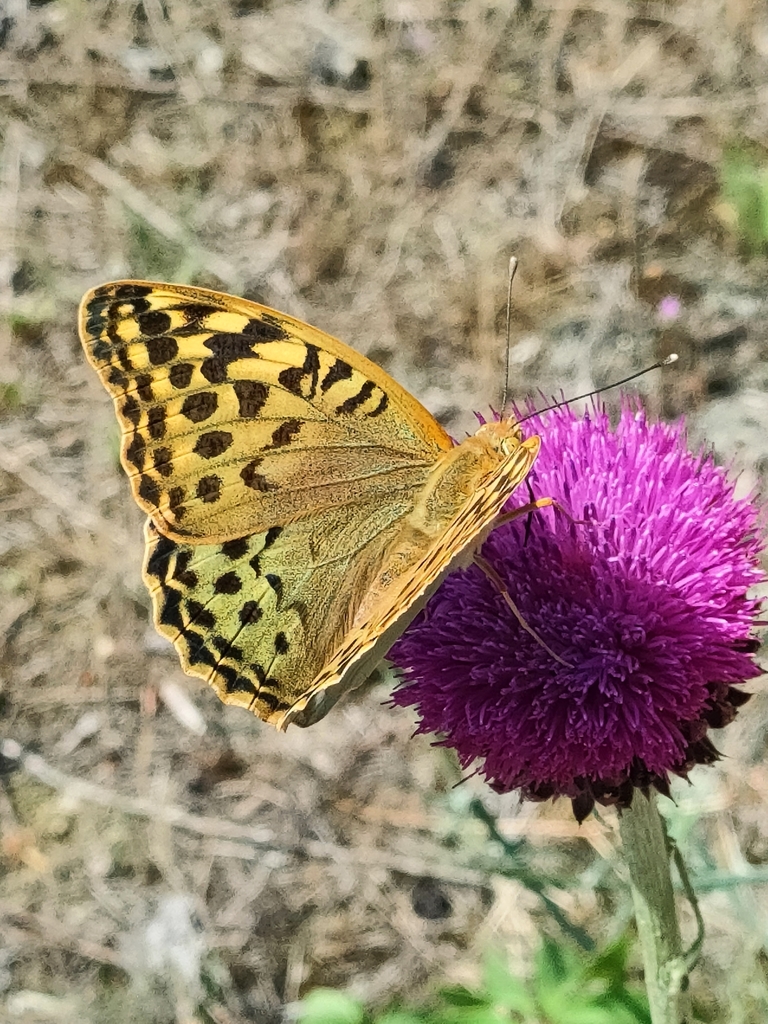
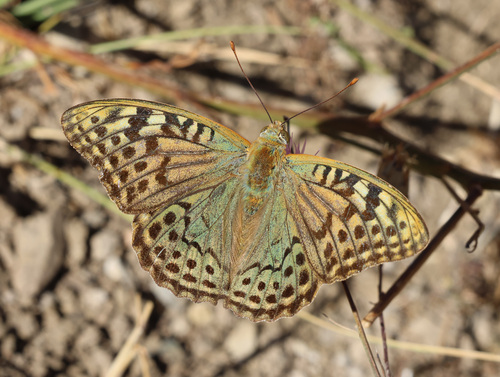
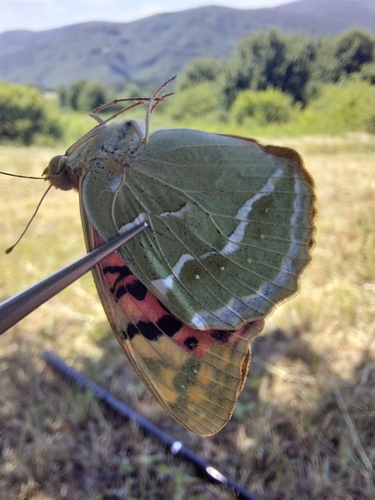
The cardinal butterfly has a wingspan of about 6.4 to 8 cm and shows bright green tips on its fore- and hindwings, a fleshy-red forewing disc with deep black spots, and narrow white-to-silvery bands on the hindwing. It lives in deciduous and open pine forests where nectar-rich thistles and related plants are abundant, and adults are on the wing from early summer through early autumn, often fluttering over roads or perched on thistle heads.
Source: Wikipedia
How to recognize it
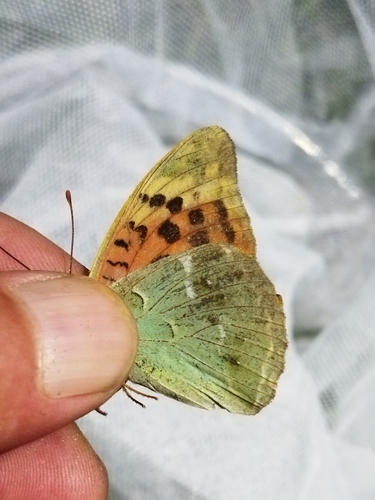
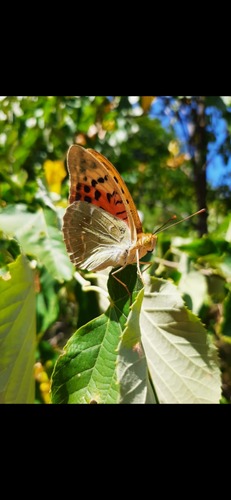
The underside is quite different, with bright green wing tips, a red and black-spotted forewing disc, and a few narrow white-to-silvery bands on the hindwing that vary in number.
Source: Wikipedia
Size
Wingspan ranges from 64 to 80 mm (about 6.4 to 8 cm).
Source: Wikipedia
Where it lives
Prefers deciduous and open pine forests that provide plenty of nectar-rich plants such as thistles (Cirsium, Carduus, Centaurea). Adults fly from June onward, moving quickly and gracefully, often settling on over-hanging tree branches or thistle heads.
Source: Wikipedia
What it eats
Caterpillars feed on Viola species. Adults sip nectar from thistles and related plants in the genera Cirsium, Carduus, and Centaurea.
Source: Wikipedia
Life cycle
Adults are active from April to September, typically May to August in Europe, depending on location.
Source: Wikipedia
When you see it
Flight period spans April to September, usually May to August in Europe.
Source: Wikipedia
Lookalikes
The largest European Argynnis, sometimes listed as A. pandora Schiff., with forms like ab. dacica and ‘paupercula’ that differ in banding.
Source: Wikipedia
More photos
Questions people ask
What plants do cardinal butterfly caterpillars eat?
The caterpillars feed on Viola species.
Source: Wikipedia
When can I see adult cardinal butterflies?
Adults are on the wing from April through September, usually May to August in Europe.
Source: Wikipedia
What habitats do they prefer?
They favor deciduous and open pine forests with plenty of nectar-rich thistles and related plants.
Source: Wikipedia
Same family (Nymphalidae)






Sources
- Wikipedia: https://en.wikipedia.org/wiki/Argynnis_pandora
Look it up elsewhere: GBIF · iNaturalist · BugGuide · Wikipedia
Text written 2026-10-22 from the sources above and checked sentence by sentence against them. Data fetched 2026-10-22.