 Bug FAQ
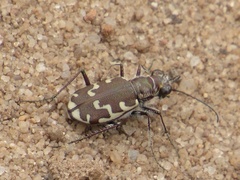
Carabus goryi
Carabus goryi · Order: Coleoptera · Family: Carabidae
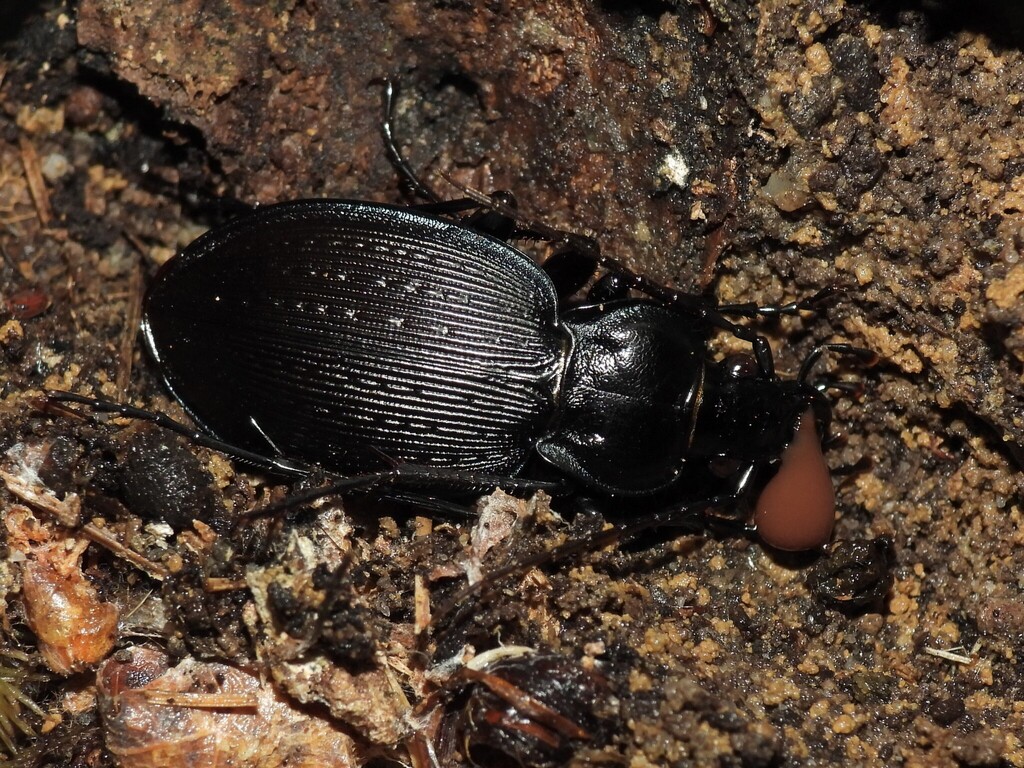
Adult Carabus goryi are short-winged, live in groups and are active at night. They are found in cool, moist forests, orchards and cultivated fields across many U.S. states and Ontario, Canada.
Source: Wikipedia
How to recognize it
Adults have reduced wings, gather together, and are nocturnal.
Source: Wikipedia
Size
Adults are brachypterous, meaning they have short wings.
Source: Wikipedia
Where it lives
They live in cool, moist forests, as well as orchards and cultivated fields.
Source: Wikipedia
What it eats
They prey on larvae of the gypsy moth (Lymantria dispar) and other soft-bodied insect larvae.
Source: Wikipedia
Where it comes from
They occur in North America, including many eastern and mid-western U.S. states and Ontario, Canada.
Source: Wikipedia
Where it is found in the US
Recorded in 25 of 51 states and DC. Most records: Virginia, Tennessee, Massachusetts, Pennsylvania, North Carolina, Maryland, Ohio, West Virginia.
Darker = more records. Counts are museum and citizen-science records, not population size.
Source: GBIF
Status: native in North America; native in Canada. Source: iNaturalist
Months it is reported in the US
Source: GBIF
More photos
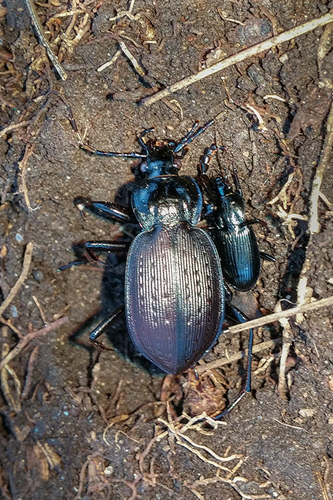
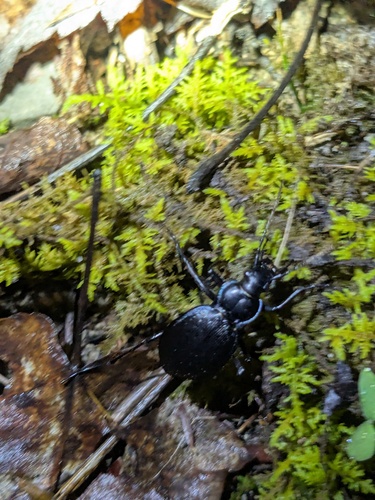
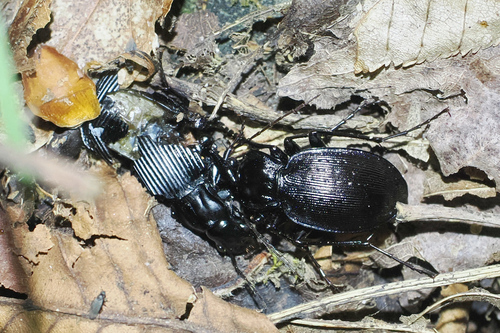
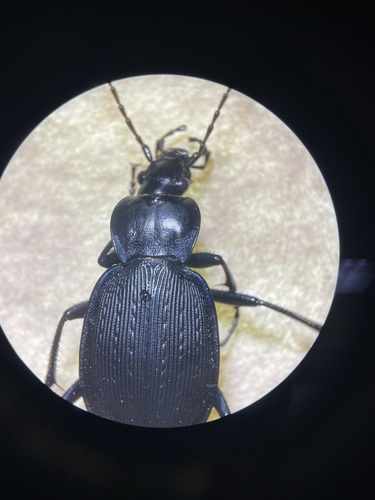
Same family (Carabidae)


Sources
- Wikipedia: https://en.wikipedia.org/wiki/Carabus_goryi
Look it up elsewhere: GBIF · iNaturalist · BugGuide · ITIS · Wikipedia
Text written 2026-10-23 from the sources above and checked sentence by sentence against them. Data fetched 2026-10-23.