 Bug FAQ
California Sister
Adelpha californica · Order: Lepidoptera · Family: Nymphalidae
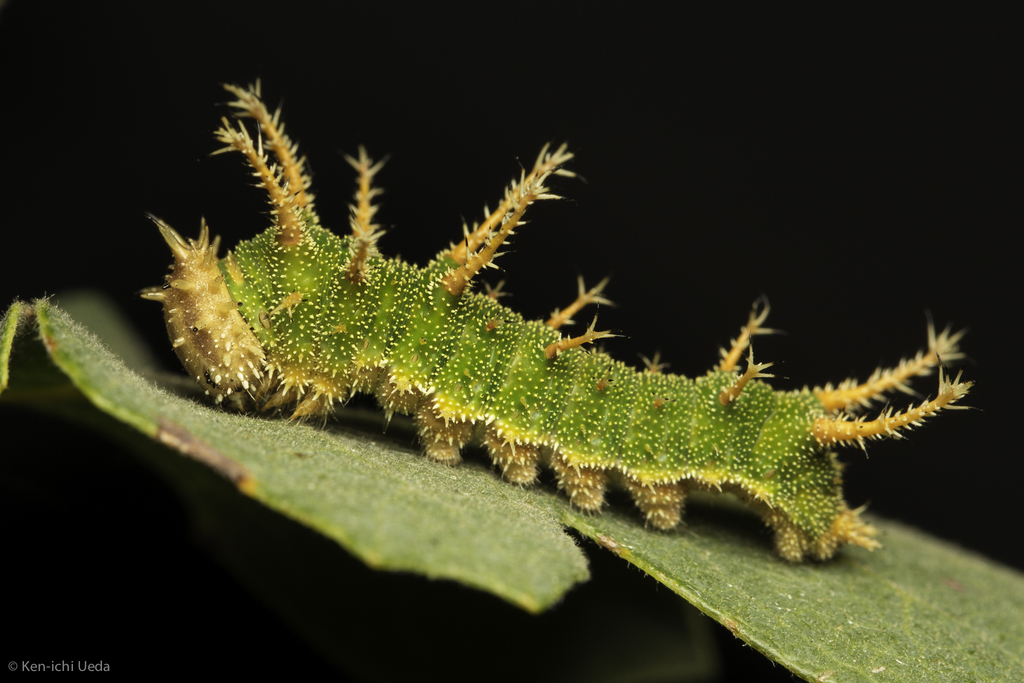
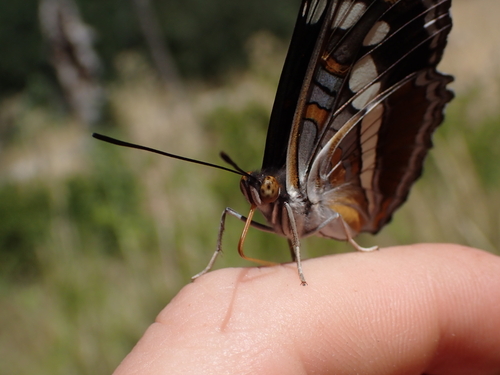
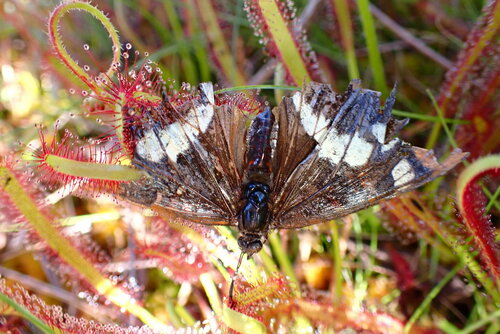
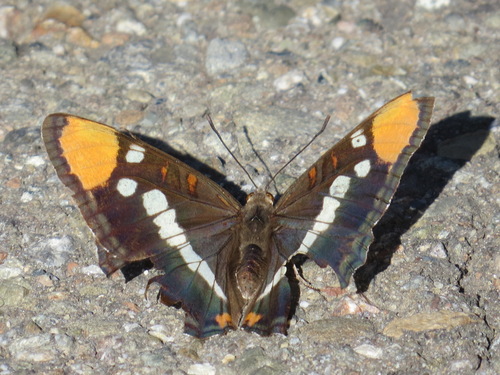
The California Sister butterfly has dark upper wings with wide cream bands and orange tips, while the underside shows a mix of brown, blue, orange, and white colors. It lives in oak woodlands, often flying near the tops of oak trees or perching by streams and canyons. Its range covers the western edge of North America from northern Baja California through most of California, western Nevada and western Oregon.
Source: Wikipedia
How to recognize it
The underside displays a variety of browns, blues, oranges, and whites.
Source: Wikipedia
Where it lives
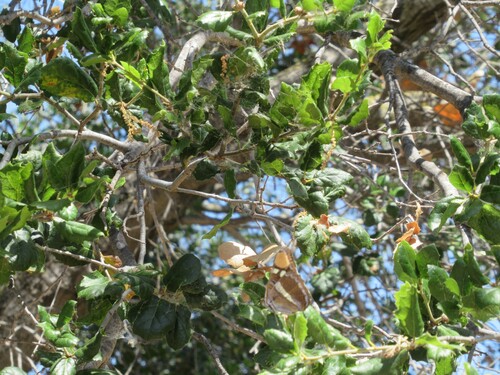
They are abundant in oak woodlands.
Source: Wikipedia
What it eats
Caterpillars feed on canyon live oak and coast live oak, as well as other oak species. Adults may sip nectar, rotting fruit, sap, and animal droppings.
Source: Wikipedia
Life cycle
Eggs are green. Development from egg to adult takes about 65 days.
Source: Wikipedia
When you see it
Depending on conditions, one to three generations appear each year, with adults usually on the wing from March through November. Adults can sometimes be seen during winter months.
Source: Wikipedia
Where it comes from
Found in the extreme western part of North America, from northern Baja California, through most of California, western Nevada, and western Oregon.
Source: Wikipedia
Lookalikes
It looks similar to Adelpha bredowii and Adelpha eulalia. Females also resemble some Doxocopa species.
Source: Wikipedia
Where it is found in the US
Recorded in 8 of 51 states and DC. Most records: California, Oregon, Nevada, Arizona, Washington, New Mexico, Utah, Texas.
Darker = more records. Counts are museum and citizen-science records, not population size.
Source: GBIF
Status: native in United States. Source: iNaturalist
Months it is reported in the US
Source: GBIF
More photos
Questions people ask
When can I see them?
Adults are most common from March to November, though they may appear in winter too.
Source: Wikipedia
How can I tell this butterfly apart from similar species?
Look for the wide cream bands on dark wings and orange patches near the forewing tips; similar species include Adelpha bredowii, Adelpha eulalia, and some female Doxocopa.
Source: Wikipedia
Same family (Nymphalidae)






Sources
- Wikipedia: https://en.wikipedia.org/wiki/Adelpha_californica
Look it up elsewhere: GBIF · iNaturalist · BugGuide · ITIS · Wikipedia
Text written 2026-10-22 from the sources above and checked sentence by sentence against them. Data fetched 2026-10-22.