 Bug FAQ
California Darner
Rhionaeschna californica · Order: Odonata · Family: Aeshnidae
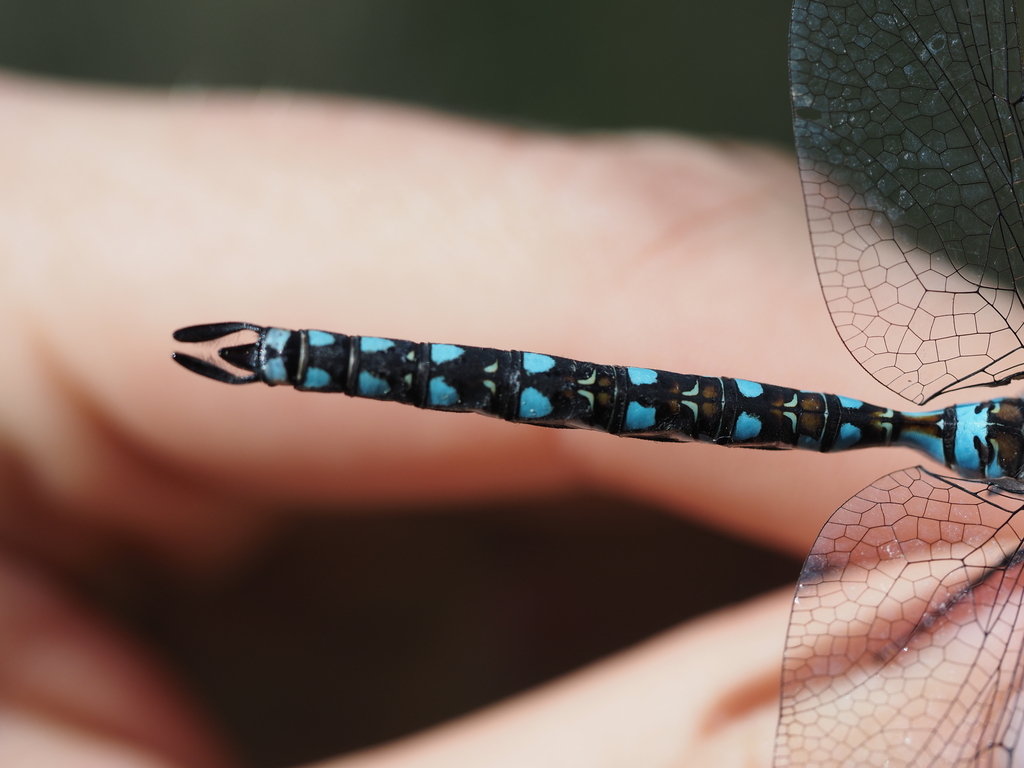
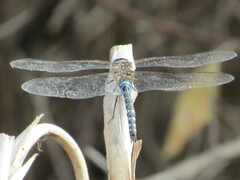
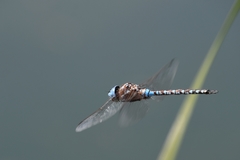
Adult California darners are medium-sized dragonflies about 5.7 to 6.4 cm long and have bright blue diagonal spots on the abdomen. They live near lakes, ponds, marshes and stream pools, often where the water is alkaline, and are found across the western United States from Baja California southward. Larvae eat aquatic insects, tiny fish and tadpoles, while adults catch soft-bodied flying insects; they spend several years as naiads before emerging at night.
Source: Wikipedia
How to recognize it
They are recognized by bright blue diagonal spots on the abdomen.
Source: Wikipedia
Size
Adults measure about 5.7 to 6.4 cm (2¼ to 2½ in) in length.
Source: Wikipedia
What it eats
Larvae feed on aquatic insects, very small fish and tadpoles. Adults eat almost any soft-bodied flying insect.
Source: Wikipedia
Life cycle
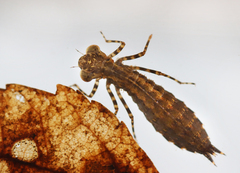
They spend several years as aquatic naiads before becoming adults. Emergence to the adult stage occurs at night, likely to avoid daytime predators.
Source: Wikipedia
When you see it
Adults are on the wing from mid-April to late June, and in California from February to August.
Source: Wikipedia
Where it comes from
They are common in the western United States, extending from Baja California to southern Mexico, and also occur in Central America and southwestern Canada.
Source: Wikipedia
Where it is found in the US
Recorded in 14 of 51 states and DC. Most records: California, Washington, Oregon, Utah, Idaho, Montana, Nevada, South Dakota.
Darker = more records. Counts are museum and citizen-science records, not population size.
Source: GBIF
Status: native in North America; native in Canada. Source: iNaturalist
Months it is reported in the US
Source: GBIF
More photos
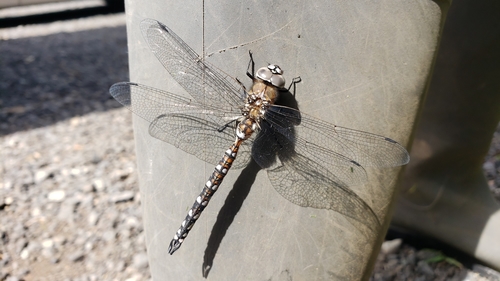
Same family (Aeshnidae)
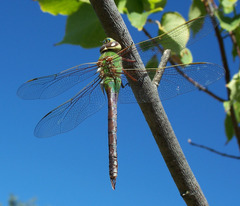
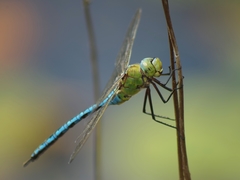
Sources
- Wikipedia: https://en.wikipedia.org/wiki/Rhionaeschna_californica
Look it up elsewhere: GBIF · iNaturalist · BugGuide · ITIS · Wikipedia
Text written 2026-10-23 from the sources above and checked sentence by sentence against them. Data fetched 2026-10-22.