 Bug FAQ
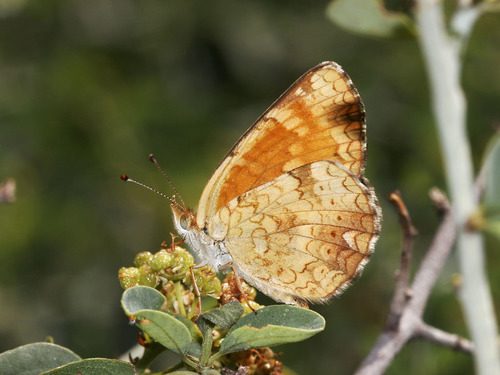
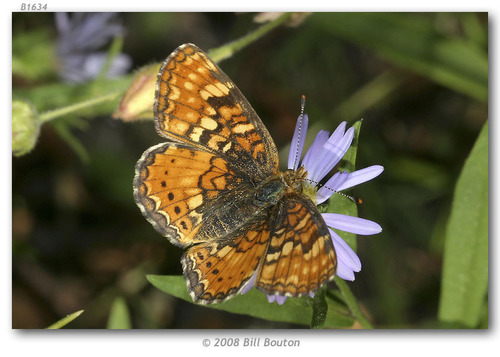
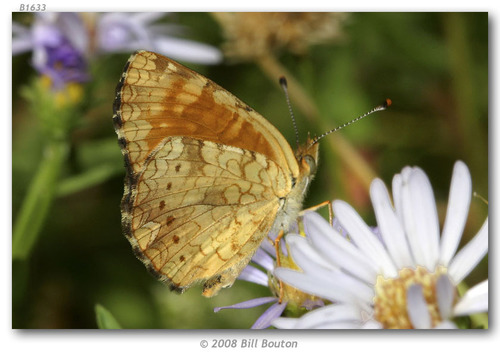
California Crescent
Phyciodes orseis · Order: Lepidoptera · Family: Nymphalidae

The California crescent butterfly has a wingspan of about 32 to 42 millimetres. It lives in mountain valleys, meadows and stream canyons in western North America, especially northern California and Oregon. Adults are on the wing from mid-May through the end of June each year.
Source: Wikipedia
How to recognize it
Phyciodes orseis, known as the California crescent, belongs to the butterfly family Nymphalidae.
Source: Wikipedia
Size
Its wingspan ranges from 32 to 42 mm.
Source: Wikipedia
Where it lives
It inhabits mountain valleys, meadows and stream canyons.
Source: Wikipedia
What it eats
Females lay eggs in large clusters on host plants that are usually thistles of the genus Cirsium.
Source: Wikipedia
Life cycle
After hatching, the larvae overwinter as third-instar caterpillars.
Source: Wikipedia
Where it comes from
The species is found in western North America, particularly in northern California and Oregon.
Source: Wikipedia
Where it is found in the US
Recorded in 6 of 51 states and DC. Most records: California, Oregon, Nevada, Colorado, Idaho, Arizona.
Darker = more records. Counts are museum and citizen-science records, not population size.
Source: GBIF
Months it is reported in the US
Source: GBIF
More photos
Questions people ask
When can I see adult California crescent butterflies?
Adults are active from mid-May through the end of June each year.
Source: Wikipedia
What plants do California crescent butterflies use for laying eggs?
They lay eggs on thistles in the genus Cirsium.
Source: Wikipedia
Same family (Nymphalidae)




Sources
- Wikipedia: https://en.wikipedia.org/wiki/Phyciodes_orseis
Look it up elsewhere: GBIF · iNaturalist · BugGuide · ITIS · Wikipedia
Text written 2026-10-27 from the sources above and checked sentence by sentence against them. Data fetched 2026-10-27.