 Bug FAQ
California Bumble Bee
Bombus californicus · Order: Hymenoptera · Family: Apidae
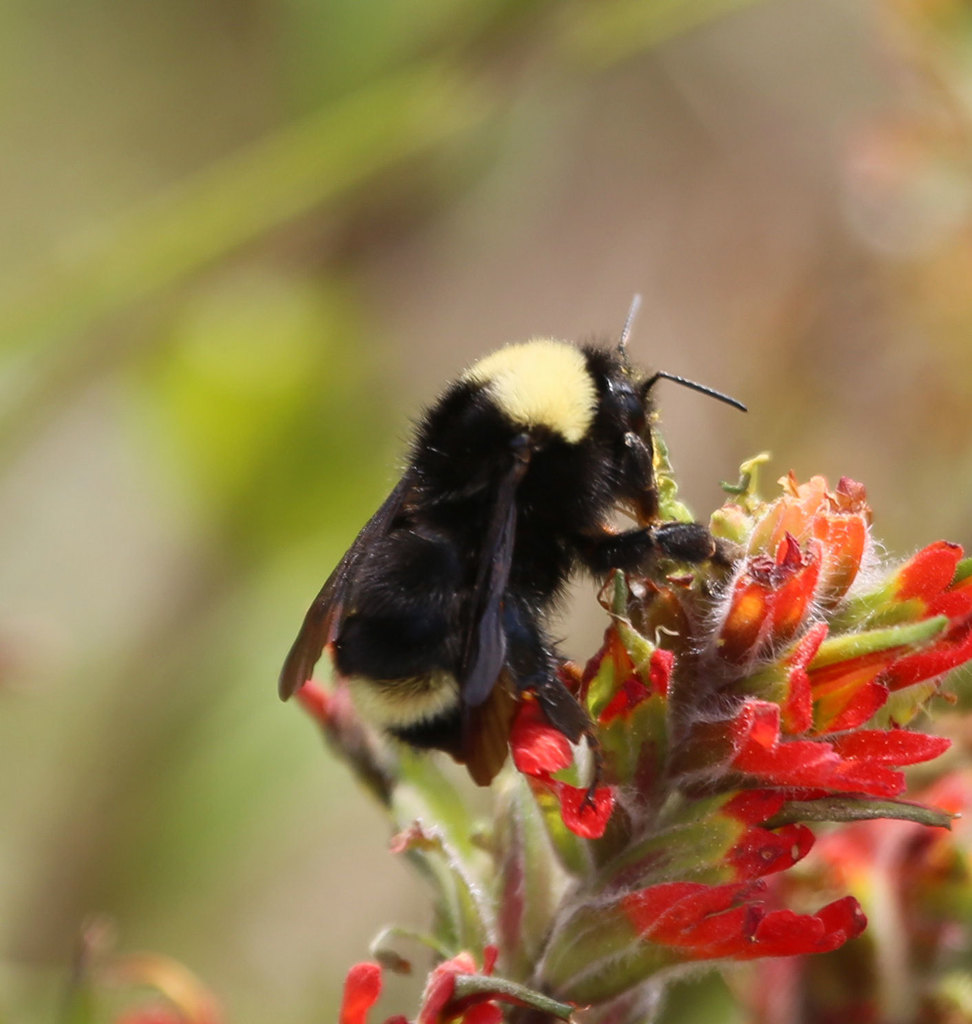
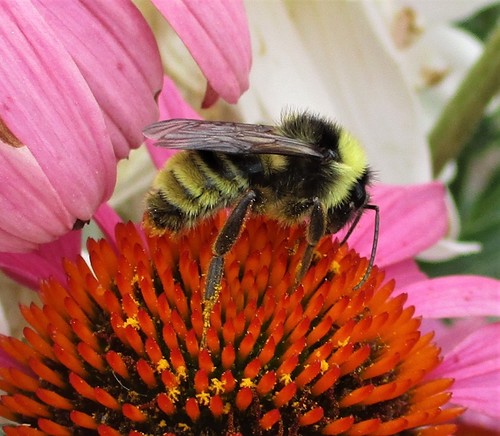
The California bumble bee lives in ground nests in woods and cities across the western half of North America and Central America. Queens appear from April to mid-July, workers from April to September, and males from late May to September. Females usually have a black body with a single yellow band on the thorax and another near the abdomen tip, but color patterns can vary and sometimes match those of the similar Bombus fervidus.
Source: Wikipedia
How to recognize it
Females are typically black with one strong yellow band on the thorax and one near the abdomen tip; males show more variation. Both sexes can show many yellow-black patterns, sometimes identical to the sister species Bombus fervidus, making visual ID difficult.
Source: Wikipedia
Where it lives
They nest in the ground in wooded and urban areas.
Source: Wikipedia
Life cycle
Queens emerge from April through mid-July; workers are present April to September; males appear late May through September.
Source: Wikipedia
When you see it
Queens appear April-July; workers April-September; males May-September.
Source: Wikipedia
Lookalikes
In areas where it overlaps with Bombus fervidus, some individuals look identical and need genetic tests to tell them apart.
Source: Wikipedia
Where it is found in the US
Recorded in 14 of 51 states and DC. Most records: California, Oregon, Washington, Colorado, Wyoming, Utah, Montana, Idaho.
Darker = more records. Counts are museum and citizen-science records, not population size.
Source: GBIF
Status: native in North America; native in United States. Source: iNaturalist
Months it is reported in the US
Source: GBIF
More photos


Questions people ask
How can I tell a California bumble bee from a similar species?
Look for the typical single yellow bands on females, but note that many individuals share patterns with Bombus fervidus and may require genetic analysis.
Source: Wikipedia
Same family (Apidae)





Sources
- Wikipedia: https://en.wikipedia.org/wiki/Bombus_californicus
Look it up elsewhere: GBIF · iNaturalist · BugGuide · ITIS · Wikipedia
Text written 2026-10-22 from the sources above and checked sentence by sentence against them. Data fetched 2026-10-22.