 Bug FAQ
Calico scale
Eulecanium cerasorum · Order: Hemiptera · Family: Coccidae
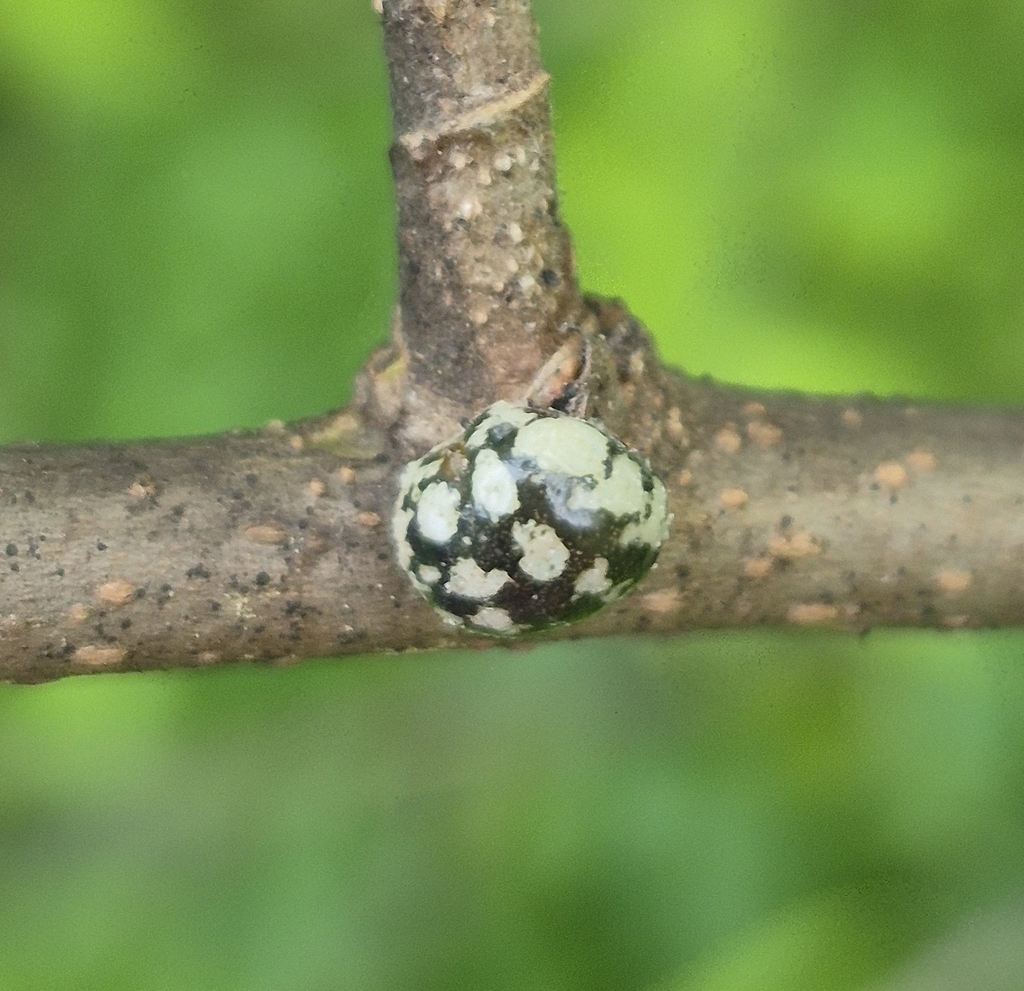
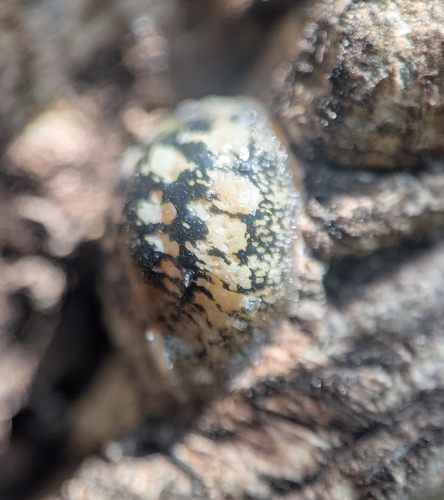
Adults are about a quarter of an inch across and have a white-brown circular shell that darkens with age. Females lay roughly 4,500 eggs inside their protective cap and the nymph moves along branches before settling and forming the shell. Mature females excrete honeydew, encouraging mold growth on the tree.
Source: Wikipedia
How to recognize it
The outer shell is white and brown and becomes darker as the insect ages.
Source: Wikipedia
Size
The insect measures about one quarter of an inch in diameter.
Source: Wikipedia
Is it a pest in the house?
Mature females produce honeydew, which promotes mold growth on the tree.
Source: Wikipedia
What it eats
It attacks tree branches, stressing the host plant.
Source: Wikipedia
Life cycle
Nymphs crawl along a branch, then settle and secrete a hardened circular cap for protection. A typical female can lay around 4,500 eggs inside that cap.
Source: Wikipedia
Where it is found in the US
Recorded in 17 of 51 states and DC. Most records: Pennsylvania, New York, Virginia, Kentucky, Indiana, Ohio, North Carolina, Maryland.
Darker = more records. Counts are museum and citizen-science records, not population size.
Source: GBIF
Status: introduced in Canada. Source: iNaturalist
Months it is reported in the US
Source: GBIF
More photos
Questions people ask
How does the calico scale harm trees?
It feeds on branches, stressing the tree, and its honeydew encourages mold that can further damage the bark.
Source: Wikipedia
How many eggs does a female calico scale lay?
A female can lay about 4,500 eggs inside her protective cap.
Source: Wikipedia
Same family (Coccidae)
 Brown Soft ScaleCoccus hesperidumDamages trees, gardens or crops
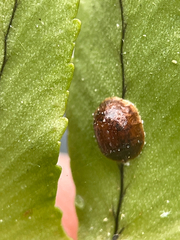 Hemispherical ScaleSaissetia coffeaeDamages trees, gardens or crops
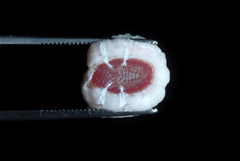 Indian Wax ScaleCeroplastes ceriferusDamages trees, gardens or crops
 European Fruit ScaleParthenolecanium corniCan spread germs or disease
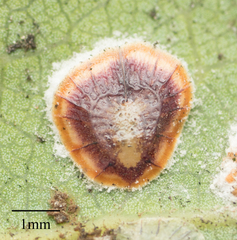 Pyriform ScaleProtopulvinaria pyriformisDamages trees, gardens or crops
 Cottony Maple ScaleNeopulvinaria innumerabilisDamages trees, gardens or crops
Sources
- Wikipedia: https://en.wikipedia.org/wiki/Eulecanium_cerasorum
Look it up elsewhere: GBIF · iNaturalist · BugGuide · Wikipedia
Text written 2026-10-28 from the sources above and checked sentence by sentence against them. Data fetched 2026-10-28.