 Bug FAQ
Brown Soft Scale
Coccus hesperidum · Order: Hemiptera · Family: Coccidae
Also called: Soft Brown Scale, Soft scale
Source: Wikipedia

Adult females are oval, dome-shaped and about 3 to 5 mm long, colored pale yellow-brown with irregular brown speckles that darken with age. The insect feeds by sucking large amounts of sap from many host plants, and a generation can be completed in roughly two months, allowing several generations per year. It is a worldwide agricultural pest, especially of citrus and commercial greenhouse crops, and the honeydew it excretes promotes sooty mould.
Source: Wikipedia
How to recognize it
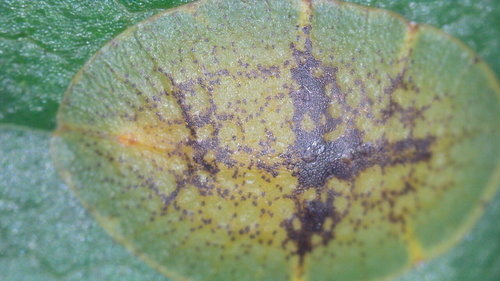
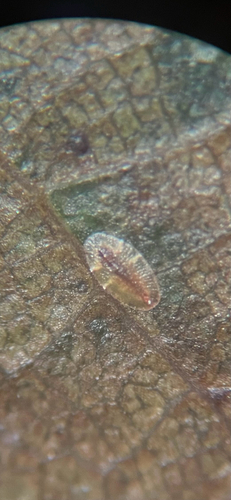
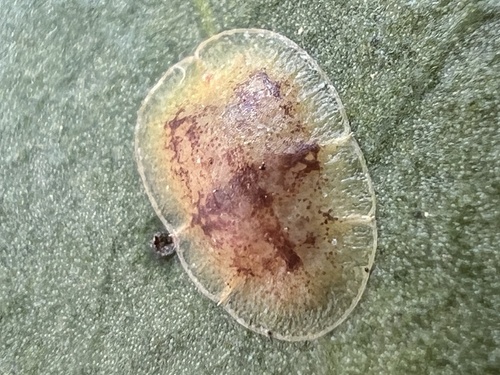
Its colour is pale yellow-brown or greenish-brown with irregular brown speckles, darkening as it ages.
Source: Wikipedia
Size
Adult females are about 3 to 5 mm long and have an oval, dome-shaped body.
Source: Wikipedia
Is it a pest in the house?
The main problem for plants is the growth of sooty mould on the honeydew the insects excrete.
Source: Wikipedia
How to get rid of it
- Traditional control uses pesticides, though these can also kill beneficial insects.
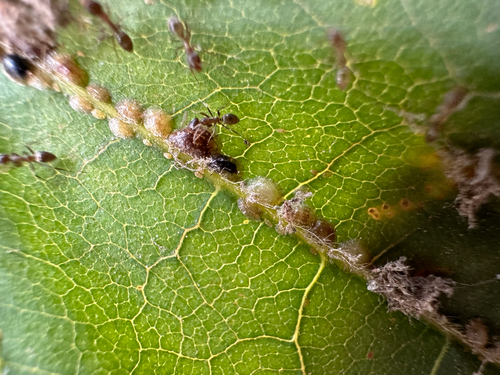
- In citrus orchards, removing ants from tree trunks or destroying ant nests helps reduce scale numbers.
Source: Wikipedia
Where it lives
It has a cosmopolitan distribution and lives on many different host plants.
Source: Wikipedia
What it eats
It pierces plant tissue and sucks large quantities of sap.
Source: Wikipedia
Life cycle
Females give birth to live young and mostly reproduce without mating. A generation takes about two months, and depending on temperature there can be three to seven generations each year.
Source: Wikipedia
Where it comes from
It is found worldwide.
Source: Wikipedia
Lookalikes
Male brown soft scales are rarely seen, so they are not often confused with other insects.
Source: Wikipedia
Where it is found in the US
Recorded in 25 of 51 states and DC. Most records: California, Kansas, New Jersey, Oregon, Texas, New York, Ohio, Illinois.
Darker = more records. Counts are museum and citizen-science records, not population size.
Source: GBIF
Months it is reported in the US
Source: GBIF
More photos
Questions people ask
How can I control brown soft scale?
Use pesticides carefully, and in citrus trees remove ants from trunks or destroy their nests to lower scale populations.
Source: Wikipedia
What does brown soft scale look like?
Adult females are oval, dome-shaped, 3 to 5 mm long, and pale yellow-brown with irregular brown speckles that darken with age.
Source: Wikipedia
How many generations does brown soft scale have per year?
A generation takes about two months, so depending on temperature there can be three to seven generations annually.
Source: Wikipedia
Why does brown soft scale cause sooty mould?
The insects excrete honeydew, and the mould grows on this sugary coating.
Source: Wikipedia
Same family (Coccidae)
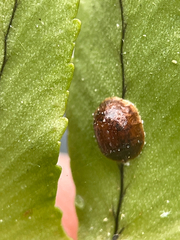 Hemispherical ScaleSaissetia coffeaeDamages trees, gardens or crops
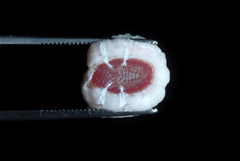 Indian Wax ScaleCeroplastes ceriferusDamages trees, gardens or crops
 European Fruit ScaleParthenolecanium corniCan spread germs or disease
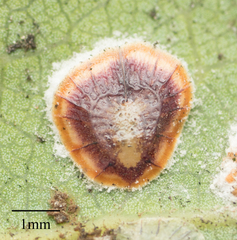 Pyriform ScaleProtopulvinaria pyriformisDamages trees, gardens or crops
 Cottony Maple ScaleNeopulvinaria innumerabilisDamages trees, gardens or crops
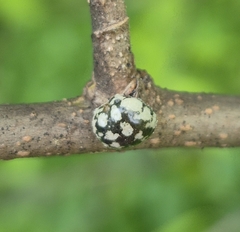 Calico scaleEulecanium cerasorum
Sources
- Wikipedia: https://en.wikipedia.org/wiki/Coccus_hesperidum
Look it up elsewhere: GBIF · iNaturalist · BugGuide · ITIS · Wikipedia
Text written 2026-10-29 from the sources above and checked sentence by sentence against them. Data fetched 2026-10-29.