 Bug FAQ
Hemispherical Scale
Saissetia coffeae · Order: Hemiptera · Family: Coccidae
Also called: brown scale, hemisphaerical scale
Source: Wikipedia
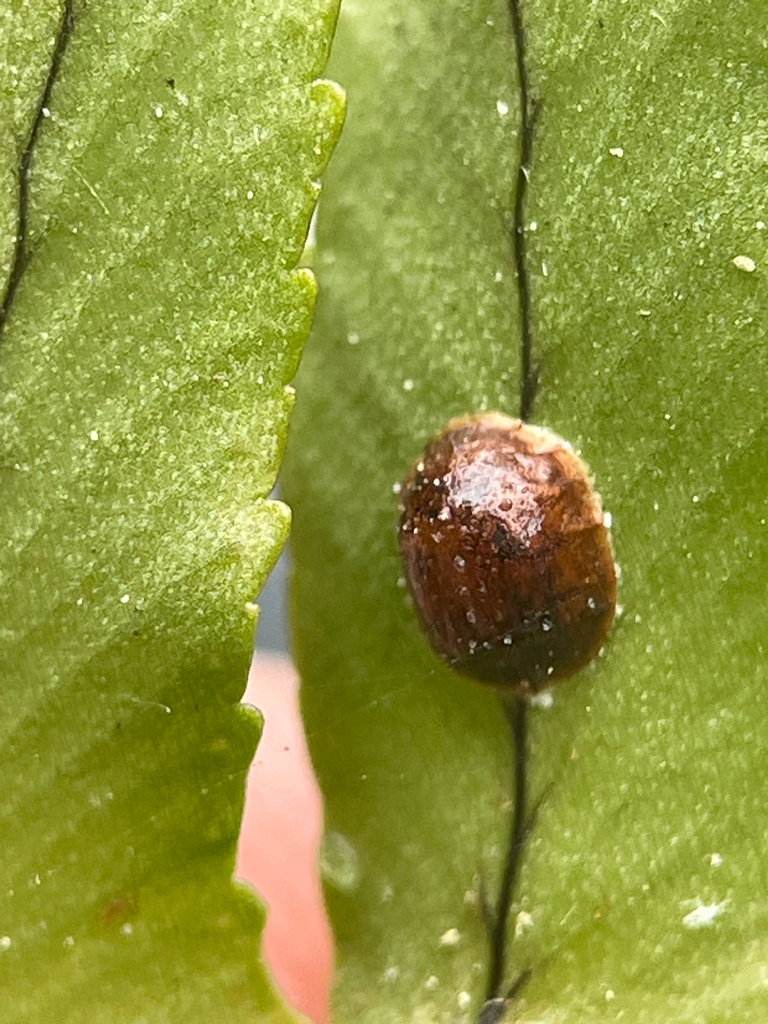
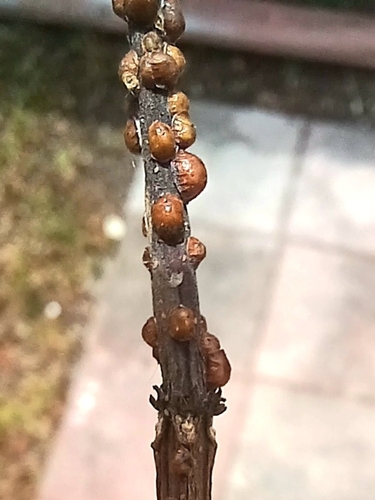
The adult hemispherical scale is a smooth, shiny brown dome about 2 to 4.5 mm across that clings tightly to stems, leaves or fruit. It feeds by piercing plant tissue and sucking sap, which can cause leaf drop, stunted shoots and heavy honeydew that encourages sooty mould on many crops.
Source: Wikipedia
How to recognize it
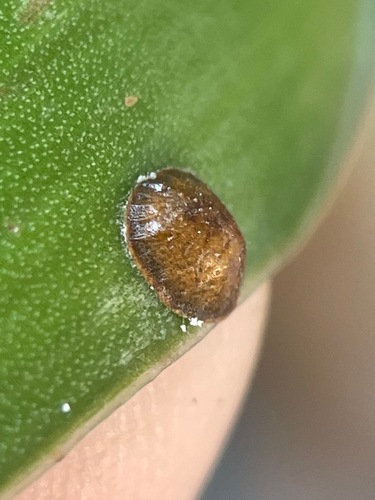
Adults look like tiny metallic helmets that are smooth, shiny and brown, pressed flat against the plant surface. Young scales may show a faint ridged pattern that can form an H-shaped mark.
Source: Wikipedia
Size
Adults range from about 2 mm to 4.5 mm in diameter, depending on the host plant.
Source: Wikipedia
Is it a pest in the house?
Heavy infestations produce large amounts of honeydew, encouraging sooty mould and causing leaf loss and stunted growth on host plants.
Source: Wikipedia
How to get rid of it
- Ants may protect the scales by feeding on their honeydew, reducing natural enemy effectiveness.
- Parasitoid wasps introduced for related scale species can attack hemispherical scale populations.
Source: Wikipedia
Where it lives
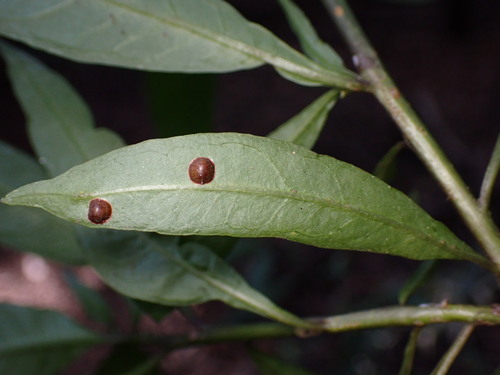
It lives on the stems, leaves and fruits of many plants, including coffee, tea, sugar apple, pumpkin, greenhouse crops and ornamental shrubs.
Source: Wikipedia
What it eats
The scale has no legs and feeds by inserting its mouthparts into plant tissue to suck sap.
Source: Wikipedia
Life cycle
All individuals are female and reproduce without mating (parthenogenesis). Development from egg to adult takes at least forty days, allowing several generations each year.
Source: Wikipedia
Where it is found in the US
Recorded in 26 of 51 states and DC. Most records: California, Mississippi, Florida, Hawaii, Massachusetts, New York, Maryland, Georgia.
Darker = more records. Counts are museum and citizen-science records, not population size.
Source: GBIF
Months it is reported in the US
Source: GBIF
More photos
Questions people ask
How can I control hemispherical scale infestations?
Encourage natural parasitoid wasps and manage ant populations that protect the scales.
Source: Wikipedia
What damage does hemispherical scale cause to my garden?
It feeds on sap, causing leaf drop, stunted shoots, and produces honeydew that leads to sooty mould on plants.
Source: Wikipedia
Sources
- Wikipedia: https://en.wikipedia.org/wiki/Saissetia_coffeae
Look it up elsewhere: GBIF · iNaturalist · BugGuide · ITIS · Wikipedia
Text written 2026-10-27 from the sources above and checked sentence by sentence against them. Data fetched 2026-10-27.