 Bug FAQ
Indian Wax Scale
Ceroplastes ceriferus · Order: Hemiptera · Family: Coccidae
Also called: Scale insect
Source: Wikipedia
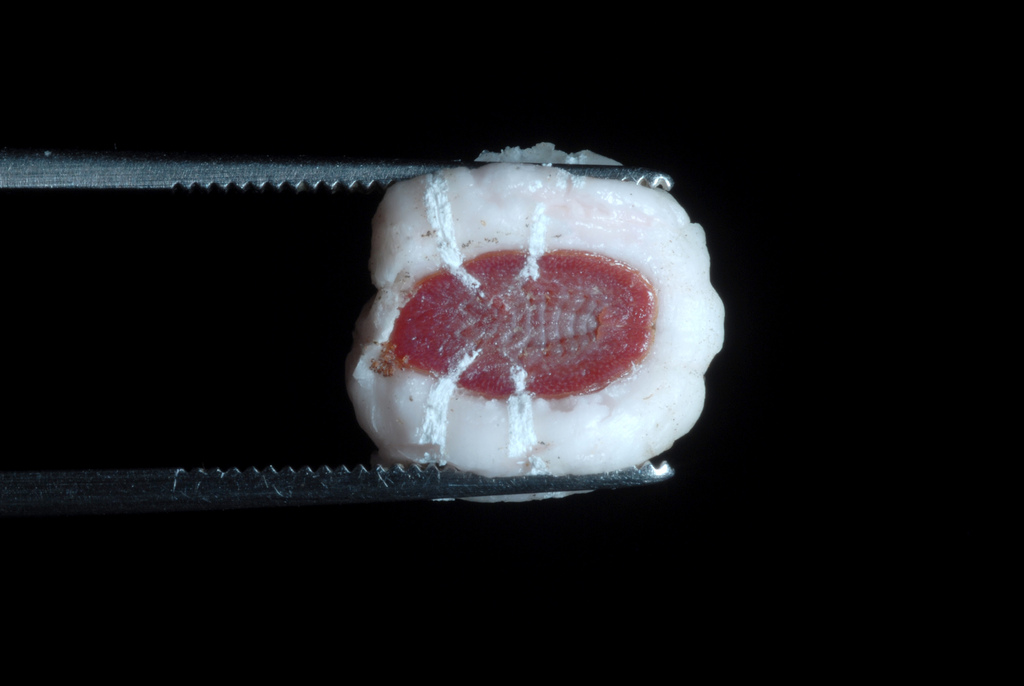
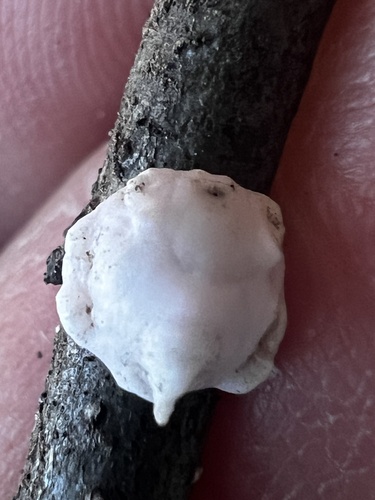
Adult Indian wax scale insects are covered by a convex wax shield that is white when young and turns pinkish with age, and they have a forward-pointing wax horn with daisy-like filaments around the edge. They feed on the sap of a very wide range of host plants to recorded on 108 genera in 60 families to and their feeding can weaken and kill foliage.
Source: Wikipedia
How to recognize it
Adults have a forward-pointing wax horn and filaments around the margin of the scale, giving a daisy-like look.
Source: Wikipedia
Is it a pest in the house?
The scale can be found on branches, twigs and foliage of plants in and around homes. Feeding causes lack of vigor, wilting, leaf drop and dieback of the plant.
Source: Wikipedia
Where it lives
Indian wax scale feeds on many different plants, being polyphagous. It has been recorded on plants in 108 genera across 60 families.
Source: Wikipedia
What it eats
It sucks sap from its host plant.
Source: Wikipedia
Life cycle
In many populations only females occur and they reproduce without mating (parthenogenesis).
Source: Wikipedia
Where it is found in the US
Recorded in 16 of 51 states and DC. Most records: Maryland, Virginia, New Jersey, North Carolina, New York, Pennsylvania, South Carolina, Delaware.
Darker = more records. Counts are museum and citizen-science records, not population size.
Source: GBIF
Months it is reported in the US
Source: GBIF
More photos
Questions people ask
How does Indian wax scale damage plants?
It feeds on plant sap, which weakens the plant and leads to wilting, leaf loss and dieback.
Source: Wikipedia
What does the wax covering look like?
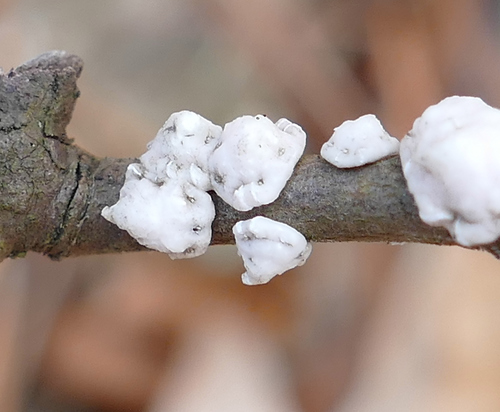
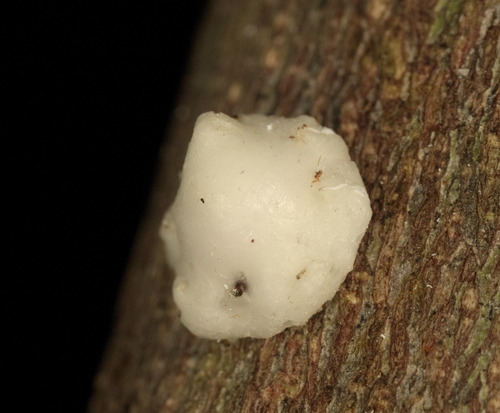
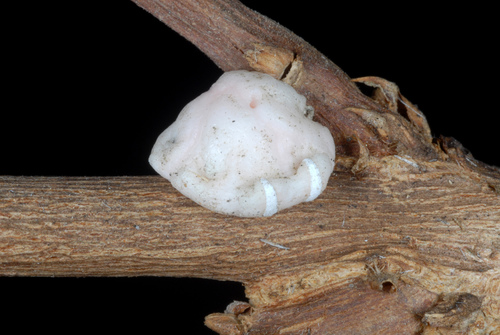
Young insects have a white wax shield that turns pinkish as they age, and adults show a forward-pointing wax horn with daisy-like filaments.
Source: Wikipedia
Where is Indian wax scale originally from?
It originates from southern Asia and has spread worldwide.
Source: Wikipedia
Same family (Coccidae)
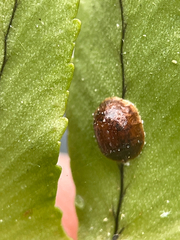 Hemispherical ScaleSaissetia coffeaeDamages trees, gardens or crops
 European Fruit ScaleParthenolecanium corniCan spread germs or disease
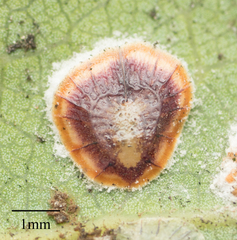 Pyriform ScaleProtopulvinaria pyriformisDamages trees, gardens or crops
 Cottony Maple ScaleNeopulvinaria innumerabilisDamages trees, gardens or crops
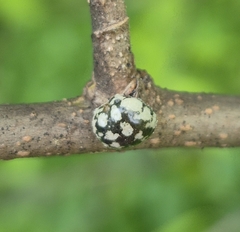 Calico scaleEulecanium cerasorum
Sources
- Wikipedia: https://en.wikipedia.org/wiki/Ceroplastes_ceriferus
Look it up elsewhere: GBIF · iNaturalist · BugGuide · Wikipedia
Text written 2026-10-27 from the sources above and checked sentence by sentence against them. Data fetched 2026-10-27.