 Bug FAQ
Calico Pennant
Celithemis elisa · Order: Odonata · Family: Libellulidae
Also called: Elisa Skimmer
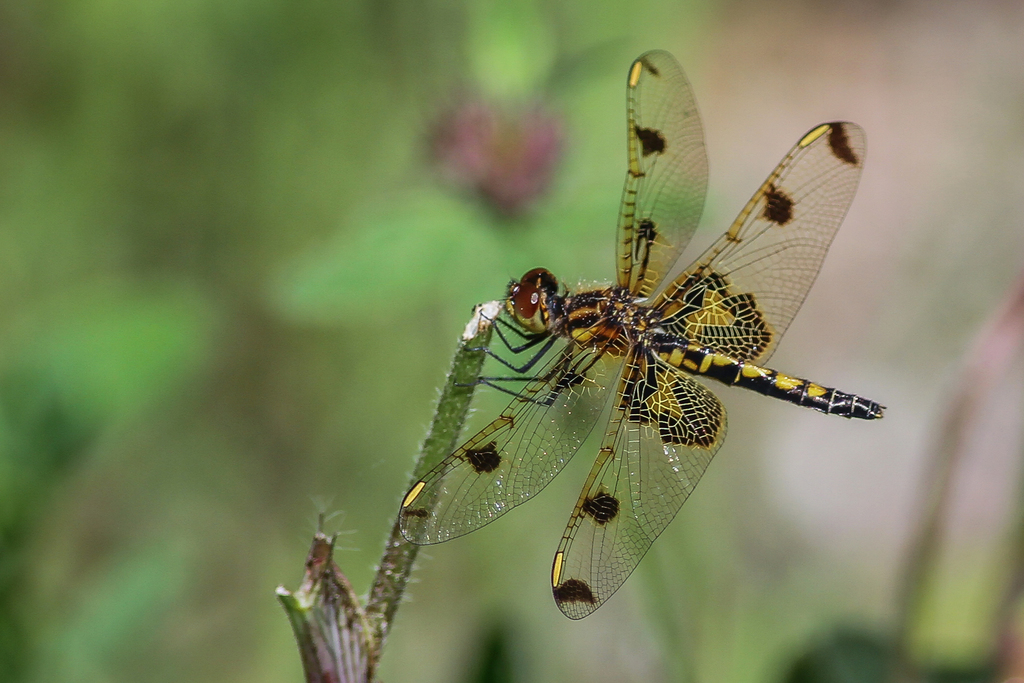
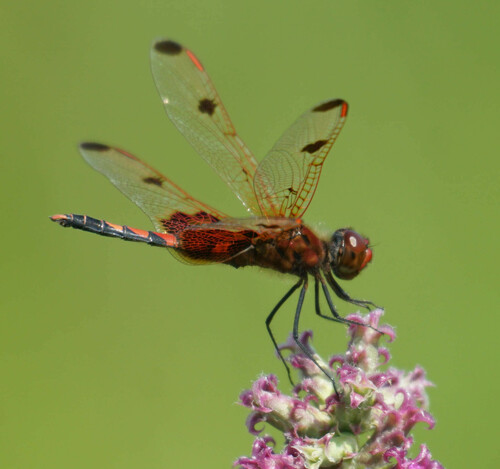
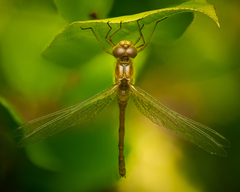
The calico pennant is a small dragonfly about 2.4 to 3.4 cm long with hindwings 2.5 to 3.0 cm long. It lives near calm water surrounded by vegetation and is native to eastern Canada and the eastern United States. Young individuals have yellow wing spots and pterostigma, which turn red in older ones; the face and thorax also change color with age (-).
Source: Wikipedia
How to recognize it
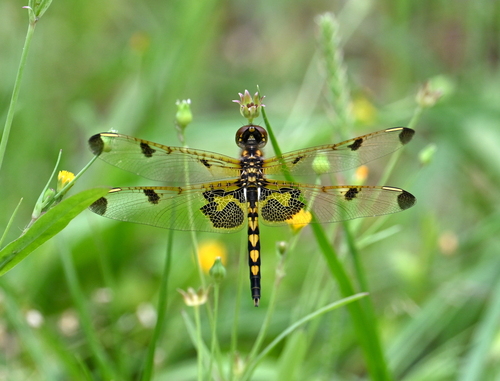
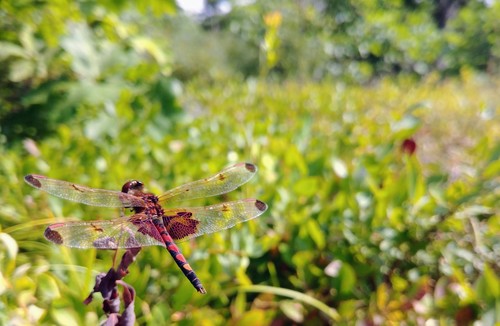
The pterostigma is yellow when young and red when older. The face is yellow in younger bugs and turns red in older males. The abdomen is dark with lighter markings.
Source: Wikipedia
Size
Body length ranges from 24 to 34 mm; hindwing length is 25 to 30 mm.
Source: Wikipedia
Where it lives
It inhabits calm water bodies surrounded by vegetation.
Source: Wikipedia
What it eats
Larvae feed on small aquatic invertebrates such as water fleas and midges.
Source: Wikipedia
Where it comes from
It is native to eastern Canada and the eastern United States.
Source: Wikipedia
Where it is found in the US
Recorded in 39 of 51 states and DC. Most records: Ohio, New Jersey, Michigan, Massachusetts, Texas, Virginia, Maine, Wisconsin.
Darker = more records. Counts are museum and citizen-science records, not population size.
Source: GBIF
Status: native in North America; native in Canada; native in United States. Source: iNaturalist
Months it is reported in the US
Source: GBIF
More photos
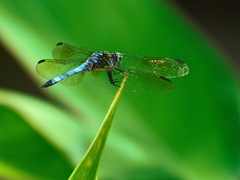
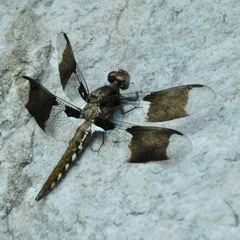
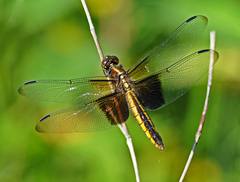
Same family (Libellulidae)


Sources
- Wikipedia: https://en.wikipedia.org/wiki/Celithemis_elisa
Look it up elsewhere: GBIF · iNaturalist · BugGuide · ITIS · Wikipedia
Text written 2026-10-22 from the sources above and checked sentence by sentence against them. Data fetched 2026-10-22.