 Bug FAQ
Buttercup Oil Beetle
Meloe americanus · Order: Coleoptera · Family: Meloidae
Also called: American Oil Beetle
Source: Wikipedia
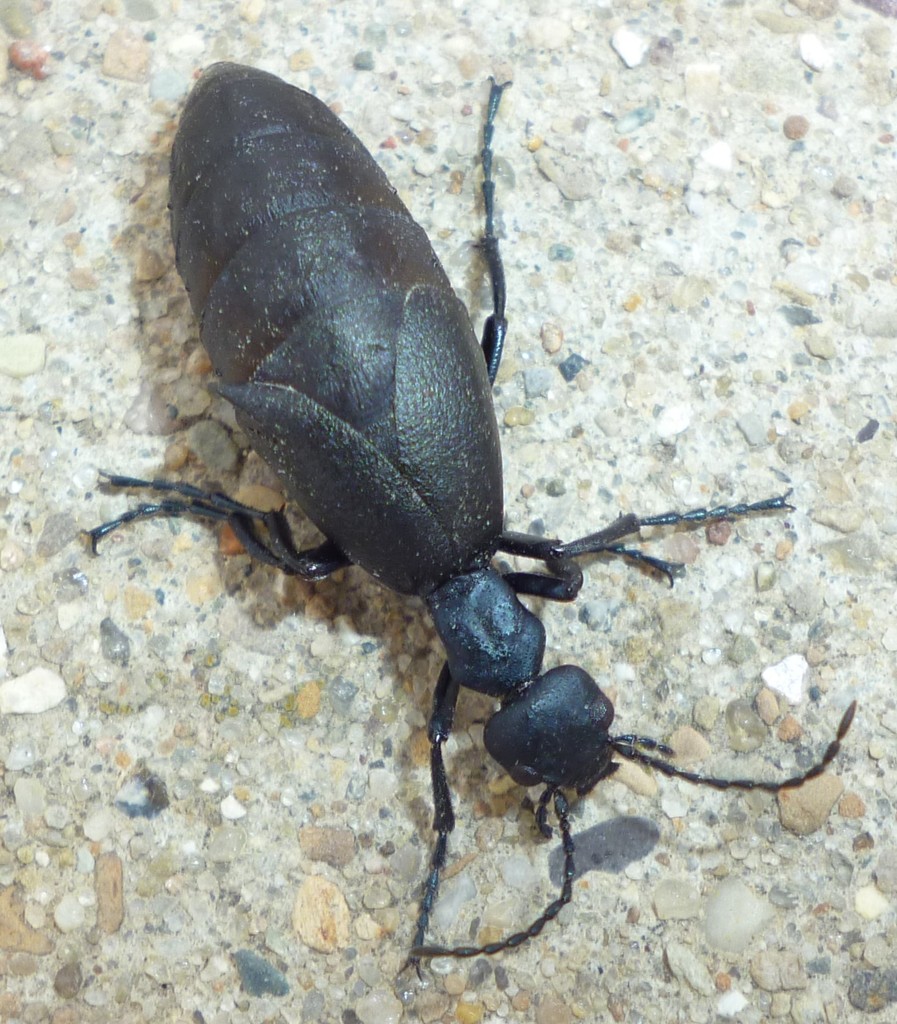
Adult buttercup oil beetles are 7 to 17 mm long, soft-bodied, long-legged, and entirely black with a possible blue metallic sheen. They live in mesic, temperate lowland areas such as farms, woodlands, and grassy fields across the northeastern, central, and southern United States. Adults eat plants, while the first-instar larvae are mobile parasites that feed on other insects and can release a toxic fluid when threatened.
Source: Wikipedia
How to recognize it
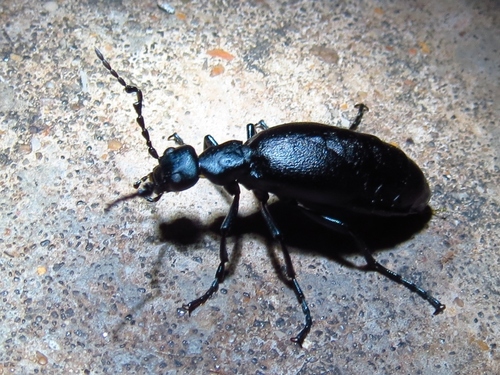
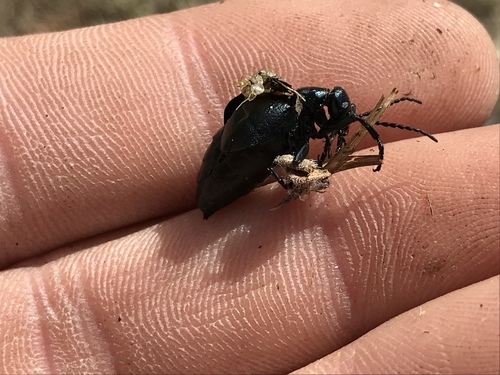
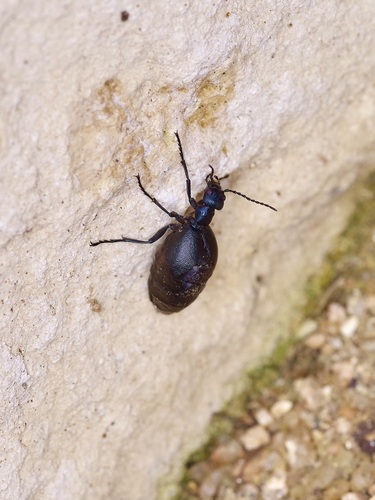
They are completely black and may show a blue metallic hue.
Source: Wikipedia
Size
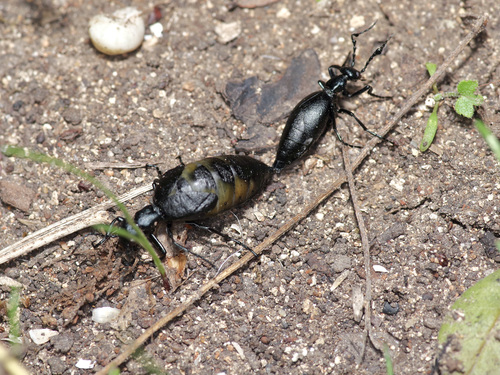
Adults range from 7 mm to 17 mm in length. Females are generally larger than males, but both sexes look alike.
Source: Wikipedia
Can it bite, sting or make you sick?
When disturbed they release a fluid that is toxic and can be lethal to mammals. The first-instar larvae are mobile parasites that use phoresy to reach hosts.
Source: Wikipedia
Where it lives
They prefer moist, temperate habitats. You can find them in lowland farms, woodlands, and open grassy areas.
Source: Wikipedia
What it eats
Adult beetles feed on plants. The larvae feed on other insects.
Source: Wikipedia
Life cycle
Their development includes nine instars covering larval, pupal, and adult stages. Larvae develop inside bee cells for 60 to 90 days.
Source: Wikipedia
When you see it
Adults become active from late autumn into early winter. Their appearance timing depends on temperature.
Source: Wikipedia
Where it comes from
They are native to the northeastern United States. They also occur in central and southern states, including Mississippi, Louisiana, and Alabama.
Source: Wikipedia
Where it is found in the US
Recorded in 31 of 51 states and DC. Most records: Texas, Georgia, North Carolina, Ohio, Tennessee, Alabama, Oklahoma, Indiana.
Darker = more records. Counts are museum and citizen-science records, not population size.
Source: GBIF
Status: native in North America; native in Canada. Source: iNaturalist
Months it is reported in the US
Source: GBIF
More photos
Questions people ask
When are buttercup oil beetles active?
Adults appear in late autumn and stay active into early winter, with timing linked to temperature.
Source: Wikipedia
What do the larvae feed on?
The first-instar larvae are parasitic and feed on other insects.
Source: Wikipedia
Same family (Meloidae)




Sources
- Wikipedia: https://en.wikipedia.org/wiki/Meloe_americanus
Look it up elsewhere: GBIF · iNaturalist · BugGuide · ITIS · Wikipedia
Text written 2026-10-25 from the sources above and checked sentence by sentence against them. Data fetched 2026-10-25.