 Bug FAQ
Brown Ringlet
Hypocysta metirius · Order: Lepidoptera · Family: Nymphalidae
Also called: Common Brown Ringlet
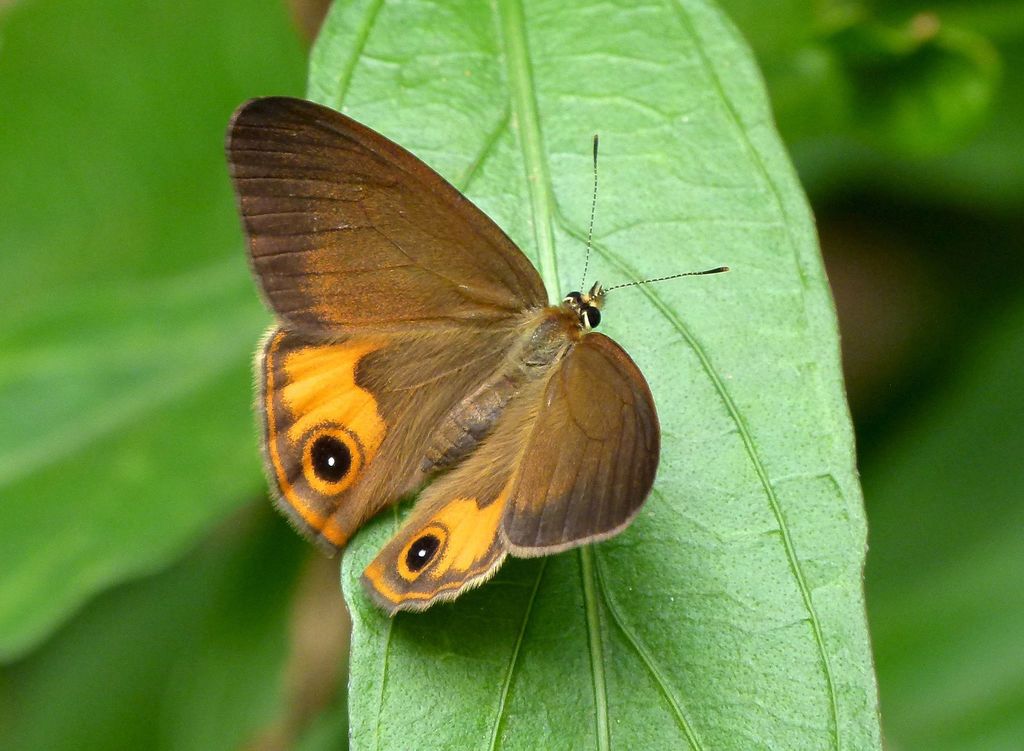
The common brown ringlet has a wingspan of about 31 mm for both males and females. It lives in tall open-forest edges and rainforest margins, and can also be seen in coastal heath-woodland in southern New South Wales.
Source: Wikipedia
How to recognize it
Adults are brown with an orange patch on the hindwing that contains an eyespot. The underside of the hindwing shows two eyespots and often a silver spot between them.
Source: Wikipedia
Size
Both male and female have a wingspan of roughly 31 mm.
Source: Wikipedia
Where it lives
In southern New South Wales they also occur in coastal heath-woodland.
Source: Wikipedia
What it eats
Larvae feed on grasses in the Poaceae family such as Cynodon dactylon, Eriachne pallescens and Alexfloydia repens.
Source: Wikipedia
Life cycle
Hypocysta metirius is a butterfly belonging to the family Nymphalidae.
Source: Wikipedia
Questions people ask
What do the caterpillars of the brown ringlet eat?
They feed on grasses such as Cynodon dactylon, Eriachne pallescens and Alexfloydia repens.
Source: Wikipedia
Where can I see the common brown ringlet?
Look for them in tall open-forest edges, rainforest margins and coastal heath-woodland along the east coast of Australia.
Source: Wikipedia
How big is the brown ringlet butterfly?
Both males and females have a wingspan of about 31 mm.
Source: Wikipedia
What does the brown ringlet look like?
It is brown with an orange patch on the hindwing that has an eyespot, and the underside shows two eyespots with a possible silver spot between them.
Source: Wikipedia
Same family (Nymphalidae)






Sources
- Wikipedia: https://en.wikipedia.org/wiki/Hypocysta_metirius
Look it up elsewhere: GBIF · iNaturalist · BugGuide · Wikipedia
Text written 2026-10-22 from the sources above and checked sentence by sentence against them. Data fetched 2026-10-22.