 Bug FAQ
Brown Hawker
Aeshna grandis · Order: Odonata · Family: Aeshnidae
Also called: Brown Aeshna, Brown Hawker Dragonfly
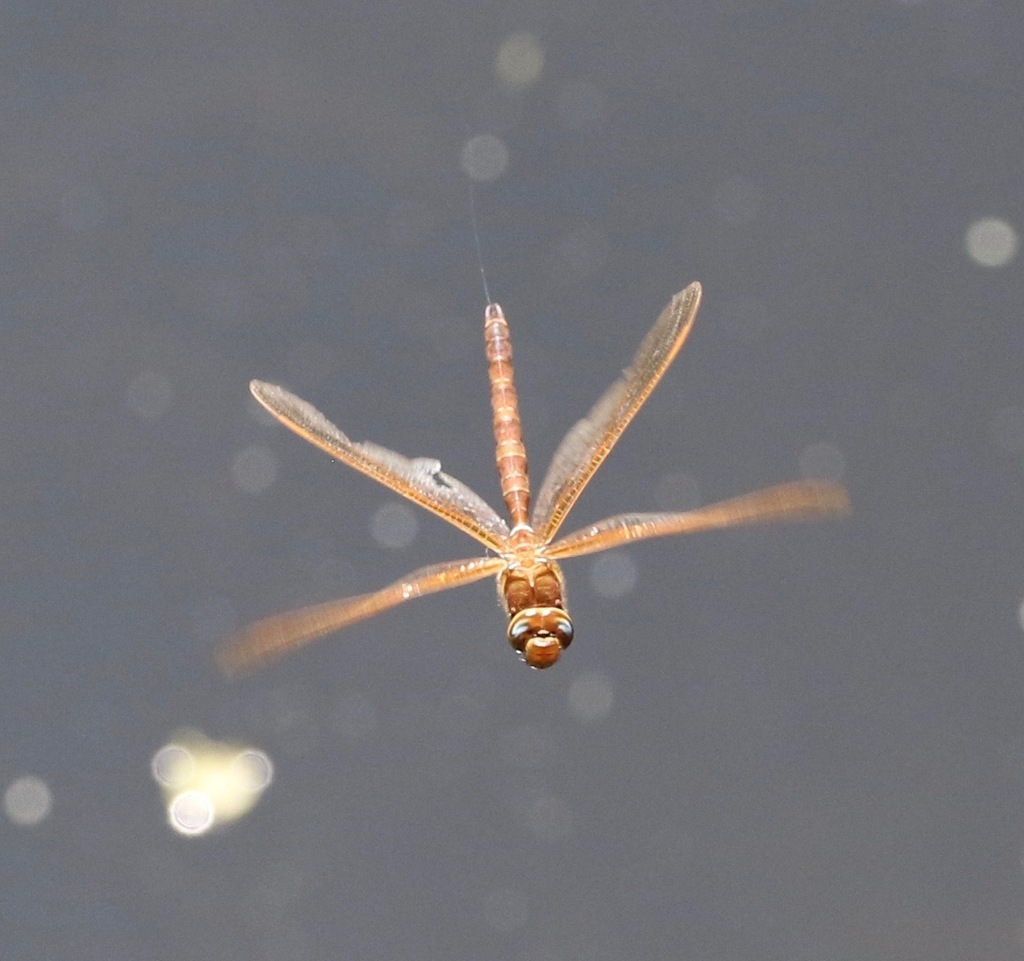
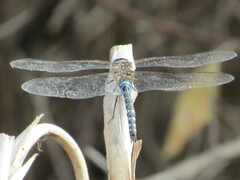
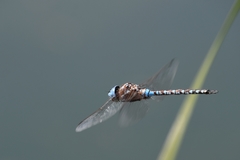
The brown hawker is a large dragonfly about 73 mm long, with a brown body marked by yellow stripes and brown-tinged wings; males show small blue and yellow spots and a noticeable waist, while females have only small yellow markings. It lives near slow-moving or still waters such as lakes, ponds, canals and ditches, especially where forest or woodland is present, and flies from May through September in Great Britain.
Source: Wikipedia
How to recognize it
The dragonfly’s body is brown with yellow thoracic stripes, and its wings have a brown tint; males have tiny blue and yellow spots and a narrowed waist, while females have only small yellow spots.
Source: Wikipedia
Size
Adults measure about 73 mm (2.9 in) in body length, making them large for dragonflies.
Source: Wikipedia
Where it lives
It prefers slow-flowing or standing water bodies like large pools, lakes, fens, oxbows, canals, ponds, ditches, reservoirs and peat diggings, and is closely associated with forested areas.
Source: Wikipedia
When you see it
In Great Britain the main flight period runs from May to September.
Source: Wikipedia
Where it comes from
The species occurs across Europe and temperate parts of Asia, but not in the far east of Asia.
Source: Wikipedia
More photos


Same family (Aeshnidae)
Sources
- Wikipedia: https://en.wikipedia.org/wiki/Brown_hawker
Look it up elsewhere: GBIF · iNaturalist · BugGuide · Wikipedia
Text written 2026-10-22 from the sources above and checked sentence by sentence against them. Data fetched 2026-10-22.