 Bug FAQ
Bright Babul Blue
Azanus ubaldus · Order: Lepidoptera · Family: Lycaenidae
Also called: Desert babul blue, Velvet-spotted Babul Blue
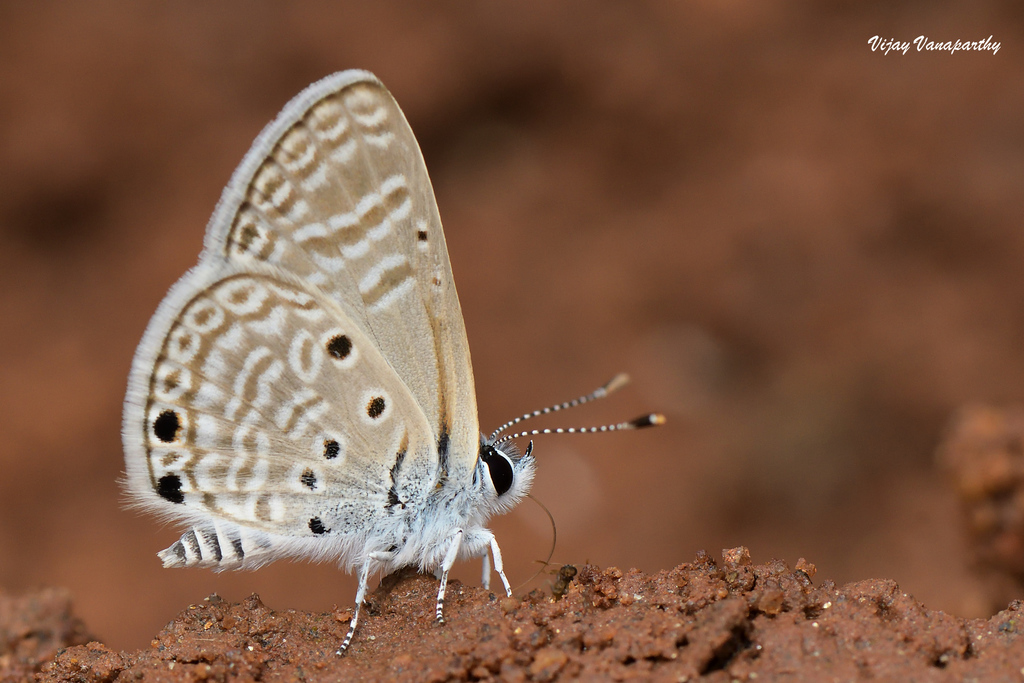
Males have a brownish-purple upperside with dark blue near the wing bases, while females are a rich silky brown. This butterfly occurs across India, the Middle East and Africa. Individuals can look quite different in colour compared with similar butterflies from other parts of South Africa.
Source: Wikipedia
How to recognize it
Males show brownish-purple on the upper side with dark blue at the wing base. Females have a rich silky brown upperside.
Source: Wikipedia
Where it comes from
Its native range includes India, the Middle East and Africa.
Source: Wikipedia
Lookalikes
Colouration varies noticeably compared with specimens from other South African regions such as Witsand.
Source: Wikipedia
Same family (Lycaenidae)





Sources
- Wikipedia: https://en.wikipedia.org/wiki/Azanus_ubaldus
Look it up elsewhere: GBIF · iNaturalist · BugGuide · Wikipedia
Text written 2026-10-23 from the sources above and checked sentence by sentence against them. Data fetched 2026-10-23.