 Bug FAQ
Breastplated Pleasing Fungus Beetle
Triplax thoracica · Order: Coleoptera · Family: Erotylidae
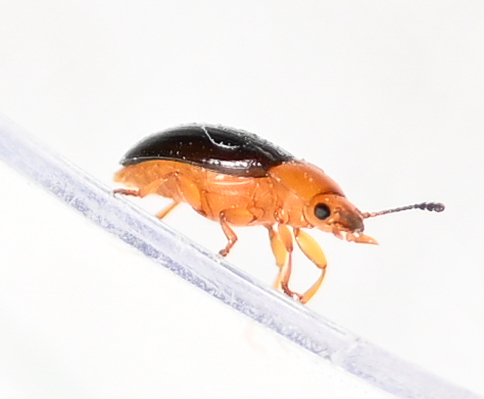
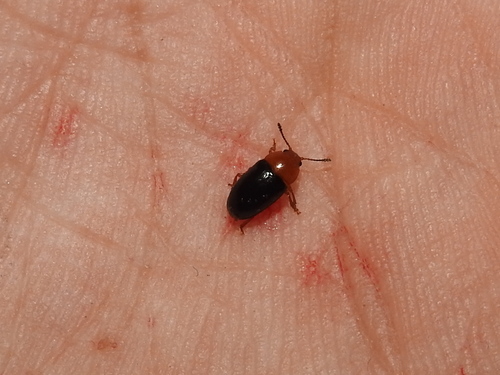
They have a reddish-orange head and pronotum with black elytra, a dark-brown scutellum that looks black, and orange legs and antenna bases. The species is native to North America and belongs to the subfamily Tritominae (or tribe Tritomini of Erotylinae) within the pleasing fungus beetles.
Source: Wikipedia
How to recognize it
The scutellum is dark brown and appears black like the elytra up close. Legs and the bases of the antennae are orange, the forehead lacks a distinct margin and forms a rounded angle toward the mouth, and the antennae darken toward the clubbed tips. It differs from the similar T.frosti by having smaller punctures scattered among the larger elytral puncture lines and a scutellum that matches the elytra in color.
Source: Wikipedia
Where it lives
It is placed in the subfamily Tritominae (formerly Triplacinae) or, in broader classifications, in the tribe Tritomini of the Erotylinae.
Source: Wikipedia
Where it comes from
Triplax thoracica is a North American species of pleasing fungus beetle.
Source: Wikipedia
Lookalikes
It can be told apart from most relatives by its all-orange underside, lack of a distinct elytral base margin, and expanded maxillary palps.
Source: Wikipedia
Where it is found in the US
Recorded in 23 of 51 states and DC. Most records: Kansas, Michigan, Kentucky, New York, Vermont, Pennsylvania, Georgia, Ohio.
Darker = more records. Counts are museum and citizen-science records, not population size.
Source: GBIF
Months it is reported in the US
Source: GBIF
More photos
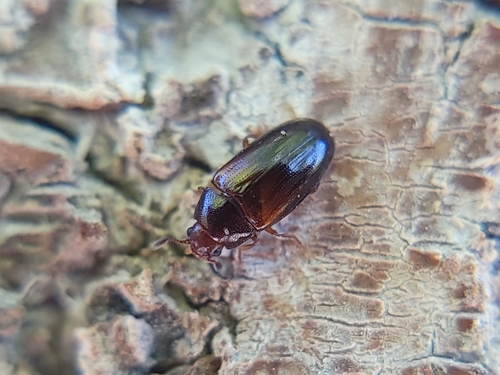
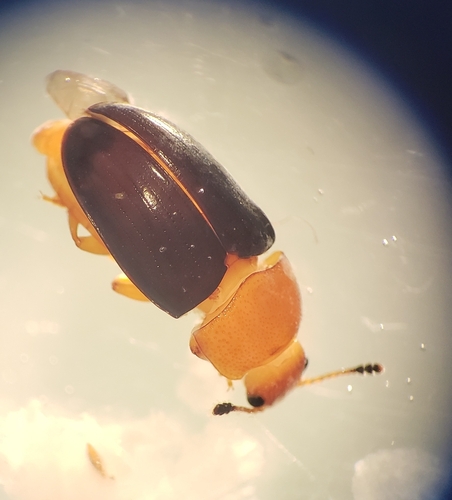
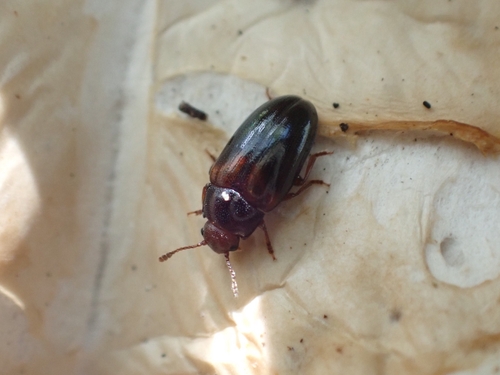
Same family (Erotylidae)
 Blue Fungus BeetleGibbifer californicus
 Pleasing Fungus BeetleMegalodacne heros
 Red-banded Fungus BeetleMegalodacne fasciata
 Four-spotted Fungus BeetleIschyrus quadripunctatus
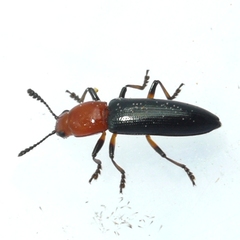 Clover Stem BorerLanguria mozardiDamages trees, gardens or crops
 Slender Lizard BeetleAcropteroxys gracilisDamages trees, gardens or crops
Sources
- Wikipedia: https://en.wikipedia.org/wiki/Triplax_thoracica
Look it up elsewhere: GBIF · iNaturalist · BugGuide · ITIS · Wikipedia
Text written 2026-10-27 from the sources above and checked sentence by sentence against them. Data fetched 2026-10-27.