 Bug FAQ
Brazilian Robust-Stingless bee
Scaptotrigona postica · Order: Hymenoptera · Family: Apidae
Also called: Yellow-haired Robust-Stingless bee
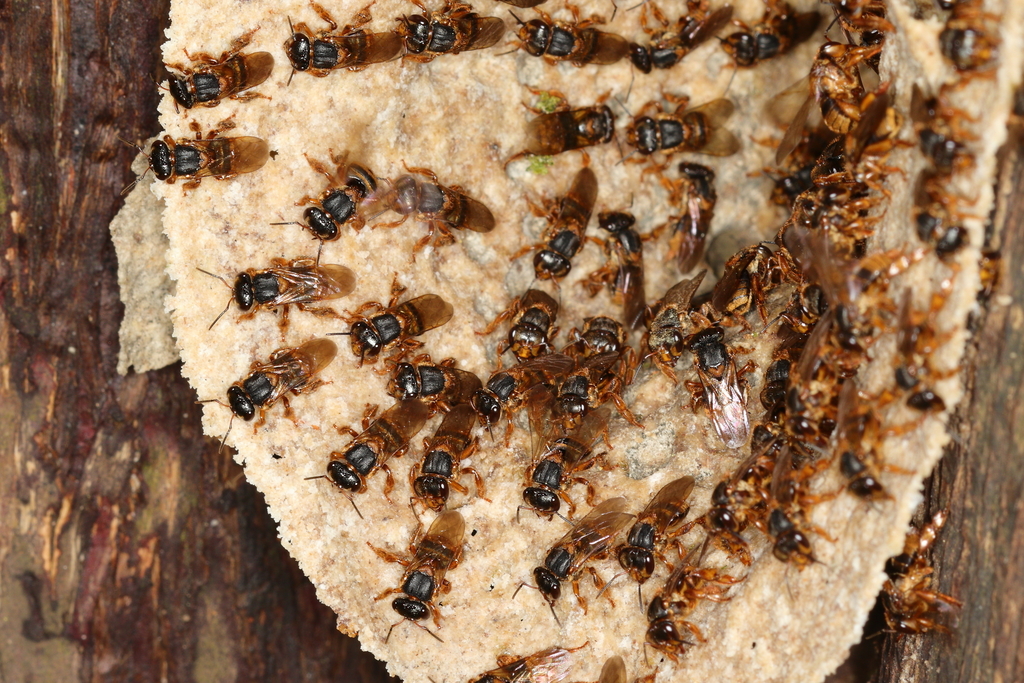
Scaptotrigona postica builds nests in hollow tree trunks in Brazil’s tropical rainforests and also occurs in Peru. Guard bees have no stinger but will bite intruders, even trying to enter ears or noses. Workers live about a month, while queens can survive for several years.
Source: Wikipedia
How to recognize it
These bees belong to a tribe that lacks stingers, yet guard bees bite intruders as they signal the colony.
Source: Wikipedia
Does it bite or sting?
Guard bees bite intruders and may try to enter body openings such as ears or noses.
Source: Wikipedia
How to get rid of it
Fipronil, which blocks GABA receptors, is used to control them in Brazil. Imidacloprid is another widely applied insecticide against these bees.
Source: Wikipedia
Where it lives
Nests are made in hollow sections of tree trunks, providing a guarded entrance. They thrive in the dense tropical rainforests of southern, central-western, and northern Brazil.
Source: Wikipedia
What it eats
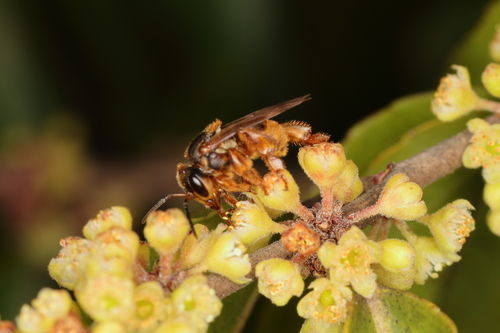
Workers use pheromones and scent trails to locate nectar and pollen while foraging in Brazilian rainforests.
Source: Wikipedia
Life cycle
Worker bees live roughly 30 to 40 days. Queens can live for multiple years, outlasting the workers.
Source: Wikipedia
Where it comes from
Found mainly in Brazil’s southern, central-western, and northern regions. Also recorded in Peru, though it is far less common there.
Source: Wikipedia
Lookalikes
Similar species include Scaptotrigona hellwegeri, S. mexicana, and S. pectoralis.
Source: Wikipedia
More photos
Questions people ask
How can I control them?
In Brazil, insecticides such as fipronil and imidacloprid are used to manage these bees.
Source: Wikipedia
Where are they found?
They are native to Brazil’s tropical rainforests and have also been recorded in Peru.
Source: Wikipedia
What do they eat?
Workers forage for nectar and pollen, using pheromones and scent trails to locate food in the rainforest.
Source: Wikipedia
Same family (Apidae)


Sources
- Wikipedia: https://en.wikipedia.org/wiki/Scaptotrigona_postica
Look it up elsewhere: GBIF · iNaturalist · BugGuide · ITIS · Wikipedia
Text written 2026-10-23 from the sources above and checked sentence by sentence against them. Data fetched 2026-10-23.