 Bug FAQ
Bog Fritillary
Boloria eunomia · Order: Lepidoptera · Family: Nymphalidae
Also called: Ocellate Bog Fritillary
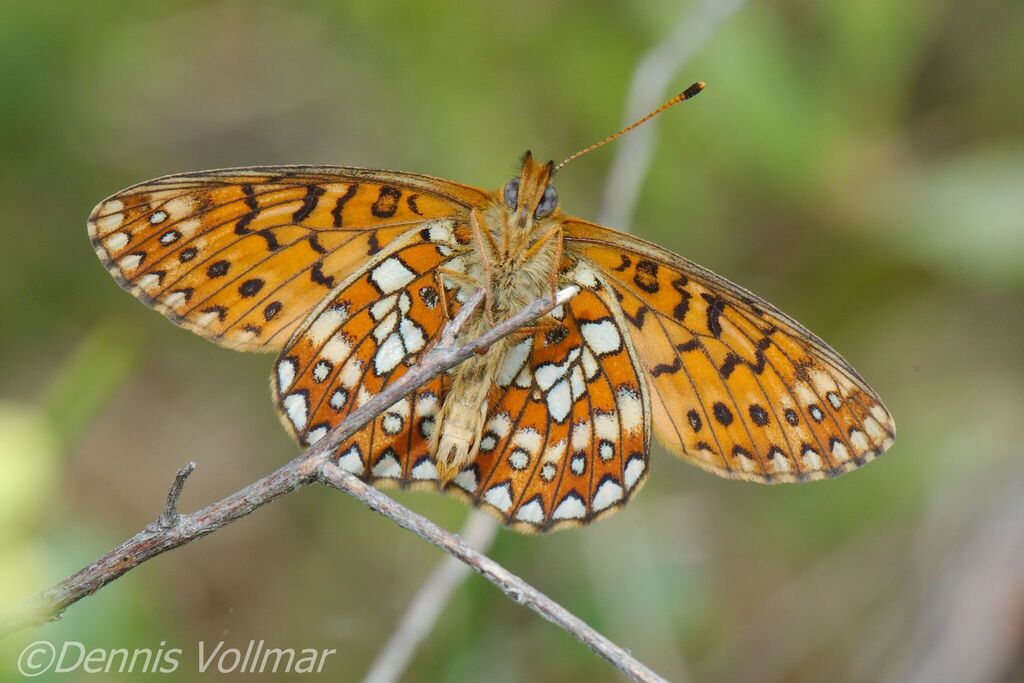
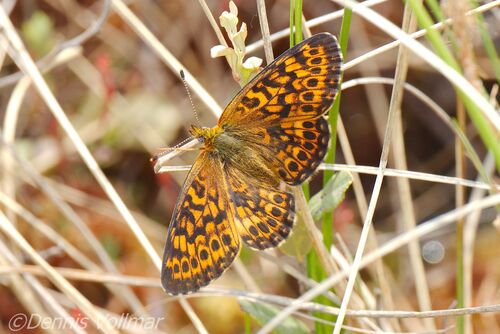
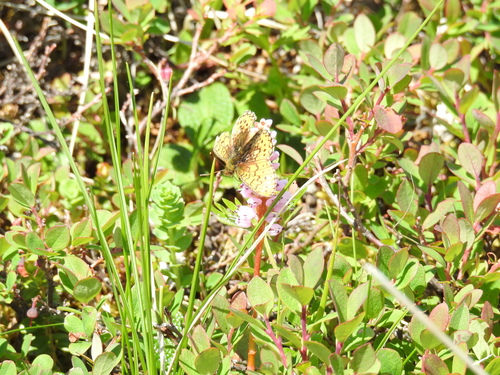
The Bog Fritillary has orange-brown wings with dark markings and a forewing length of 20 to 24 mm. It lives in moist acid bogs, tundra and willow seeps across the north-temperate Northern Hemisphere, including the Balkans and an isolated site in Serbia, and flies from late May to early August.
Source: Wikipedia
Size
Forewing length is about 20 to 24 mm.
Source: Wikipedia
Where it lives
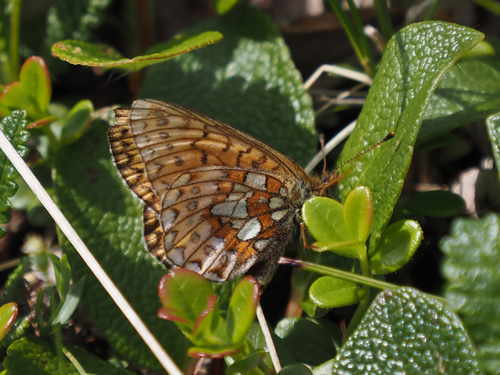
It lives in open, moist acid bogs, as well as moist tundra and willow seeps.
Source: Wikipedia
What it eats
Adults sip nectar from flowers such as Labrador tea and goldenrod. Caterpillars feed on Viola species and willows.
Source: Wikipedia
Life cycle
Eggs are laid in groups of two to four under the leaves of the host plant. In Colorado and Wyoming the caterpillars are reddish-brown with red spines, and the third or fourth instar hibernates.
Source: Wikipedia
Lookalikes
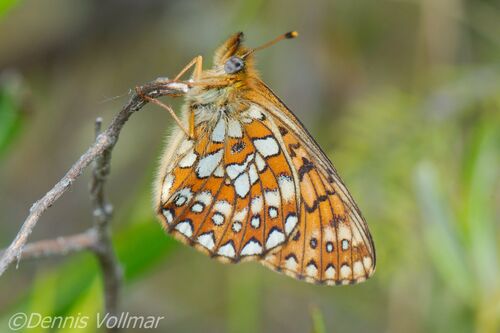
On the underside of the hindwing it is the only species with a row of silvery submarginal spots.
Source: Wikipedia
Where it is found in the US
Recorded in 11 of 51 states and DC. Most records: Alaska, Colorado, Wyoming, Montana, Maine, Michigan, New Hampshire, Wisconsin.
Darker = more records. Counts are museum and citizen-science records, not population size.
Source: GBIF
Status: native in North America; native in Canada. Source: iNaturalist
Months it is reported in the US
Source: GBIF
More photos
Questions people ask
When can I see Bog Fritillary butterflies?
They are on the wing from late May through early August.
Source: Wikipedia
What do the caterpillars eat?
Caterpillars feed on violet (Viola) species and willows.
Source: Wikipedia
Where does this butterfly live?
It inhabits moist acid bogs, tundra and willow seeps across the north-temperate Northern Hemisphere, including the Balkans and an isolated spot in Serbia.
Source: Wikipedia
How can I tell it apart from similar butterflies?
Look at the underside of the hindwing; it alone has a row of silvery spots near the margin.
Source: Wikipedia
Same family (Nymphalidae)






Sources
- Wikipedia: https://en.wikipedia.org/wiki/Boloria_eunomia
Look it up elsewhere: GBIF · iNaturalist · BugGuide · ITIS · Wikipedia
Text written 2026-10-24 from the sources above and checked sentence by sentence against them. Data fetched 2026-10-24.