 Bug FAQ
Blueberry Digger Bee
Habropoda laboriosa · Order: Hymenoptera · Family: Apidae
Also called: Southeastern Blueberry Bee, Southern Blueberry Bee
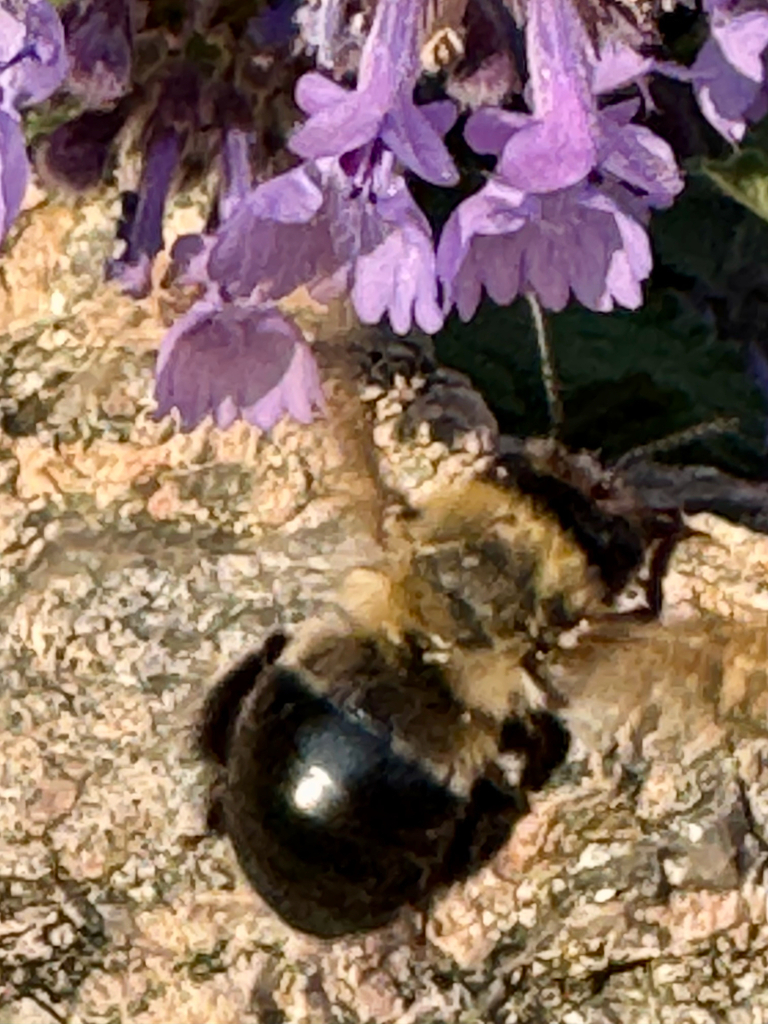
Females are about 15.5 to 16 mm long and males about 13 to 14 mm. They live in warm, humid eastern U.S. areas, nesting in dry leaf-litter soil near blueberry fields.
Source: Wikipedia
How to recognize it
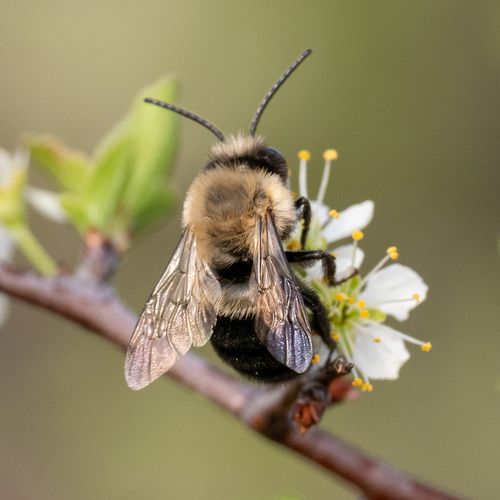
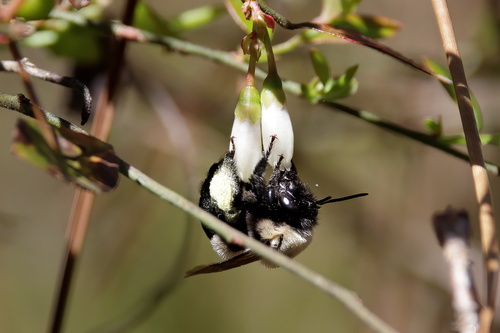
Female heads are all black, while males have a black head with a yellow clypeus.
Source: Wikipedia
Size
Females measure 15.5 to 16 mm and males 13 to 14 mm in length. They look like bumblebees but are noticeably smaller.
Source: Wikipedia
Is it a pest in the house?
If a nest is disturbed, the bees will abandon it and look for a new site.
Source: Wikipedia
Does it bite or sting?
The abdomen contains the sting among other organs.
Source: Wikipedia
How to get rid of it
When searching for new nests they prefer already-dug, unoccupied sites, often near blueberry orchards.
Source: Wikipedia
Where it lives
They are solitary ground-nesters that prefer leaf-litter covered soil with low moisture and few roots.
Source: Wikipedia
What it eats
They pollinate by buzz-pollination, vibrating their thorax and wings to release pollen.
Source: Wikipedia
Life cycle
Adults are active for only 3 to 5 weeks each year and produce one generation annually. Each bee nests alone but many nests are clustered together.
Source: Wikipedia
When you see it
They emerge from late February to April, coinciding with early-spring blueberry flowering.
Source: Wikipedia
Where it comes from
The species is native to the eastern United States.
Source: Wikipedia
Lookalikes
They often resemble bumblebees but are smaller. Female H. laboriosa locate pollen and nectar faster than bumblebees.
Source: Wikipedia
Where it is found in the US
Recorded in 31 of 51 states and DC. Most records: Florida, Texas, South Carolina, North Carolina, Georgia, Maryland, New Jersey, Virginia.
Darker = more records. Counts are museum and citizen-science records, not population size.
Source: GBIF
Status: native in North America; native in United States; native in Canada. Source: iNaturalist
Months it is reported in the US
Source: GBIF
More photos
Questions people ask
How can I tell a Blueberry Digger Bee from a bumblebee?
Look for a smaller bee with a completely black head in females or a black head with a yellow clypeus in males; the overall size is about 13 to 16 mm.
Source: Wikipedia
When are Blueberry Digger Bees active?
They are out from late February through April, just as blueberries are in bloom.
Source: Wikipedia
Same family (Apidae)





Sources
- Wikipedia: https://en.wikipedia.org/wiki/Habropoda_laboriosa
Look it up elsewhere: GBIF · iNaturalist · BugGuide · ITIS · Wikipedia
Text written 2026-10-23 from the sources above and checked sentence by sentence against them. Data fetched 2026-10-22.