 Bug FAQ
Blue Tiger
Tirumala limniace · Order: Lepidoptera · Family: Nymphalidae
Also called: Blue Tiger Butterfly
The Blue Tiger is a medium-large butterfly with dark upper wings marked by bluish-white translucent spots and lines, and a mostly black underside with olive-brown tips. It migrates in large groups across southern India during the monsoon, often gathering on moist ground, and its range extends through South and Southeast Asia, with a single record from Europe.
Source: Wikipedia
How to recognize it
Underside of forewings is black, while the tips of both fore- and hind-wings are olive-brown.
Source: Wikipedia
Size
Wingspan ranges from 90 to 100 mm, females being larger than males.
Source: Wikipedia
Where it lives
Shows gregarious migratory behavior in southern India and often mud-puddles during migration.
Source: Wikipedia
What it eats
Larvae feed on a variety of Asclepiadaceae plants such as Asclepias, Calotropis, Crotalaria species, and several others.
Source: Wikipedia
Life cycle
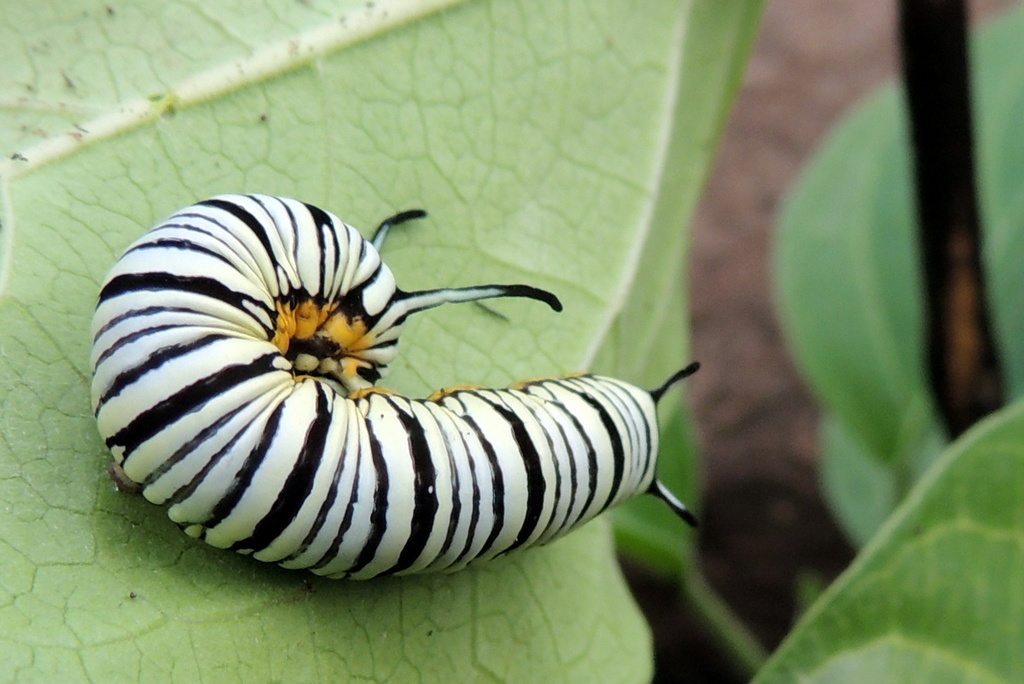
Newly hatched larvae are about 1.2 cm long and weigh 5 mg, doubling in size and quadrupling in weight within two days. Larvae are green with golden spots and a beaded dorsal crescent pattern.
Source: Wikipedia
When you see it
Extensive migration occurs during the monsoon season in southern India.
Source: Wikipedia
Where it comes from
Found throughout South and Southeast Asia; a lone adult was recorded in the Balearic Islands in 2019, the first European record.
Source: Wikipedia
Questions people ask
Where might I see a Blue Tiger butterfly?
During the monsoon they migrate in large groups across southern India and can be found mud-puddling on wet ground.
Source: Wikipedia
Is the Blue Tiger butterfly found outside Asia?
A single adult was recorded in the Balearic Islands in 2019, marking the first European sighting.
Source: Wikipedia
Same family (Nymphalidae)






Sources
- Wikipedia: https://en.wikipedia.org/wiki/Tirumala_limniace
Look it up elsewhere: GBIF · iNaturalist · BugGuide · Wikipedia
Text written 2026-10-22 from the sources above and checked sentence by sentence against them. Data fetched 2026-10-22.