 Bug FAQ
Blue-spotted Hawker
Adversaeschna brevistyla · Order: Odonata · Family: Aeshnidae
Also called: Lancer Dragonfly
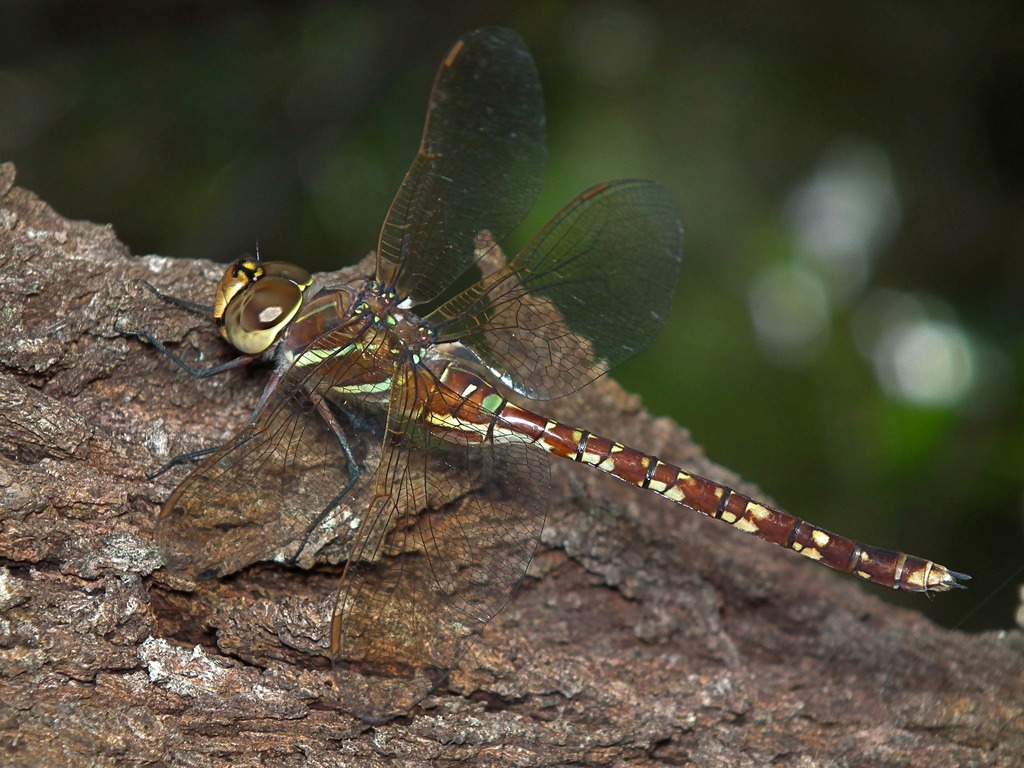
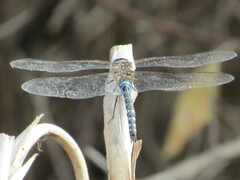
Males have blue eyes and females have brown eyes. It lives near still water such as ponds, marshes and calm streams, but can also be found away from water among vegetation.
Source: Wikipedia
How to recognize it
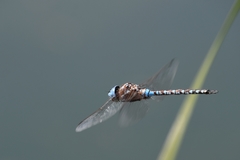
It has a pair of pale stripes on each side of the thorax and two symmetrical bright-blue stripes at the base of the thorax. The front edge of each wing is pale orange, ending at a reddish-brown pterostigma. Mature males have blue eyes; females have brown eyes.
Source: Wikipedia
Where it lives
It is found near ponds, marshes and other still water, and also along calm streams. It may be seen away from water in vegetation.
Source: Wikipedia
Where it is found in the US
Recorded in 1 of 51 states and DC. Most records: Kansas.
Darker = more records. Counts are museum and citizen-science records, not population size.
Source: GBIF
Questions people ask
Where can I find a blue-spotted hawker?
Look near ponds, marshes, calm streams or in vegetation away from water in Australia, New Zealand and nearby Pacific islands.
Source: Wikipedia
How can I tell a male from a female?
Males have blue eyes, while females have brown eyes.
Source: Wikipedia
Same family (Aeshnidae)
Sources
- Wikipedia: https://en.wikipedia.org/wiki/Blue-spotted_hawker
Look it up elsewhere: GBIF · iNaturalist · BugGuide · Wikipedia
Text written 2026-10-22 from the sources above and checked sentence by sentence against them. Data fetched 2026-10-22.