 Bug FAQ
Blue Pansy
Junonia orithya · Order: Lepidoptera · Family: Nymphalidae
Also called: Eyed Pansy, Ox-eyed Pansy
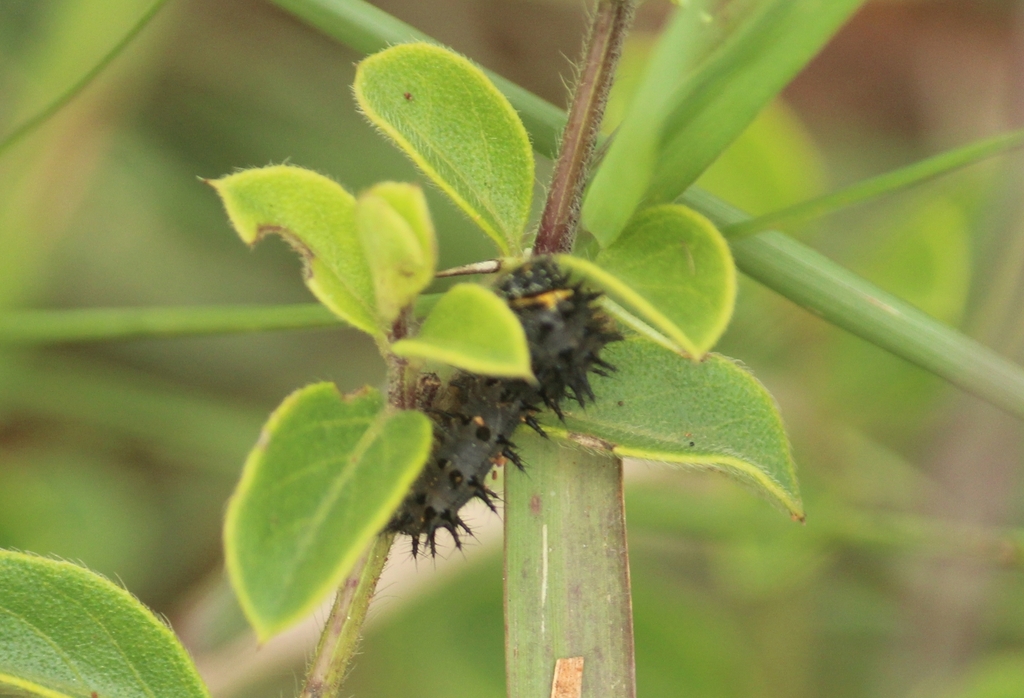
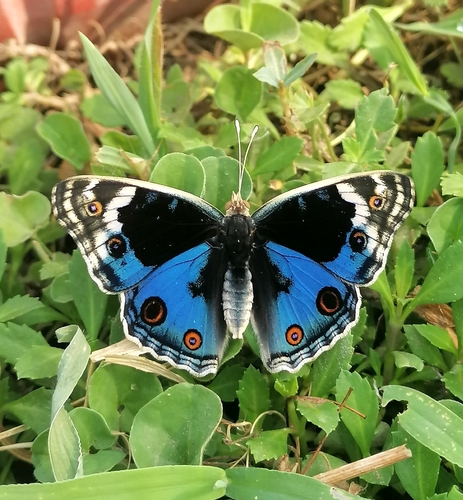
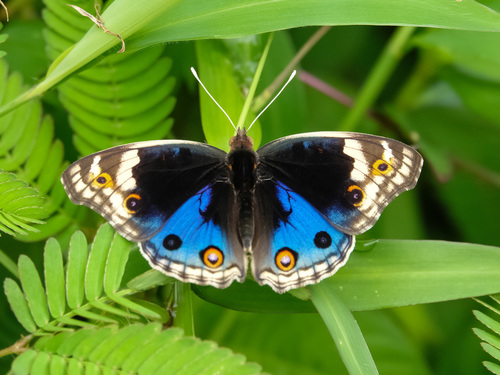
The blue pansy butterfly has a distinctive wing pattern with black, gray, and blue areas and sometimes orange bars or spots. Adults are found in open, bare ground areas and defend territories by chasing other butterflies. Its larvae feed on a wide range of plants from several families, including many garden and wild species.
Source: Wikipedia
How to recognize it
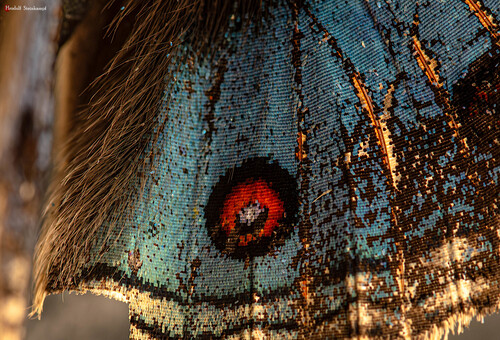
Males show a black base on the forewing, a dull gray tip, a blue patch near the tornus, and sometimes orange bars and a faint eye spot.
Source: Wikipedia
Where it lives
Adults live in open spaces and often sit on bare ground.
Source: Wikipedia
What it eats
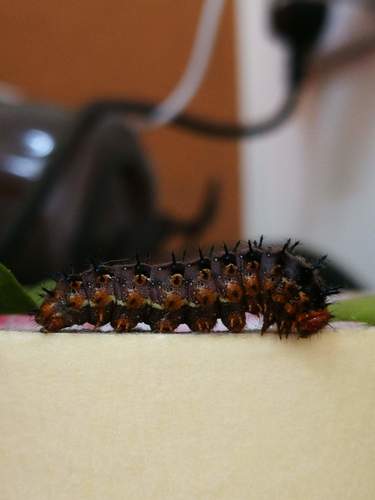
Caterpillars eat plants from families such as Acanthaceae, Convolvulaceae, Labiatae, and others, including specific species like Angelonia and Viola.
Source: Wikipedia
Life cycle
The pupa hangs by its tail, is naked, with muddy-yellow wing covers and a purplish body marked with creamy-white lines. Adults fly with a stiff flap-and-glide style and maintain territories, driving away intruders.
Source: Wikipedia
Where it comes from
The species occurs across Africa, South and Southeast Asia, and Australia.
Source: Wikipedia
Lookalikes
In India it is called the blue pansy, but in southern Africa the same name refers to Junonia oenone, and in Australia it is also known as the blue argus.
Source: Wikipedia
More photos
Same family (Nymphalidae)






Sources
- Wikipedia: https://en.wikipedia.org/wiki/Junonia_orithya
Look it up elsewhere: GBIF · iNaturalist · BugGuide · Wikipedia
Text written 2026-10-22 from the sources above and checked sentence by sentence against them. Data fetched 2026-10-22.