 Bug FAQ
Blue Ground Beetle
Carabus intricatus · Order: Coleoptera · Family: Carabidae
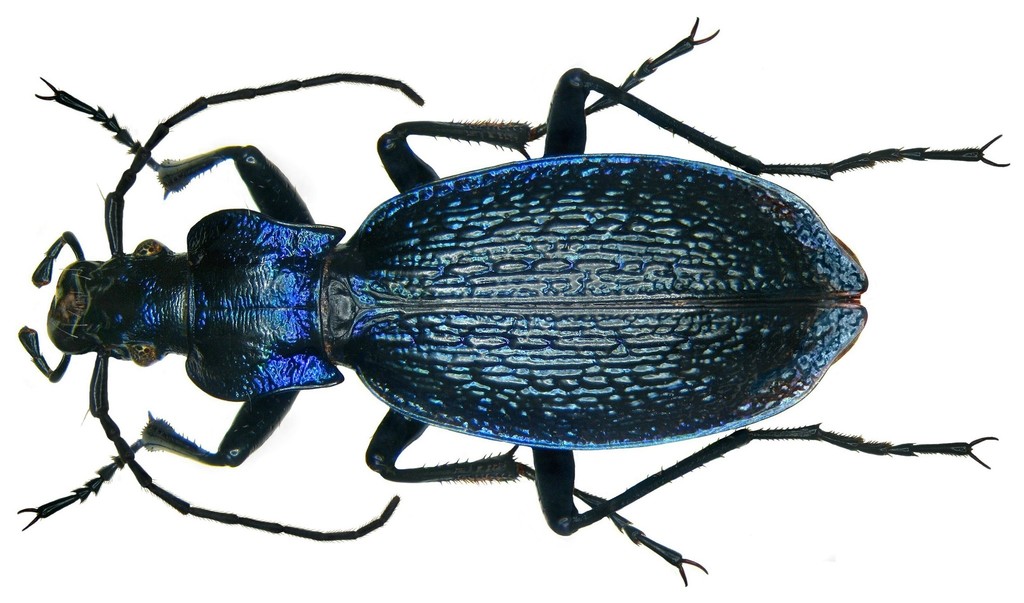
The blue ground beetle is a large beetle about 24 to 35 mm long with metallic purple or blue, roughly textured wing covers. Adults live under bark on dead wood, under rocks, and like damp, moss-covered wood, and they are active at night mainly in spring and early summer.
Source: Wikipedia
How to recognize it
It has metallic purple or blue elytra that are roughly surfaced, and its flight wings underneath are reduced.
Source: Wikipedia
Size
It measures between 24 and 35 mm (0.9 to 1.4 in) in length.
Source: Wikipedia
Where it lives
In the wild it is found under bark on dead wood, under rocks, and prefers damp, rotten, moss-covered wood.
Source: Wikipedia
What it eats
It prefers slugs of the genus Limax, especially Limax marginatus, and will also eat liver, dog food, and crabsticks.
Source: Wikipedia
Life cycle
Adults are long-lived; the beetle is active year-round, with larvae found in summer that pupate after eating slugs and emerge as adults about three weeks later, possibly taking two years to complete the cycle.
Source: Wikipedia
When you see it
They are nocturnal carnivores most active in spring and early summer.
Source: Wikipedia
Where it comes from
It is a European species of ground beetle.
Source: Wikipedia
Same family (Carabidae)


Sources
- Wikipedia: https://en.wikipedia.org/wiki/Carabus_intricatus
Look it up elsewhere: GBIF · iNaturalist · BugGuide · Wikipedia
Text written 2026-10-22 from the sources above and checked sentence by sentence against them. Data fetched 2026-10-22.