 Bug FAQ
Blue-faced Meadowhawk
Sympetrum ambiguum · Order: Odonata · Family: Libellulidae
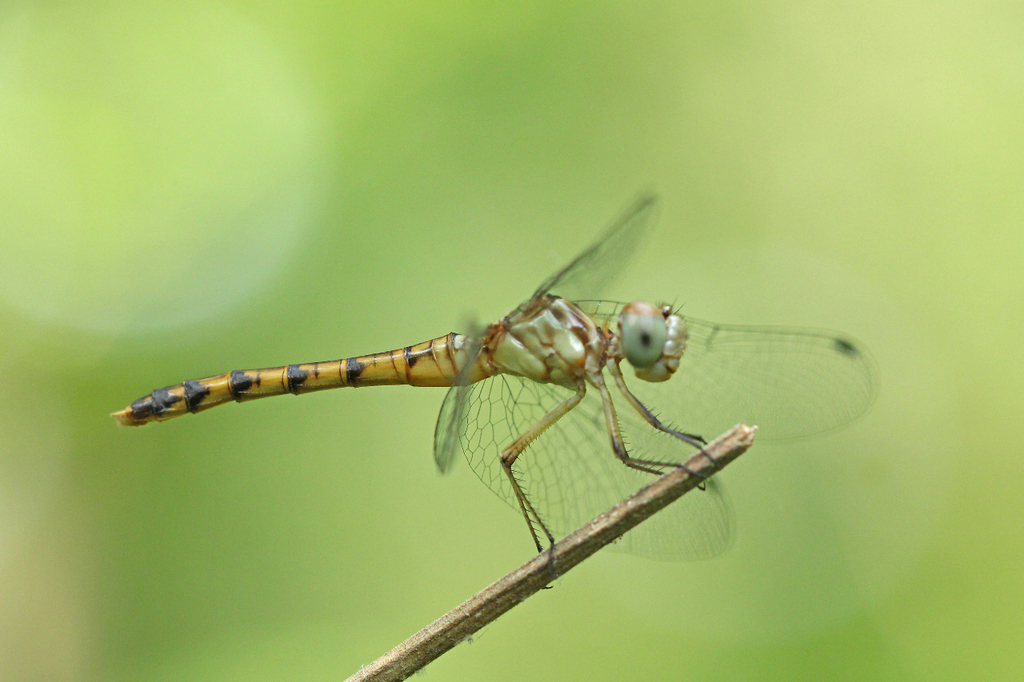
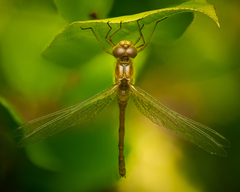
The blue-faced meadowhawk is a small dragonfly up to 38 mm long. It lives near water in the Midwestern United States from summer through fall. Males have a bright red abdomen with black stripes, while females and juveniles stay brown; both sexes show six black rings on the abdomen.
Source: Wikipedia
How to recognize it
A live adult has an aqua-blue face, which turns green-turquoise after death, a key field mark separating it from similar Sympetrum species. Males display a bright red abdomen with black stripes; females and juveniles are brown, and all have six black abdominal rings.
Source: Wikipedia
Size
Total length reaches a maximum of about 38 mm.
Source: Wikipedia
Where it lives
Found near water sources from summer through fall in the Midwestern United States.
Source: Wikipedia
When you see it
Active from summer into fall.
Source: Wikipedia
Where it comes from
Native to the Midwest region of North America.
Source: Wikipedia
Lookalikes
The blue face (or green-turquoise when dead) distinguishes it from other meadowhawks like Sympetrum vicinum.
Source: Wikipedia
Where it is found in the US
Recorded in 34 of 51 states and DC. Most records: Ohio, Texas, New Jersey, Virginia, Maryland, Oklahoma, Missouri, Indiana.
Darker = more records. Counts are museum and citizen-science records, not population size.
Source: GBIF
Months it is reported in the US
Source: GBIF
More photos

Questions people ask
How can I tell a blue-faced meadowhawk apart from other meadowhawks?
Look for the live adult’s aqua-blue face (turning green-turquoise after death) and the male’s bright red abdomen with black stripes; both sexes have six black rings on the abdomen.
Source: Wikipedia
When and where am I likely to see this dragonfly?
They are common near water in the Midwest United States during the summer and fall months.
Source: Wikipedia
Same family (Libellulidae)

Sources
- Wikipedia: https://en.wikipedia.org/wiki/Sympetrum_ambiguum
Look it up elsewhere: GBIF · iNaturalist · BugGuide · ITIS · Wikipedia
Text written 2026-10-22 from the sources above and checked sentence by sentence against them. Data fetched 2026-10-22.