 Bug FAQ
Black Turpentine Beetle
Dendroctonus terebrans · Order: Coleoptera · Family: Curculionidae
Source: Wikipedia
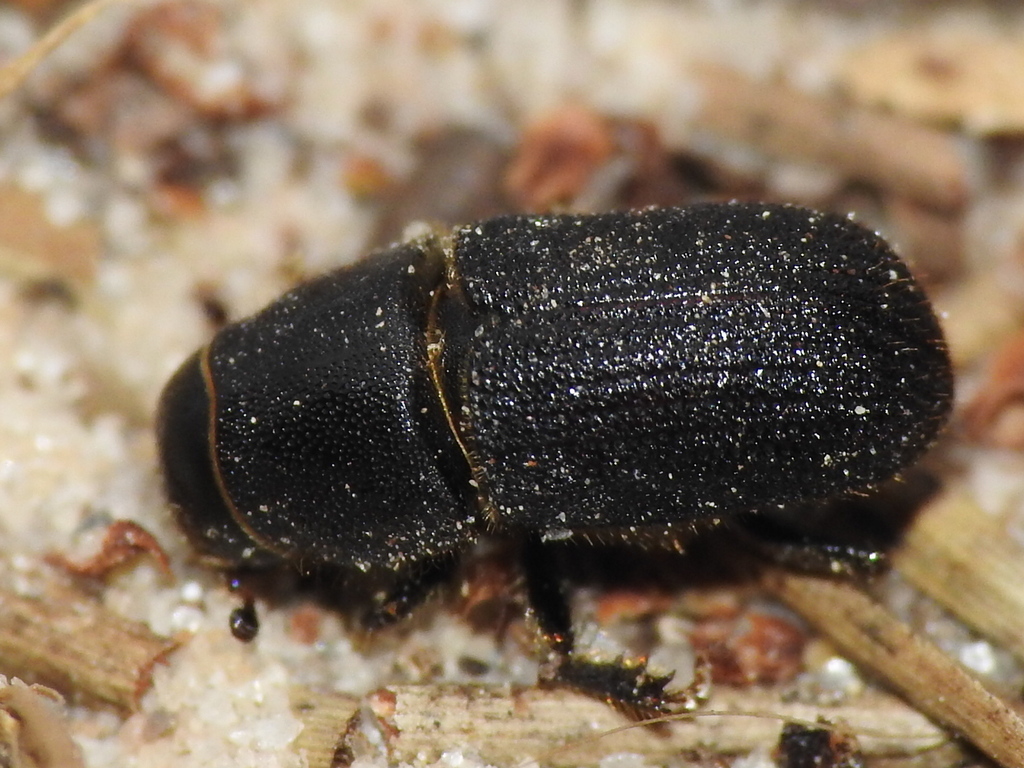
How to recognize it
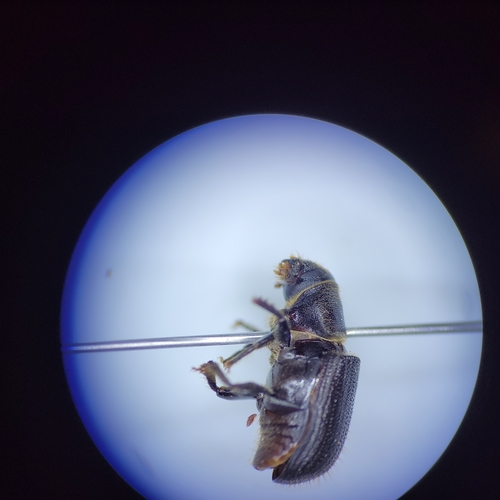
It has a cylindrical body that is dark reddish-brown or black.
Source: Wikipedia
Size
Adults are 5 to 8 mm long (about 0.2 to 0.3 in).
Source: Wikipedia
Is it a pest in the house?
It is attracted to fresh pine stumps and stressed trees, making it a problem for recently cut timber. The beetle can carry the blue-stain fungus from one tree to another.
Source: Wikipedia
How to get rid of it
Biological control is being studied; beetles imported from Belgium were released in Louisiana in 1988.
Source: Wikipedia
Where it lives
It lives in the eastern United States and attacks both native and exotic pine species. The beetle is strongly attracted to the chemicals released by freshly cut pine stumps and will also infest stressed, intact trees.
Source: Wikipedia
What it eats
They chew side-by-side through the sapwood, creating galleries packed with frass.
Source: Wikipedia
Life cycle
When development is complete, each larva makes its own pupation chamber and pupates there.
Source: Wikipedia
When you see it
In Florida, breeding can occur any time of year and up to three generations may overlap.
Source: Wikipedia
Where it comes from
It is native to the eastern United States. Its range stretches from New Hampshire south to Florida and west to Texas and Missouri.
Source: Wikipedia
Where it is found in the US
Recorded in 21 of 51 states and DC. Most records: Texas, Florida, Missouri, Massachusetts, Virginia, South Carolina, North Carolina, Georgia.
Darker = more records. Counts are museum and citizen-science records, not population size.
Source: GBIF
Months it is reported in the US
Source: GBIF
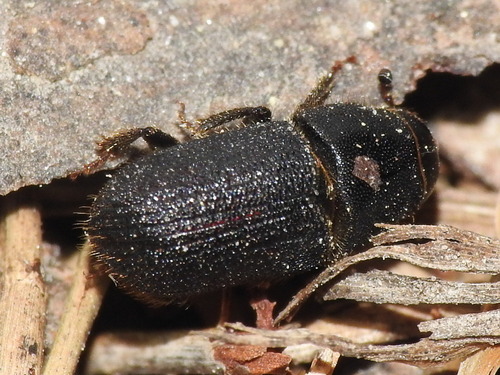
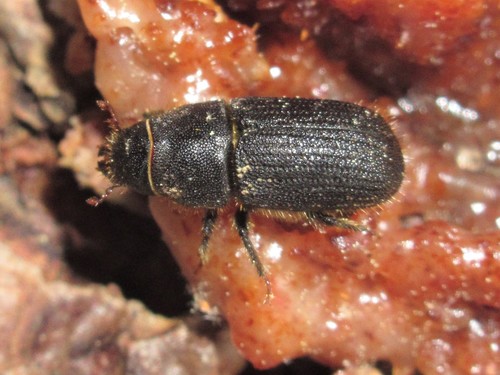
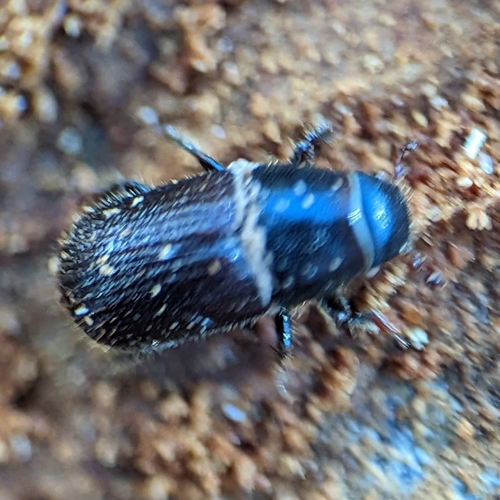
More photos
Questions people ask
How does the black turpentine beetle damage trees?
Its larvae tunnel under the bark and chew through the sapwood, weakening and sometimes killing pine trees.
Source: Wikipedia
When does this beetle breed?
In Florida it can breed year-round, with up to three overlapping generations.
Source: Wikipedia
What attracts the beetle to a site?
It is strongly drawn to the volatile chemicals released by freshly cut pine stumps and to stressed trees.
Source: Wikipedia
Is there any control method being used?
Researchers are testing biological control, including releases of beetles imported from Belgium in Louisiana.
Source: Wikipedia
Same family (Curculionidae)
 Green Immigrant Leaf WeevilPolydrusus formosusDamages trees, gardens or crops
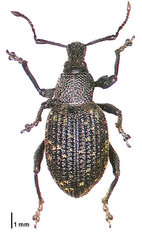 Black Vine WeevilOtiorhynchus sulcatusDamages trees, gardens or crops
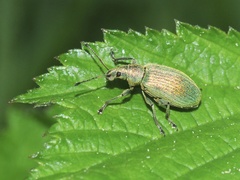 Nettle weevilPhyllobius pomaceusDamages trees, gardens or crops
 Asian Oak WeevilCyrtepistomus castaneusDamages trees, gardens or crops
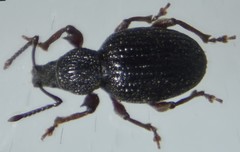 Strawberry Root WeevilOtiorhynchus ovatusDamages trees, gardens or crops
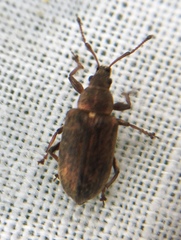 Common Leaf WeevilPhyllobius pyriDamages trees, gardens or crops
Sources
- Wikipedia: https://en.wikipedia.org/wiki/Dendroctonus_terebrans
Look it up elsewhere: GBIF · iNaturalist · BugGuide · ITIS · Wikipedia
Text written 2026-10-26 from the sources above and checked sentence by sentence against them. Data fetched 2026-10-26.