 Bug FAQ
Black Saddlebags
Tramea lacerata · Order: Odonata · Family: Libellulidae
Also called: Jagged-edged Saddlebag, black-mantled glider
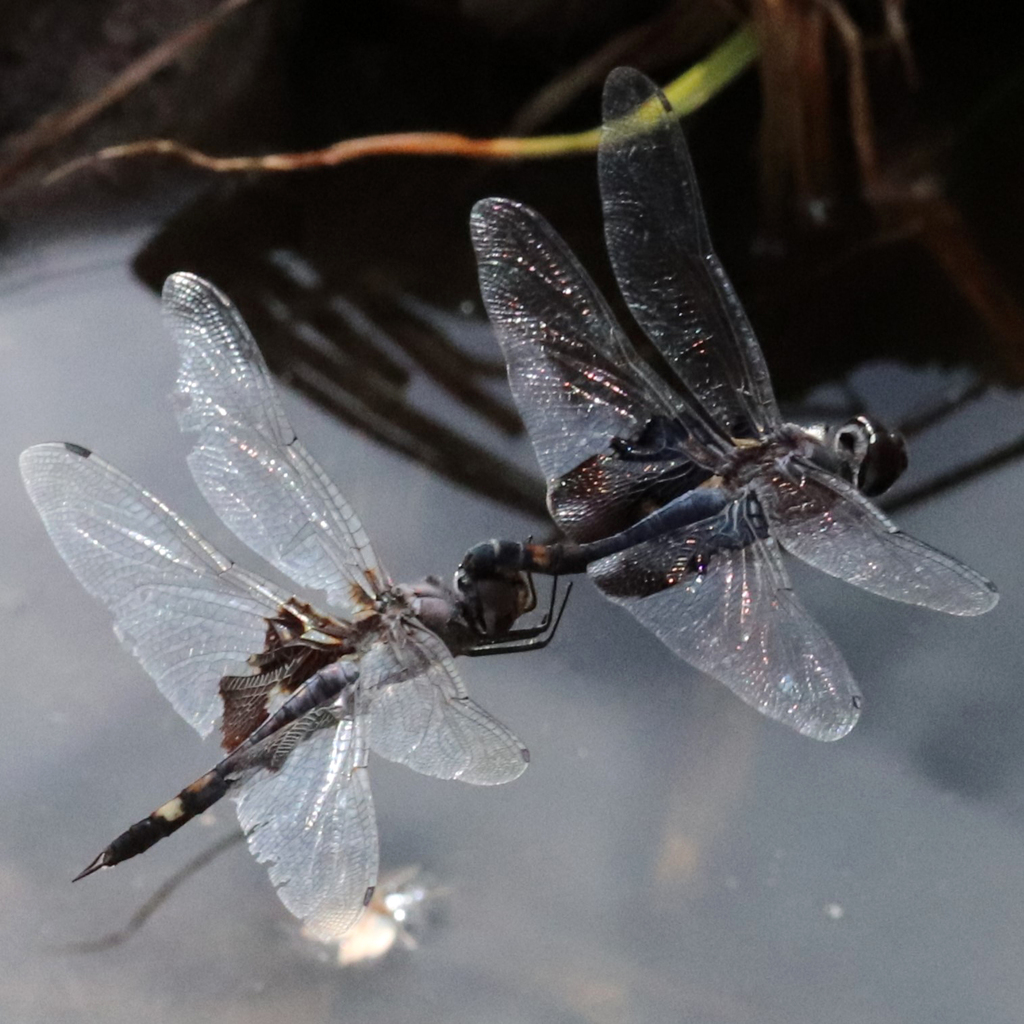
It lives near stagnant water such as ponds and ditches across North America and both larvae and adults hunt mosquitoes and other small prey.
Source: Wikipedia
How to recognize it
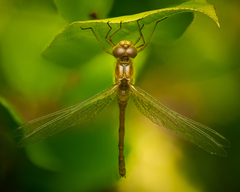
The wings have black patches near the base, giving the appearance of saddlebags. The body is thin and black; females may show lighter spots on the back.
Source: Wikipedia
Size
It measures about 5 cm (2 in) in length.
Source: Wikipedia
Where it lives
Found near stagnant water like ponds and ditches.
Source: Wikipedia
What it eats
Adults and larvae are active predators of mosquitoes. Larvae eat any small organisms they can catch.
Source: Wikipedia
Life cycle
Mating occurs in the typical dragonfly “wheel” position. After mating, the male releases the female to drop into water and lay eggs before re-joining him.
Source: Wikipedia
Where it comes from
Occurs throughout North America.
Source: Wikipedia
Where it is found in the US
Recorded in 48 of 51 states and DC. Most records: Texas, Ohio, California, New Jersey, Illinois, Michigan, Virginia, Arizona.
Darker = more records. Counts are museum and citizen-science records, not population size.
Source: GBIF
Status: native in North America; native in Canada; native in United States. Source: iNaturalist
Months it is reported in the US
Source: GBIF
More photos

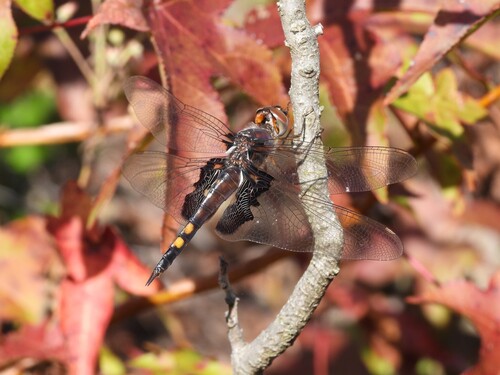
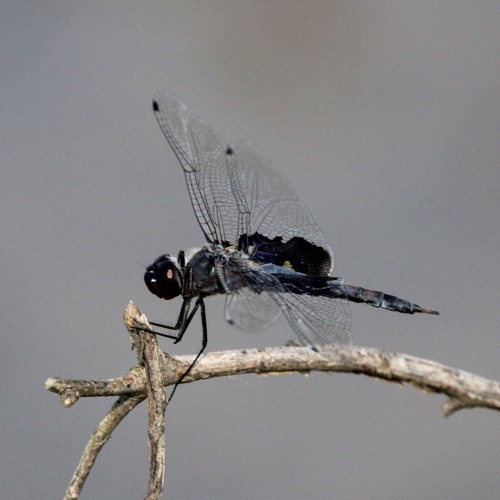
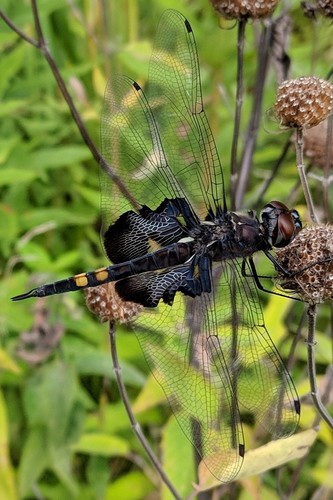
Same family (Libellulidae)

Sources
- Wikipedia: https://en.wikipedia.org/wiki/Black_saddlebags
Look it up elsewhere: GBIF · iNaturalist · BugGuide · ITIS · Wikipedia
Text written 2026-10-22 from the sources above and checked sentence by sentence against them. Data fetched 2026-10-22.