 Bug FAQ
Black-fronted Triplax
Triplax frontalis · Order: Coleoptera · Family: Erotylidae
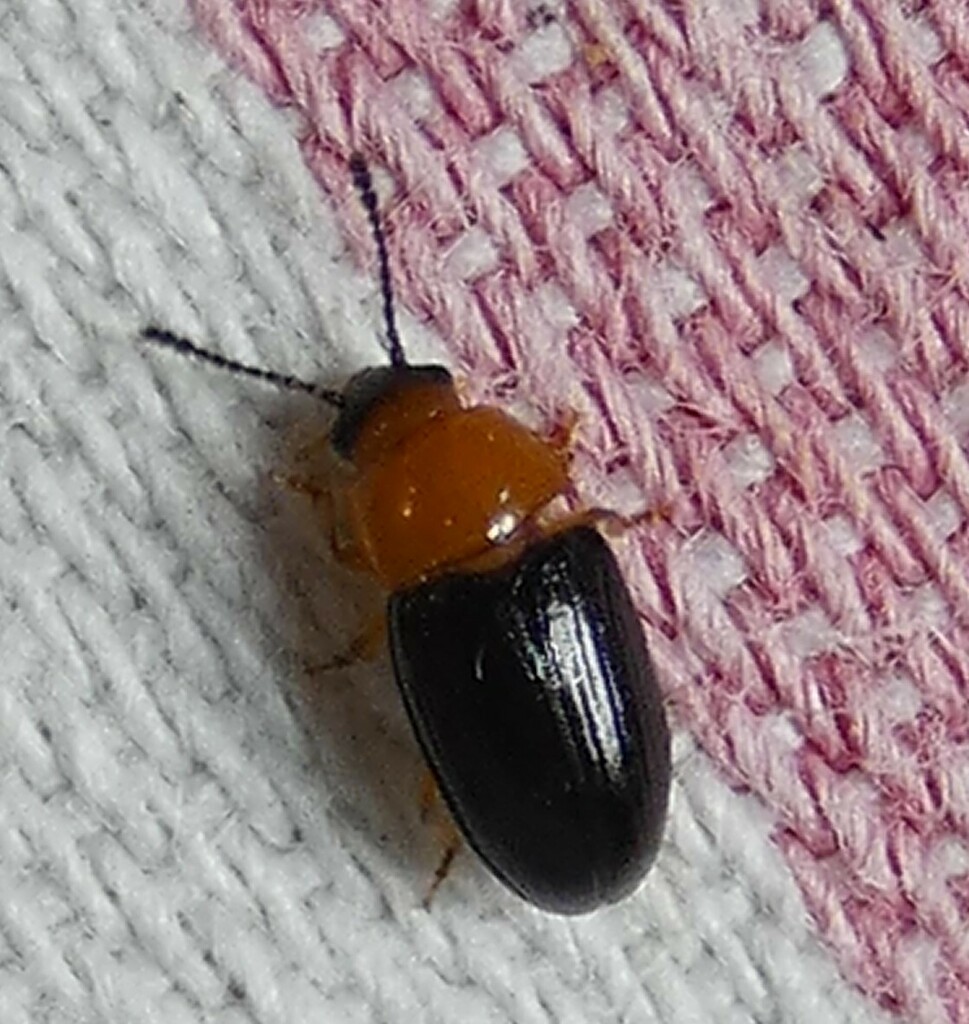
They are most common in the southern Great Plains of the United States and are endemic to the USA, occurring eastward from the south-central region.
Source: Wikipedia
How to recognize it
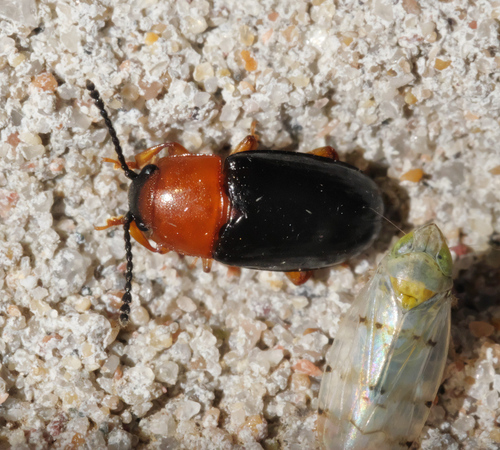
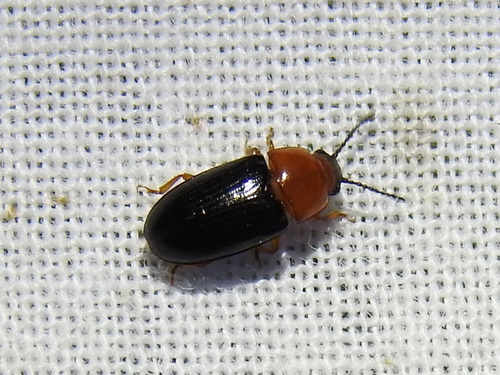
The beetle’s head top and cheeks are black, the scutellum is dark red, and the elytra are black contrasting with the orange body. It can be separated from the T.thoracica complex by its dark antennae and a narrow forehead margin that meets the tip at about a right angle.
Source: Wikipedia
Size
Adults measure 3.9 to 6.3 mm in length and 1.7 to 2.6 mm in width.
Source: Wikipedia
Where it comes from
The species is endemic to the United States, occurring eastward from the south-central part of the country.
Source: Wikipedia
Lookalikes
It resembles members of the T.thoracica complex but can be told apart by its dark antennae and the 90-degree forehead margin; definitive identification requires examination of male genitalia.
Source: Wikipedia
Where it is found in the US
Recorded in 10 of 51 states and DC. Most records: Georgia, Texas, Kansas, Oklahoma, Florida, Kentucky, Missouri, Nebraska.
Darker = more records. Counts are museum and citizen-science records, not population size.
Source: GBIF
Status: native in North America; native in United States. Source: iNaturalist
Months it is reported in the US
Source: GBIF
More photos
Questions people ask
How can I tell this beetle apart from similar species?
Look for the black antennae and the sharply angled forehead margin; the orange body with black elytra and a dark red scutellum are also characteristic, but confirming the species may need a look at the male genitalia.
Source: Wikipedia
Same family (Erotylidae)
 Blue Fungus BeetleGibbifer californicus
 Pleasing Fungus BeetleMegalodacne heros
 Red-banded Fungus BeetleMegalodacne fasciata
 Four-spotted Fungus BeetleIschyrus quadripunctatus
 Clover Stem BorerLanguria mozardiDamages trees, gardens or crops
 Slender Lizard BeetleAcropteroxys gracilisDamages trees, gardens or crops
Sources
- Wikipedia: https://en.wikipedia.org/wiki/Triplax_frontalis
Look it up elsewhere: GBIF · iNaturalist · BugGuide · ITIS · Wikipedia
Text written 2026-10-28 from the sources above and checked sentence by sentence against them. Data fetched 2026-10-28.