 Bug FAQ
Black Fairway Beetle
Ataenius spretulus · Order: Coleoptera · Family: Scarabaeidae
Also called: Black Turfgrass Ataenius
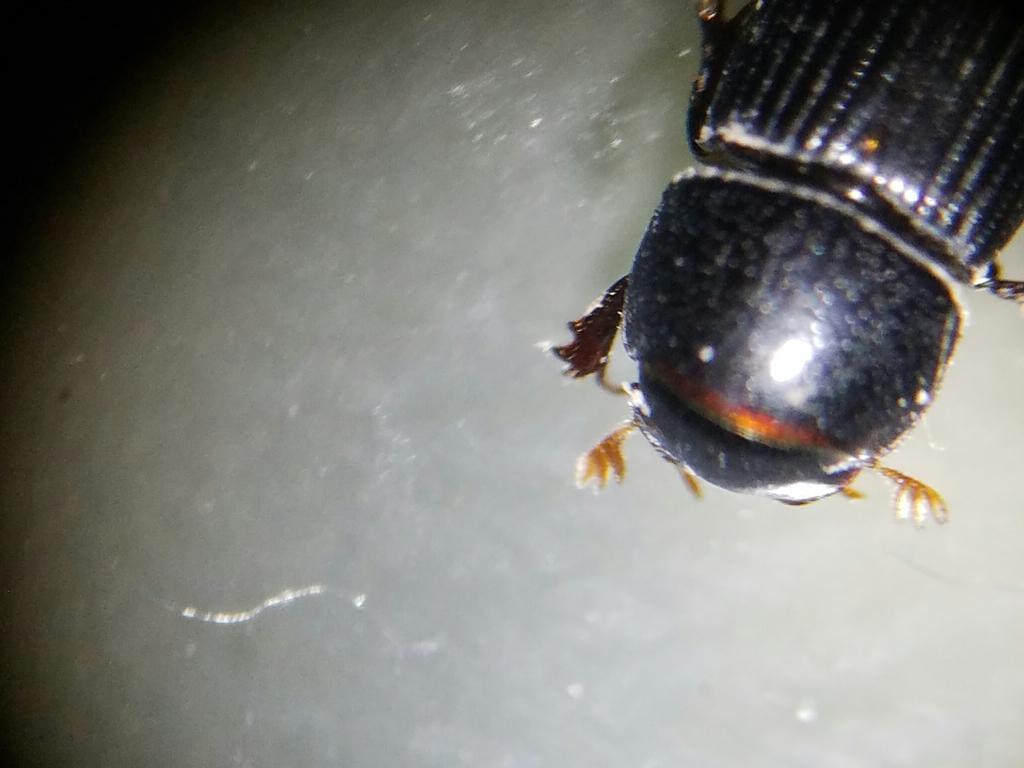
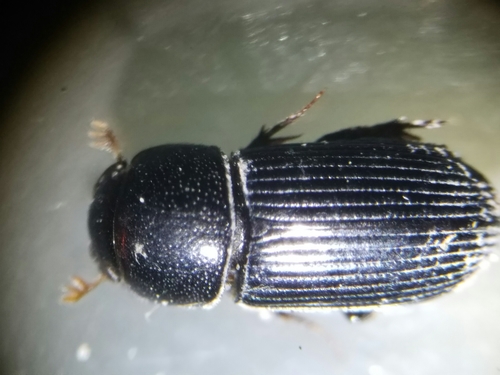
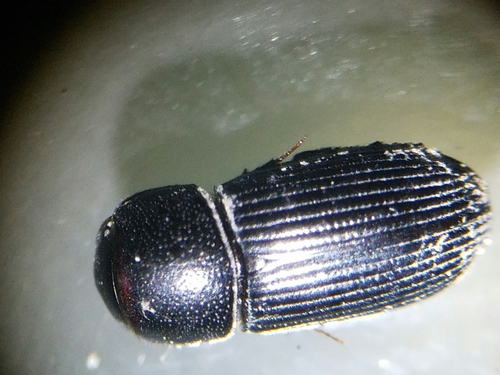
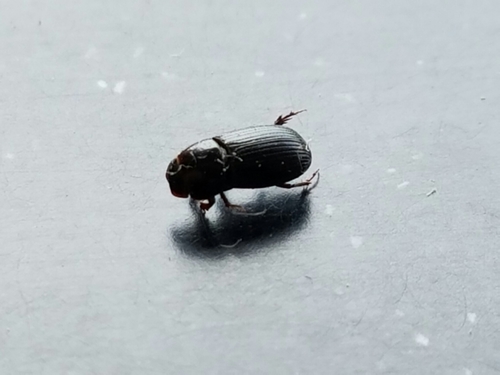
The black fairway beetle is a small, shiny black beetle with reddish-black legs and measures about 3.6 to 5.5 mm long. It is found throughout much of the United States, parts of Canada, and also in Portugal, where it lives in cow dung, deer droppings, and plant debris.
Source: Wikipedia
How to recognize it
The beetle has an oblong, moderately shiny black body and usually reddish-black legs.
Source: Wikipedia
Where it lives
Specimens are collected from cow dung, deer droppings, and plant debris.
Source: Wikipedia
What it eats
The beetle is found in cow dung, deer droppings, and plant debris, indicating it feeds on material in those substrates.
Source: Wikipedia
Where it comes from
It occurs in many U.S. states, in Ontario and Quebec in Canada, and has also been recorded in Portugal.
Source: Wikipedia
Where it is found in the US
Recorded in 31 of 51 states and DC. Most records: Indiana, Kansas, Pennsylvania, Illinois, Nebraska, Arkansas, Kentucky, Florida.
Darker = more records. Counts are museum and citizen-science records, not population size.
Source: GBIF
Status: native in North America; native in Canada. Source: iNaturalist
Months it is reported in the US
Source: GBIF
More photos
Questions people ask
Where is the black fairway beetle found?
It lives in many U.S. states, parts of Canada (Ontario and Quebec), and has also been reported in Portugal.
Source: Wikipedia
Same family (Scarabaeidae)
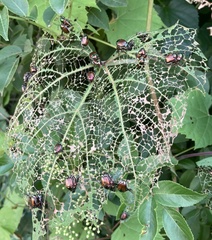 Japanese BeetlePopillia japonicaDamages trees, gardens or crops
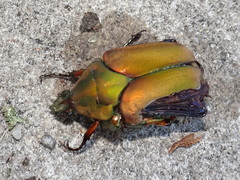 Common Green June BeetleCotinis nitidaDamages trees, gardens or crops
 Phyllophaga crinitaPhyllophaga crinitaDamages trees, gardens or crops
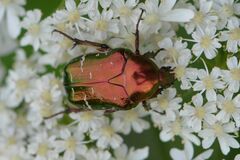 European Rose ChaferCetonia aurata
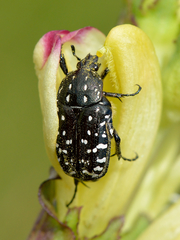 Mediterranean Spotted ChaferOxythyrea funestaDamages trees, gardens or crops
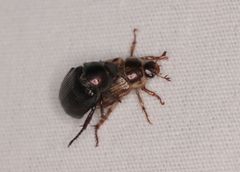 Oriental BeetleExomala orientalisDamages trees, gardens or crops
Sources
- Wikipedia: https://en.wikipedia.org/wiki/Ataenius_spretulus
Look it up elsewhere: GBIF · iNaturalist · BugGuide · ITIS · Wikipedia
Text written 2026-10-24 from the sources above and checked sentence by sentence against them. Data fetched 2026-10-24.