 Bug FAQ
Black coconut bunch weevil
Homalinotus coriaceus · Order: Coleoptera · Family: Curculionidae
Source: Wikipedia
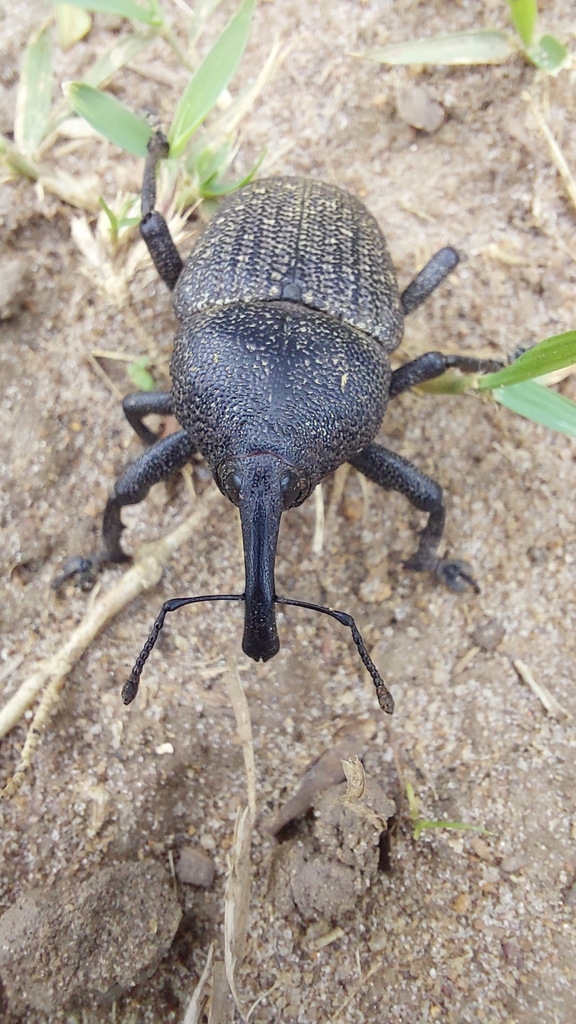
The larvae are white, curved, and larger than the adults, reaching up to 5 cm and feeding on coconut sap inside the tree’s peduncles. Both life stages can damage cultivated coconuts, making the weevil a major pest in Brazil.
Source: Wikipedia
How to recognize it
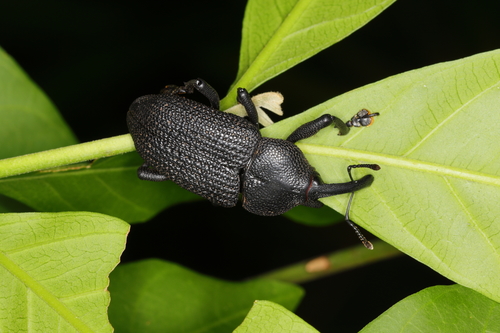
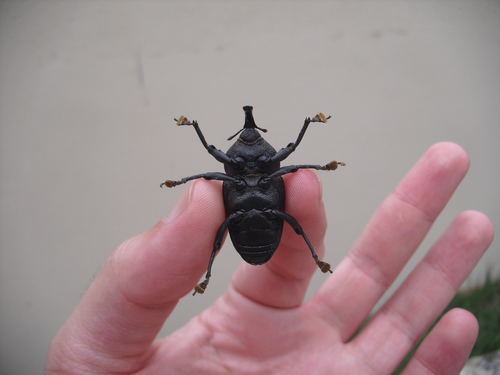
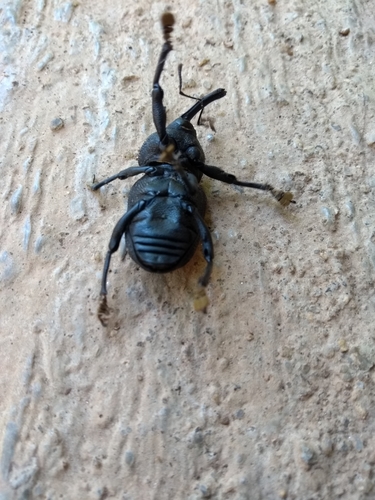
The beetle is entirely black.
Source: Wikipedia
Size
Adults measure 25 to 30 mm in length with an 8 mm rostrum. Mature larvae are 40 to 50 mm long, white, and have a rust-tinted head.
Source: Wikipedia
Is it a pest in the house?
It feeds on cultivated coconuts.
Source: Wikipedia
Where it lives
It is found in Brazil.
Source: Wikipedia
What it eats
Larvae tunnel into coconut peduncles and feed on the sap. Adults damage coconut flowers and fruit tissues.
Source: Wikipedia
Life cycle
Eggs are laid on the floral peduncle; they are white, smooth, and elongated. The larvae that hatch are larger than the adults and have a rust-tinted head.
Source: Wikipedia
Where it comes from
Its native range is Brazil.
Source: Wikipedia
More photos
Questions people ask
How does this weevil damage coconut trees?
The larvae tunnel into the peduncles and feed on sap, while adults chew flower and fruit tissue, reducing coconut yields.
Source: Wikipedia
Same family (Curculionidae)
 Green Immigrant Leaf WeevilPolydrusus formosusDamages trees, gardens or crops
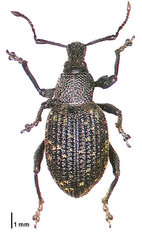 Black Vine WeevilOtiorhynchus sulcatusDamages trees, gardens or crops
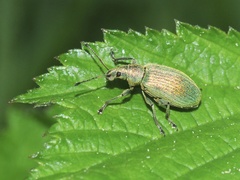 Nettle weevilPhyllobius pomaceusDamages trees, gardens or crops
 Asian Oak WeevilCyrtepistomus castaneusDamages trees, gardens or crops
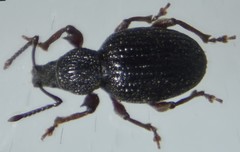 Strawberry Root WeevilOtiorhynchus ovatusDamages trees, gardens or crops
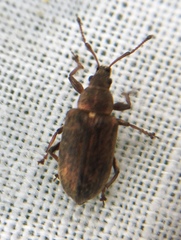 Common Leaf WeevilPhyllobius pyriDamages trees, gardens or crops
Sources
- Wikipedia: https://en.wikipedia.org/wiki/Homalinotus_coriaceus
Look it up elsewhere: GBIF · iNaturalist · BugGuide · Wikipedia
Text written 2026-10-23 from the sources above and checked sentence by sentence against them. Data fetched 2026-10-23.