 Bug FAQ
Black Clock
Pterostichus madidus · Order: Coleoptera · Family: Carabidae
Also called: Rain-Clock, Black Clock Beetle, Black Garden Beetle, Common Blackclock
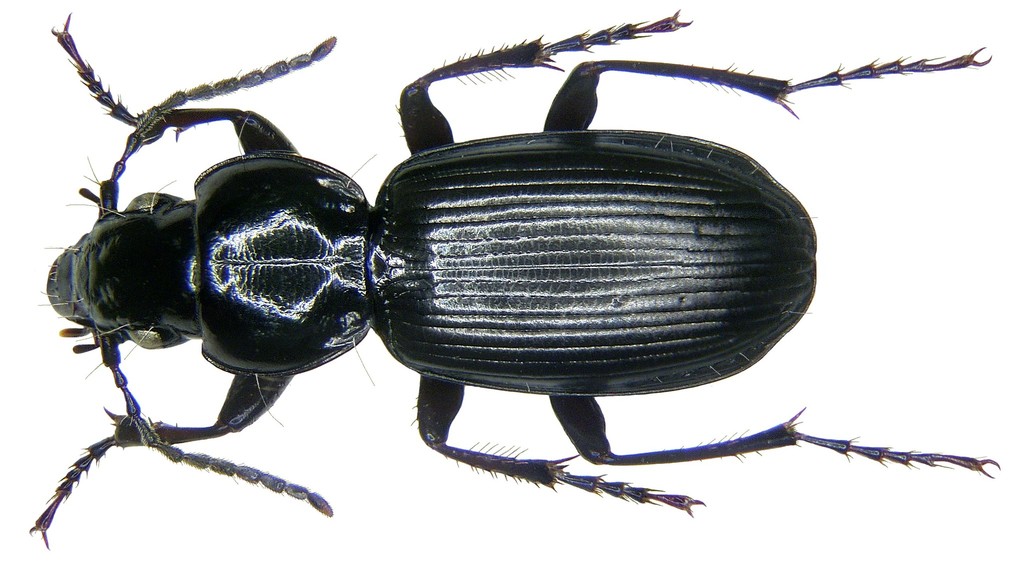
The black clock beetle is 14 to 20 mm long. It lives in gardens, grasslands, dry woodlands and hides under stones, in grass or loose bark. It is native to Europe and is most common in summer, breeding in autumn. In the UK it is called the rain beetle because it often appears before rain.
Source: Wikipedia
Size
Adults measure between 14 and 20 mm in length.
Source: Wikipedia
When you see it
Most abundant in summer; it breeds during autumn.
Source: Wikipedia
Where it comes from
It is a ground beetle native to Europe.
Source: Wikipedia
More photos

Questions people ask
When are black clock beetles most common?
They are most abundant in summer and breed in autumn.
Source: Wikipedia
Why are they called rain beetles in the UK?
Because they often appear just before rain.
Source: Wikipedia
Same family (Carabidae)


Sources
- Wikipedia: https://en.wikipedia.org/wiki/Pterostichus_madidus
Look it up elsewhere: GBIF · iNaturalist · BugGuide · Wikipedia
Text written 2026-10-22 from the sources above and checked sentence by sentence against them. Data fetched 2026-10-22.