 Bug FAQ
Black Bee Fly
Anthrax analis · Order: Diptera · Family: Bombyliidae
Also called: Field Coral Bee Fly
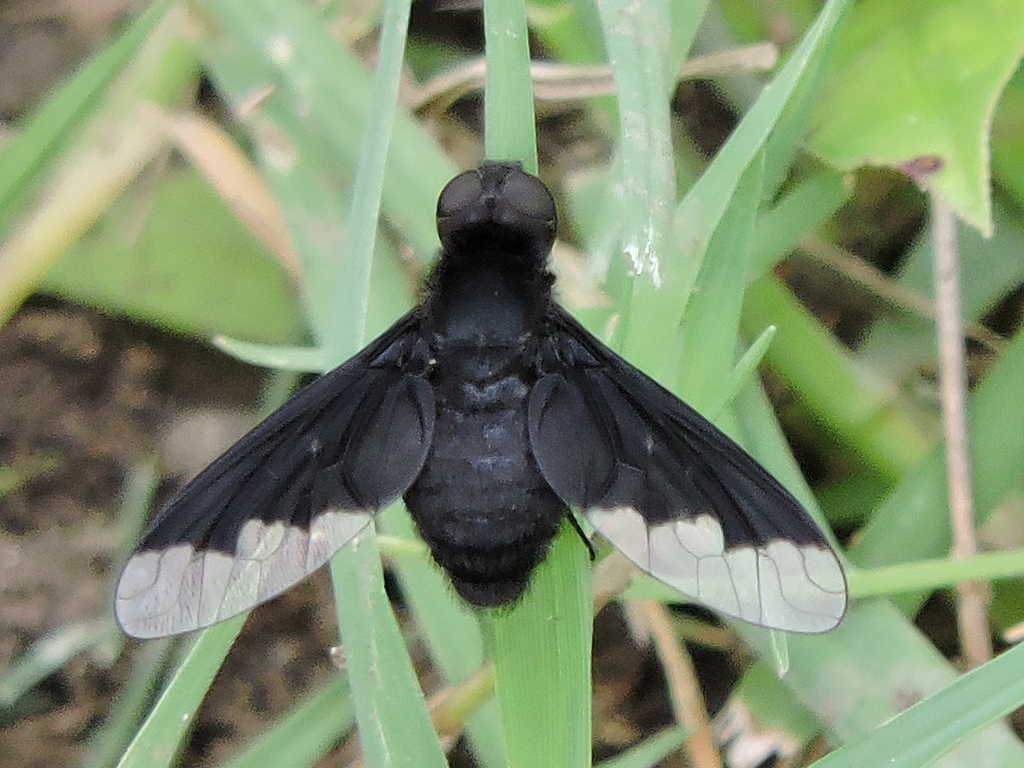
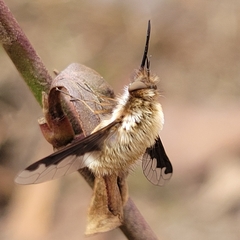
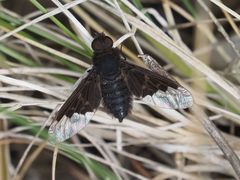
The black bee fly has a body covered in black hair with silvery scales on the tip of its abdomen, and its wings are partly transparent but may be fully dark in the eastern United States.
Source: Wikipedia
How to recognize it
The fly’s body is covered in black hair and the tip of the abdomen has silvery scales.
Source: Wikipedia
What it eats
Adult black bee flies act as pollinators.
Source: Wikipedia
Life cycle
The life cycle begins when the female lays an egg. After hatching, the larvae look like small, soft-bodied worms without wings. Larvae pupate inside the host’s burrow or nearby soil. The adult emerges with fully formed wings, a hardened body, and functional reproductive organs.
Source: Wikipedia
Where it comes from
It is native to the United States and Canada, extending south through Mexico to Costa Rica and Cuba.
Source: Wikipedia
Where it is found in the US
Recorded in 41 of 51 states and DC. Most records: Florida, Massachusetts, Virginia, New York, Texas, North Carolina, Vermont, Ohio.
Darker = more records. Counts are museum and citizen-science records, not population size.
Source: GBIF
Status: native in North America; native in Canada. Source: iNaturalist
Months it is reported in the US
Source: GBIF
More photos

Questions people ask
What does the black bee fly look like?
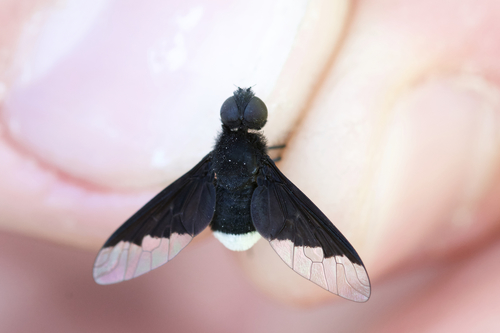
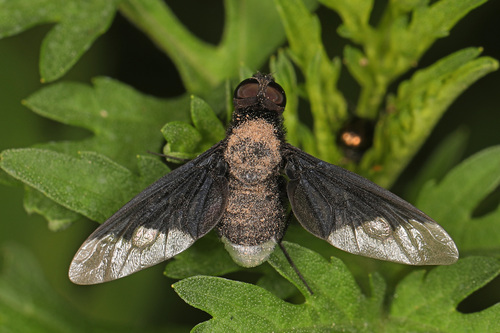
It has a black, hairy body with silvery scales on the abdomen tip, and its wings are partly transparent but may be fully dark in the eastern U.S.
Source: Wikipedia
Where can I find black bee flies?
They occur across North America from the Yukon to Quebec, throughout the United States, most of Mexico, and down to Costa Rica and Cuba.
Source: Wikipedia
What do black bee flies eat?
Adults feed on flower nectar as pollinators, while larvae parasitize tiger beetles and probably solitary bees.
Source: Wikipedia
What are the life stages of a black bee fly?
They develop from egg to worm-like larva, then pupate in soil or host burrows, and finally emerge as winged adults.
Source: Wikipedia
Same family (Bombyliidae)



Sources
- Wikipedia: https://en.wikipedia.org/wiki/Anthrax_analis
Look it up elsewhere: GBIF · iNaturalist · BugGuide · ITIS · Wikipedia
Text written 2026-10-24 from the sources above and checked sentence by sentence against them. Data fetched 2026-10-24.