 Bug FAQ
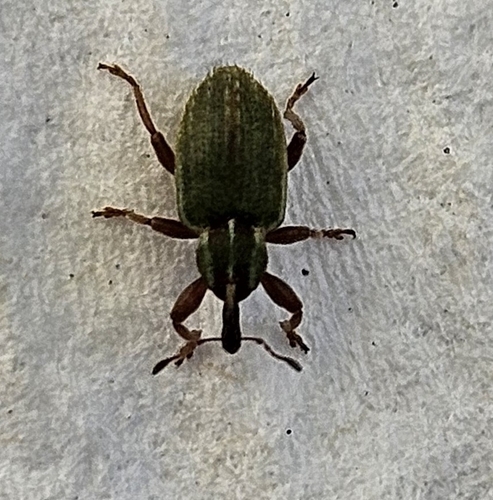
Black-beaked green weevil
Hypera nigrirostris · Order: Coleoptera · Family: Curculionidae
Also called: Lesser Clover Weevil, Lesser clover leaf weevil
Source: Wikipedia
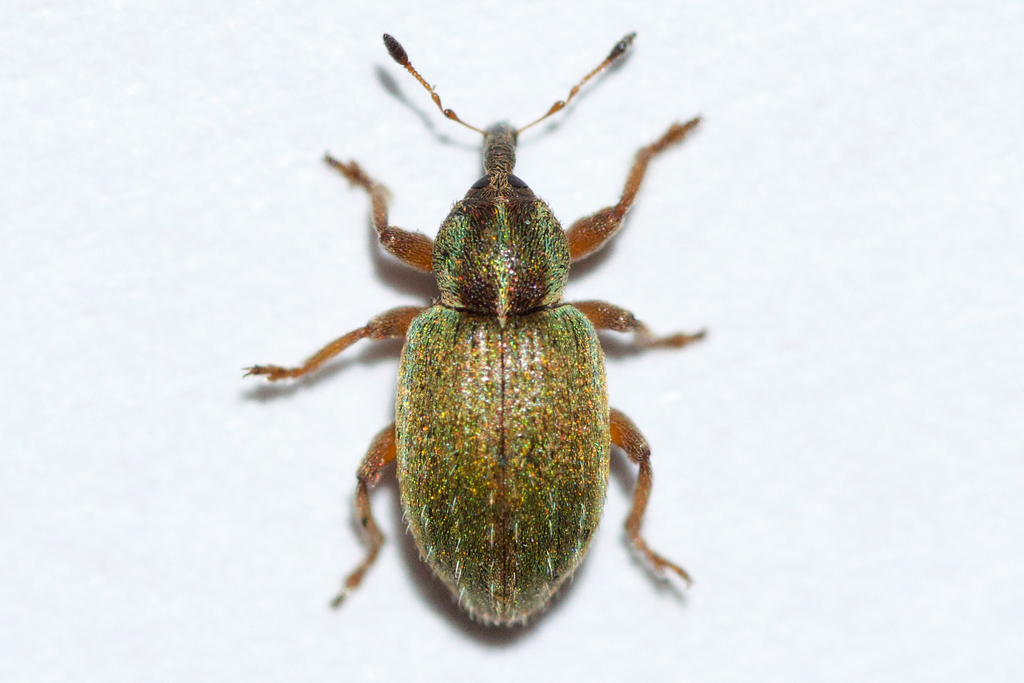
The lesser clover leaf weevil is a tiny black beetle about 3 to 4 mm long with a green-metallic sheen on its back. In northeastern Saskatchewan they overwinter in red-clover fields, lay eggs from early May to mid-July, pupate late June to August, and new adults appear in late July.
Source: Wikipedia
How to recognize it
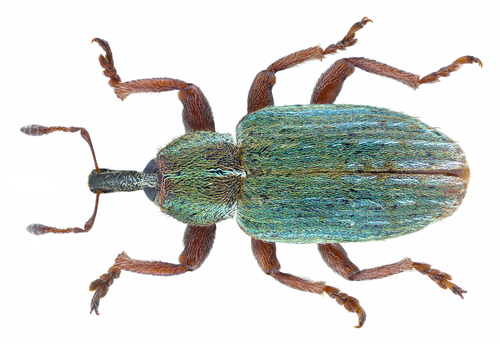
The beetle’s body is black with reddish-tinged legs and antennae. Its pronotum shows a greenish-gold sheen and the elytra appear greenish-metallic because of dissected scales.
Source: Wikipedia
Is it a pest in the house?
Adults chew holes in leaves and make hollows in stems, while larvae damage buds and flowers, harming clover crops.
Source: Wikipedia
How to get rid of it
In Canada the weevil is often kept in check by parasitic insects and an entomopathogenic fungus.
Source: Wikipedia
Where it lives
Adults overwinter in fields of red clover in northeastern Saskatchewan.
Source: Wikipedia
Life cycle
Eggs are laid from early May through mid-July. Larvae pass through four instars, eating stipules, buds and flower clusters. Pupation occurs between late June and August, either on the plant or on the ground beneath. New adults emerge in late July, causing a sharp rise in weevil numbers.
Source: Wikipedia
When you see it
The insects become active in late April. Egg-laying takes place from early May to mid-July. Pupation runs from late June through August. The next generation of adults appears in late July.
Source: Wikipedia
Where it comes from
It is native to Europe and northern Africa.
Source: Wikipedia
Where it is found in the US
Recorded in 33 of 51 states and DC. Most records: New York, Illinois, Pennsylvania, Alabama, Oregon, Kentucky, Alaska, Washington.
Darker = more records. Counts are museum and citizen-science records, not population size.
Source: GBIF
Months it is reported in the US
Source: GBIF
More photos
Questions people ask
How does this weevil damage plants?
Adults chew holes in leaves and hollow stems, and larvae eat buds and flower clusters, reducing the health of red clover and other legumes.
Source: Wikipedia
When are they most active?
They become active in late April, lay eggs from early May to mid-July, pupate late June to August, and the new adult generation emerges in late July.
Source: Wikipedia
How can I control them?
Natural parasites and an entomopathogenic fungus in Canada help keep their numbers low.
Source: Wikipedia
Same family (Curculionidae)
 Green Immigrant Leaf WeevilPolydrusus formosusDamages trees, gardens or crops
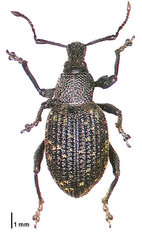 Black Vine WeevilOtiorhynchus sulcatusDamages trees, gardens or crops
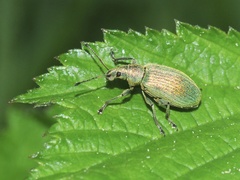 Nettle weevilPhyllobius pomaceusDamages trees, gardens or crops
 Asian Oak WeevilCyrtepistomus castaneusDamages trees, gardens or crops
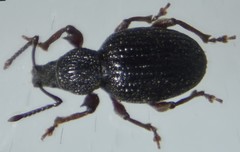 Strawberry Root WeevilOtiorhynchus ovatusDamages trees, gardens or crops
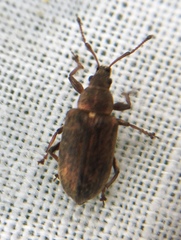 Common Leaf WeevilPhyllobius pyriDamages trees, gardens or crops
Sources
- Wikipedia: https://en.wikipedia.org/wiki/Hypera_nigrirostris
Look it up elsewhere: GBIF · iNaturalist · BugGuide · ITIS · Wikipedia
Text written 2026-10-26 from the sources above and checked sentence by sentence against them. Data fetched 2026-10-26.