 Bug FAQ
Beyer's Jewel Scarab
Chrysina beyeri · Order: Coleoptera · Family: Scarabaeidae
Also called: Beyer's Scarab
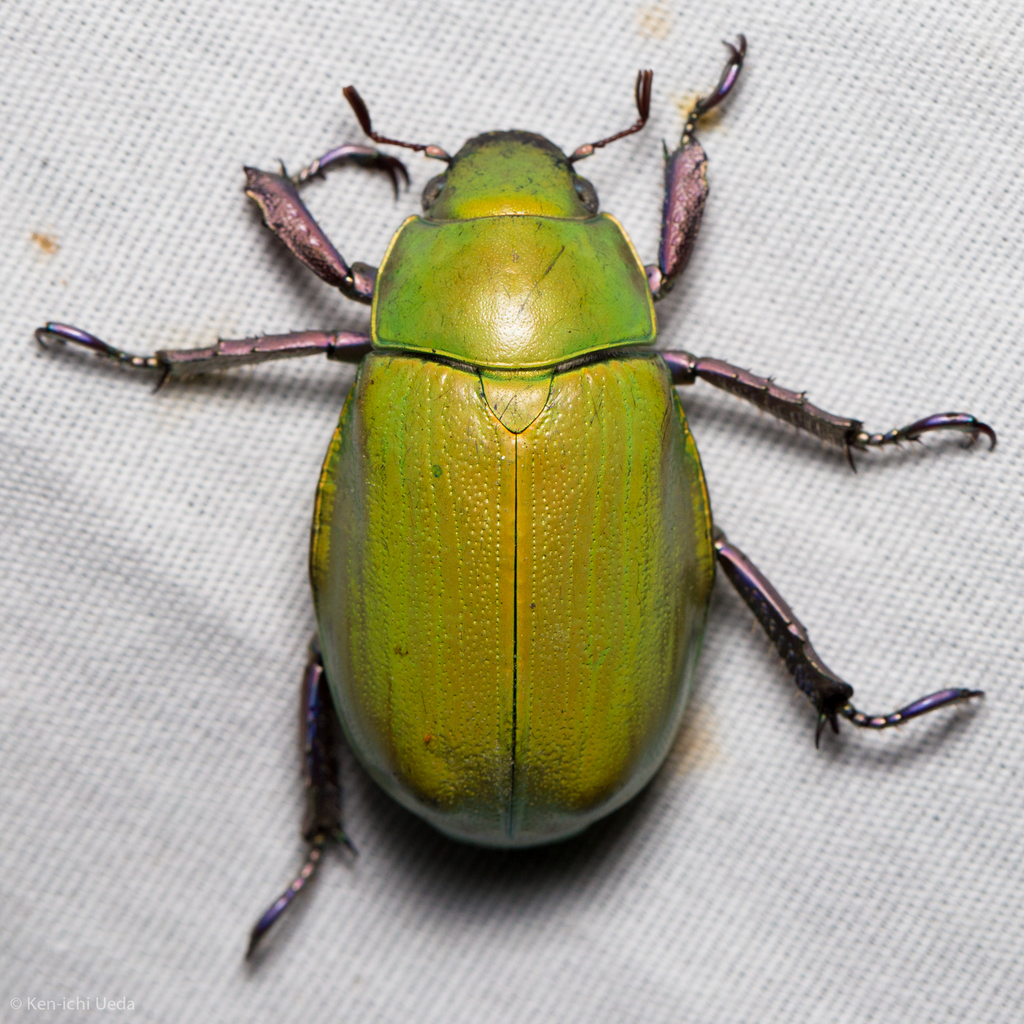
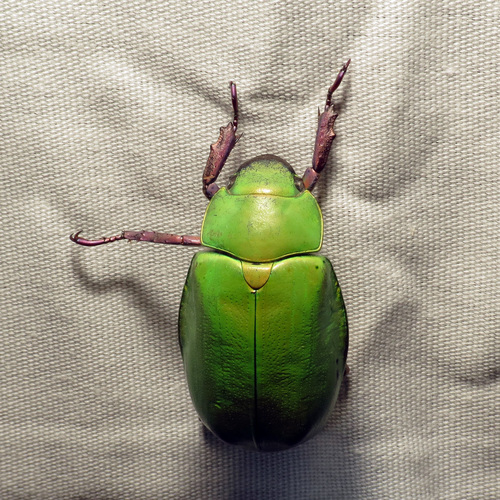
Chrysina beyeri is a bright-green beetle that lives in Chihuahua, Mexico, and southeastern Arizona, USA. It can be told apart from the similar C. woodi because its legs and tarsi are blue-purple, while C. woodi has green legs and blue tarsi.
Source: Wikipedia
How to recognize it
The beetle’s legs and tarsi are blue-purple, unlike the similar C. woodi which has green legs and blue tarsi.
Source: Wikipedia
Where it lives
It is found in the desert-mountain regions of Chihuahua and southeastern Arizona.
Source: Wikipedia
Where it comes from
Chrysina beyeri is native to Chihuahua in Mexico and to southeastern Arizona in the United States.
Source: Wikipedia
Lookalikes
It resembles Chrysina woodi in size and overall shape, but can be distinguished by the color of its legs and tarsi.
Source: Wikipedia
Where it is found in the US
Recorded in 4 of 51 states and DC. Most records: Arizona, Kansas, New Mexico, Ohio.
Darker = more records. Counts are museum and citizen-science records, not population size.
Source: GBIF
Months it is reported in the US
Source: GBIF
More photos
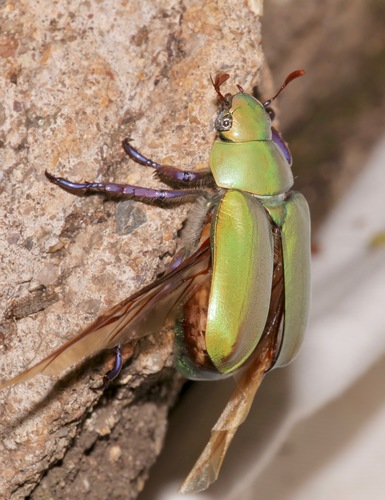
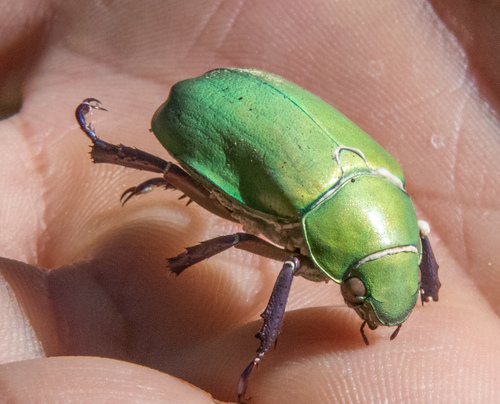
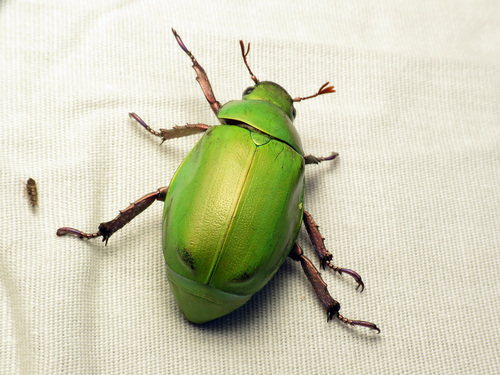
Same family (Scarabaeidae)
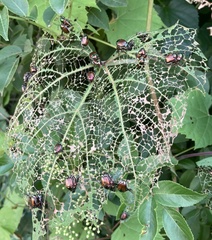 Japanese BeetlePopillia japonicaDamages trees, gardens or crops
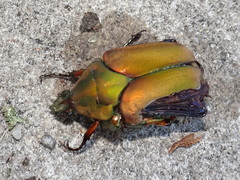 Common Green June BeetleCotinis nitidaDamages trees, gardens or crops
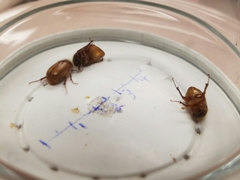 Phyllophaga crinitaDamages trees, gardens or crops
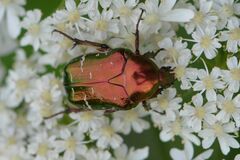 European Rose ChaferCetonia aurata
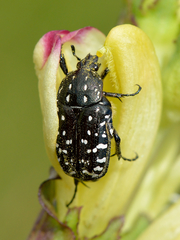 Mediterranean Spotted ChaferOxythyrea funestaDamages trees, gardens or crops
 Oriental BeetleExomala orientalisDamages trees, gardens or crops
Sources
- Wikipedia: https://en.wikipedia.org/wiki/Chrysina_beyeri
Look it up elsewhere: GBIF · iNaturalist · BugGuide · ITIS · Wikipedia
Text written 2026-10-24 from the sources above and checked sentence by sentence against them. Data fetched 2026-10-24.