 Bug FAQ
Bereft Snail-eating Beetle
Scaphinotus viduus · Order: Coleoptera · Family: Carabidae
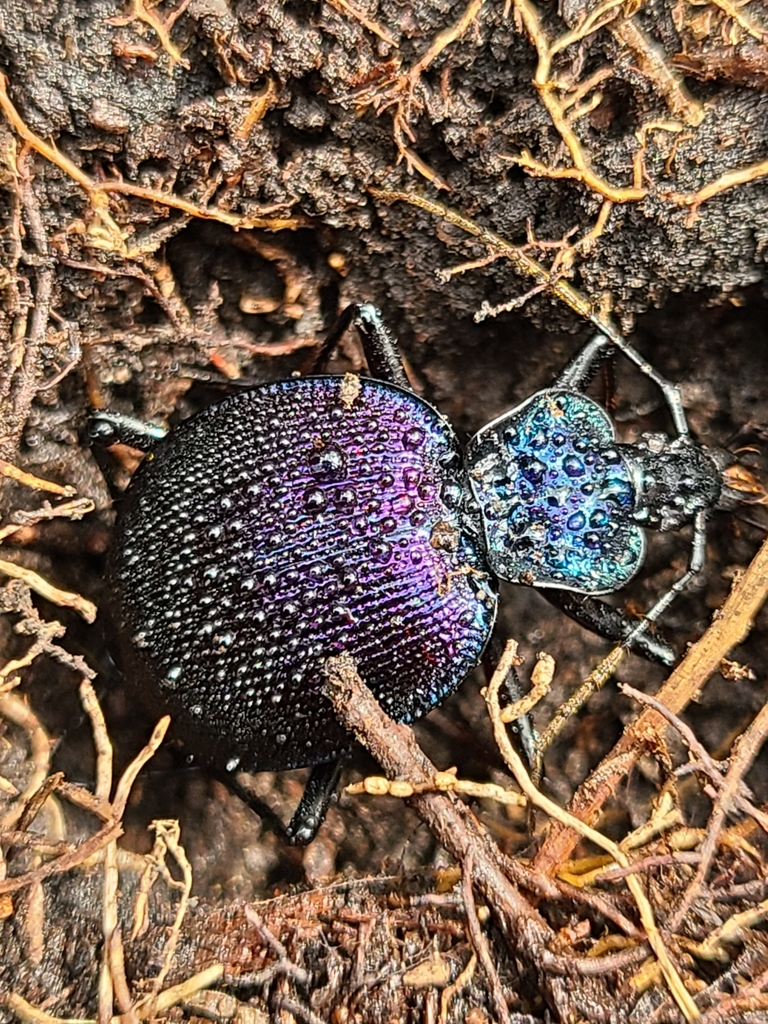
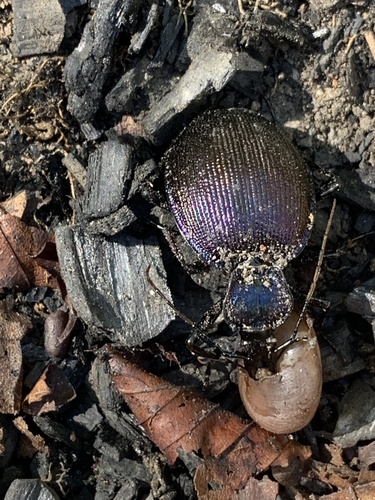
Adult Bereft Snail-eating Beetles are wing-reduced, live in groups and are active at night. They live in conifer forests near water and hunt snails, slugs and caterpillars. Their range includes eastern Canada and the eastern United States.
Source: Wikipedia
How to recognize it
Adults have short wings, gather together, and are nocturnal.
Source: Wikipedia
Where it lives
They are found in coniferous forests, usually close to water.
Source: Wikipedia
What it eats
They prey on snails, slugs and caterpillars.
Source: Wikipedia
Where it comes from
They occur in eastern Canada and the eastern United States.
Source: Wikipedia
Where it is found in the US
Recorded in 18 of 51 states and DC. Most records: Pennsylvania, New Hampshire, Vermont, Virginia, Maryland, New York, Tennessee, West Virginia.
Darker = more records. Counts are museum and citizen-science records, not population size.
Source: GBIF
Status: native in North America; native in Canada; native in United States. Source: iNaturalist
Months it is reported in the US
Source: GBIF
More photos
Questions people ask
What do Bereft Snail-eating Beetles eat?
They feed on snails, slugs and caterpillars.
Source: Wikipedia
Where can I find these beetles?
They live in coniferous forests near water in eastern Canada and the eastern United States.
Source: Wikipedia
Are they active during the day or night?
Adults are nocturnal, being active at night.
Source: Wikipedia
Same family (Carabidae)


Sources
- Wikipedia: https://en.wikipedia.org/wiki/Scaphinotus_viduus
Look it up elsewhere: GBIF · iNaturalist · BugGuide · ITIS · Wikipedia
Text written 2026-10-26 from the sources above and checked sentence by sentence against them. Data fetched 2026-10-26.