 Bug FAQ
Bellicose Bumble Bee
Bombus bellicosus · Order: Hymenoptera · Family: Apidae
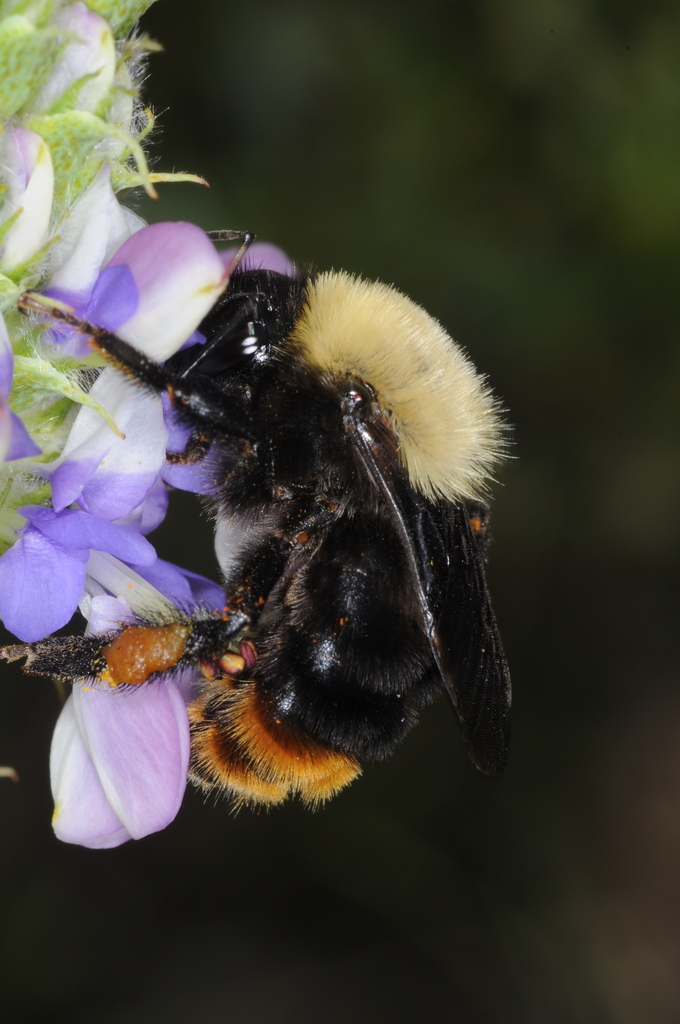
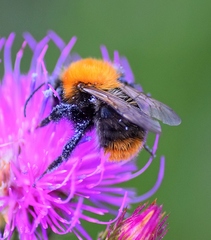
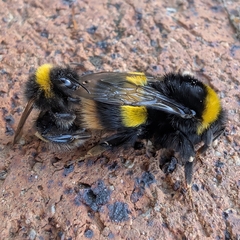
Bellicose bumble bees have a yellow thorax with black wings and a black-orange striped abdomen. They live in grasslands and shrub areas of southern South America, building underground nests in soil and leaf litter.
Source: Wikipedia
How to recognize it
The thorax is yellow on top with a central black, hair-less patch; the head, eyes and antennae are all black. The abdomen is black on the first four segments and orange on the last three.
Source: Wikipedia
Where it lives
They are found mainly in grasslands and shrublands from northern Argentina to southern Brazil. Nests are built underground, often under leaf litter.
Source: Wikipedia
What it eats
They also collect pollen to feed larvae and for protein.
Source: Wikipedia
Life cycle
Their reproduction is assumed to follow the typical bumblebee pattern of a queen founding a nest and workers caring for brood. The species was first described by Frederick Smith in 1879.
Source: Wikipedia
Where it comes from
Bellicose bumble bees are native to South America. Their range includes Argentina, Uruguay and throughout Brazil, where they occur with Bombus pauloensis.
Source: Wikipedia
Lookalikes
They are eusocial South American bumblebees that share habitats with Bombus pauloensis.
Source: Wikipedia
More photos

Questions people ask
How can I identify a bellicose bumble bee?
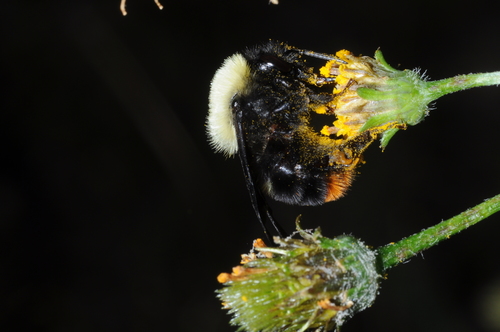
Look for a yellow thorax with a central black, hair-less spot, black head and antennae, and an abdomen that is black on the front half and orange on the rear.
Source: Wikipedia
Where does the bellicose bumble bee live?
It lives in grassland and shrub habitats of northern Argentina, Uruguay and southern Brazil, nesting underground under soil and leaf litter.
Source: Wikipedia
Same family (Apidae)


Sources
- Wikipedia: https://en.wikipedia.org/wiki/Bombus_bellicosus
Look it up elsewhere: GBIF · iNaturalist · BugGuide · ITIS · Wikipedia
Text written 2026-10-23 from the sources above and checked sentence by sentence against them. Data fetched 2026-10-23.