 Bug FAQ
Banded Peacock
Anartia fatima · Order: Lepidoptera · Family: Nymphalidae
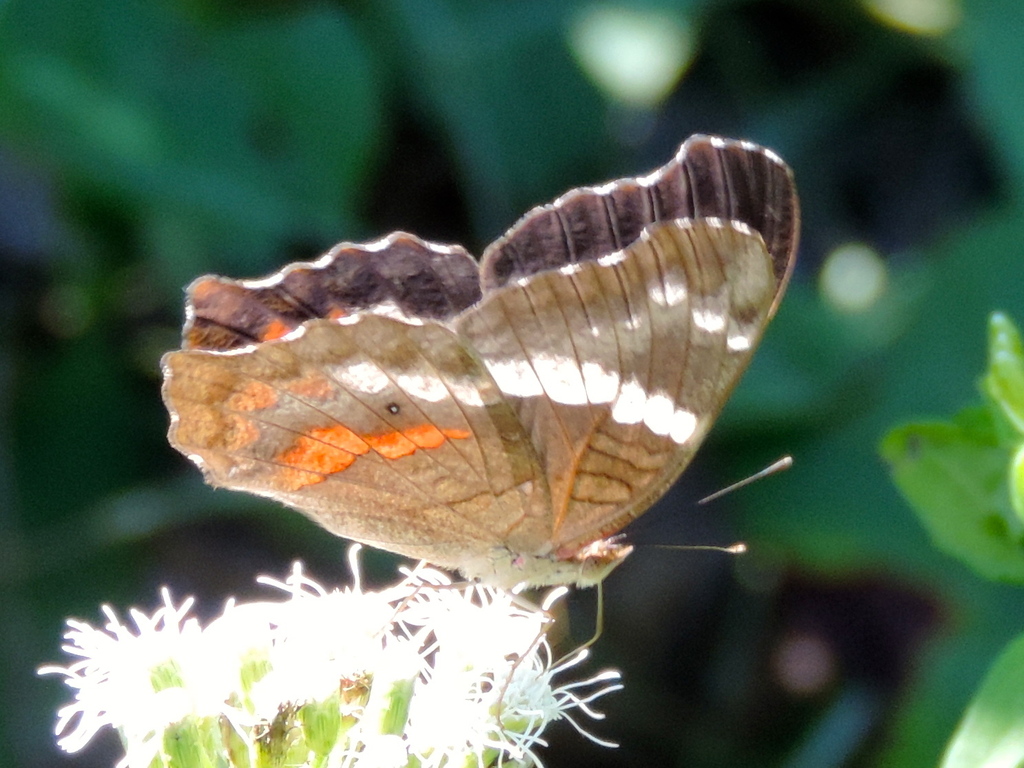
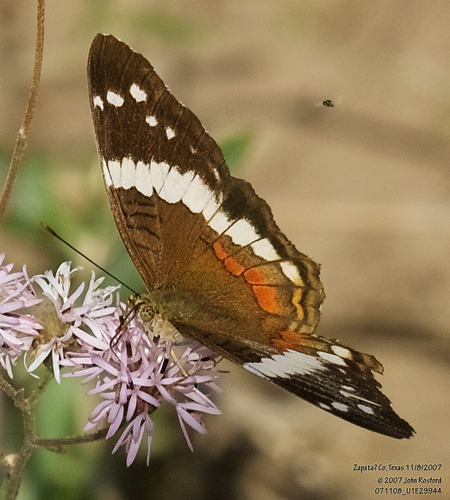
Adults emerge in the morning and can fly within a couple of hours, showing dark brown wings with red spots and a light-colored band across both wings. They live in moist, subtropical areas like second-growth woodlands near rivers, ranging from south Texas through Central America. Larvae feed on Acanthaceae plants and adults sip nectar from Acanthus and other flowers; they are not toxic and are preyed upon by many animals.
Source: Wikipedia
How to recognize it
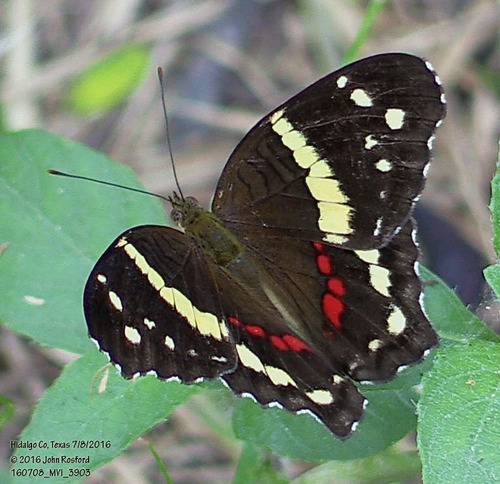
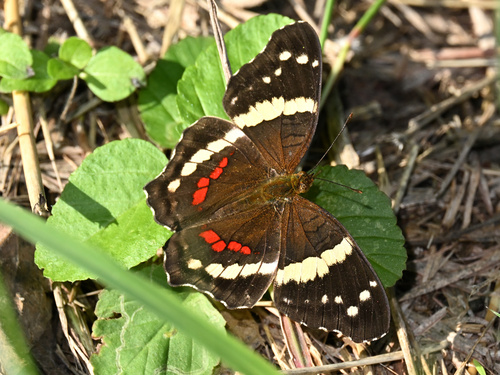
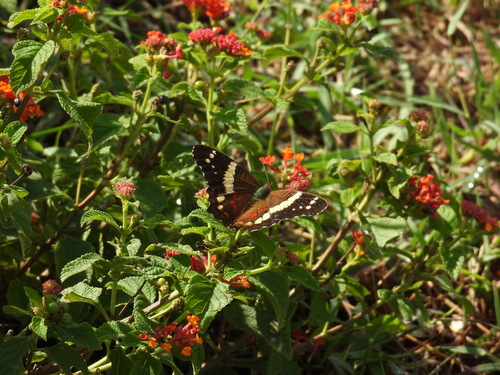
A bright median band runs across the forewing and hindwing, with several small spots near the wing tips; the band can be white or yellow.
Source: Wikipedia
Size
Their wings are dark brown on top with four or five red spots on the base of the hindwing.
Source: Wikipedia
Does it bite or sting?
The species is not poisonous to predators. Many birds, lizards, frogs, and arthropods eat them.
Source: Wikipedia
Where it lives
They prefer moist, subtropical spots such as river edges and spend much time in second-growth forests.
Source: Wikipedia
What it eats
Caterpillars eat plants from the Acanthaceae family. Adult butterflies sip nectar mainly from Acanthus flowers and other blooming plants.
Source: Wikipedia
Life cycle
Eggs hatch in about five days, and the larvae pass through six growth stages before forming a pupa. After pupation, the adult emerges and can fly within one to two hours.
Source: Wikipedia
When you see it
They have a short adult life and can be seen flying into South Texas throughout the year. In Costa Rica they may move southeast along the Pacific coast during the dry season.
Source: Wikipedia
Where it comes from
Their core range starts in southern Texas and continues through Mexico, Central America, and Panama, with occasional records farther north. They are common in south Texas, Mexico, and Central America and have been studied extensively in Costa Rica.
Source: Wikipedia
Lookalikes
Because they are tasty, they are often used as a control species in studies of warning colors and mimicry. Their striped pattern does not give them chemical protection like many warning-colored insects.
Source: Wikipedia
Where it is found in the US
Recorded in 3 of 51 states and DC. Most records: Texas, Florida, Arizona.
Darker = more records. Counts are museum and citizen-science records, not population size.
Source: GBIF
Status: native in North America. Source: iNaturalist
Months it is reported in the US
Source: GBIF
More photos
Questions people ask
Are they a pest for gardens or crops?
No, adults feed on flower nectar and larvae eat Acanthaceae plants, not cultivated crops.
Source: Wikipedia
What does a banded peacock butterfly look like?
It has dark brown upper wings with red spots on the hindwing base and a light-colored band across both wings, which may be white or yellow.
Source: Wikipedia
Where can I find this butterfly?
Its range runs from southern Texas through Mexico and Central America, especially in moist, second-growth woodlands near rivers.
Source: Wikipedia
Same family (Nymphalidae)





Sources
- Wikipedia: https://en.wikipedia.org/wiki/Anartia_fatima
Look it up elsewhere: GBIF · iNaturalist · BugGuide · ITIS · Wikipedia
Text written 2026-10-22 from the sources above and checked sentence by sentence against them. Data fetched 2026-10-22.