 Bug FAQ
Banded Darter
Sympetrum pedemontanum · Order: Odonata · Family: Libellulidae
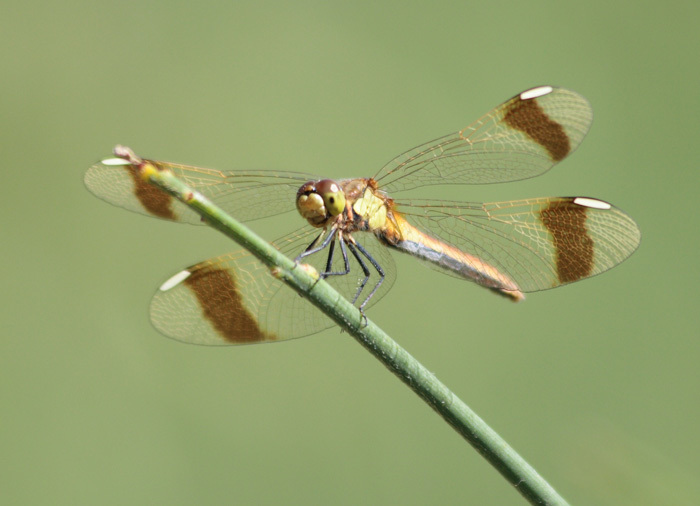
Banded darters are small dragonflies, usually under 40 mm long, with dark bands on their wings and a red body in males or yellow in females. They live near low vegetation and still or slow-moving water such as irrigated hay meadows, marshes, rice paddies and grasslands across Eurasia. Adults hunt small insects in the air, while larvae eat tadpoles, mosquito and mayfly larvae, and tiny crustaceans; they emerge in summer and are seen from mid-July to October.
Source: Wikipedia
How to recognize it
They are identified by their small size, dark wing bands, and a red body in males or yellow body in females, with black markings on the thorax, abdomen and legs.
Source: Wikipedia
Size
They are comparatively smaller than most dragonflies, usually less than 40 mm long.
Source: Wikipedia
What it eats
Adults are aerial predators that catch a variety of small insects. Larvae feed on tadpoles, mosquito and mayfly larvae, and small crustaceans.
Source: Wikipedia
Life cycle
Eggs are laid in summer and hatch after 80 to 230 days, overwintering before the next summer. Adults emerge in summer, with juveniles maturing by mid-summer.
Source: Wikipedia
When you see it
In Europe they are active from mid-July through the end of October and are active during daylight hours.
Source: Wikipedia
Where it comes from
Their range spans much of Eurasia.
Source: Wikipedia
Lookalikes
Females may be confused with male Orthetrum anceps because of similar yellow coloration, but O. anceps has antehumeral stripes.
Source: Wikipedia
Same family (Libellulidae)

Sources
- Wikipedia: https://en.wikipedia.org/wiki/Banded_darter_%28dragonfly%29
Look it up elsewhere: GBIF · iNaturalist · BugGuide · Wikipedia
Text written 2026-10-22 from the sources above and checked sentence by sentence against them. Data fetched 2026-10-22.