 Bug FAQ
Baltimore Checkerspot
Euphydryas phaeton · Order: Lepidoptera · Family: Nymphalidae
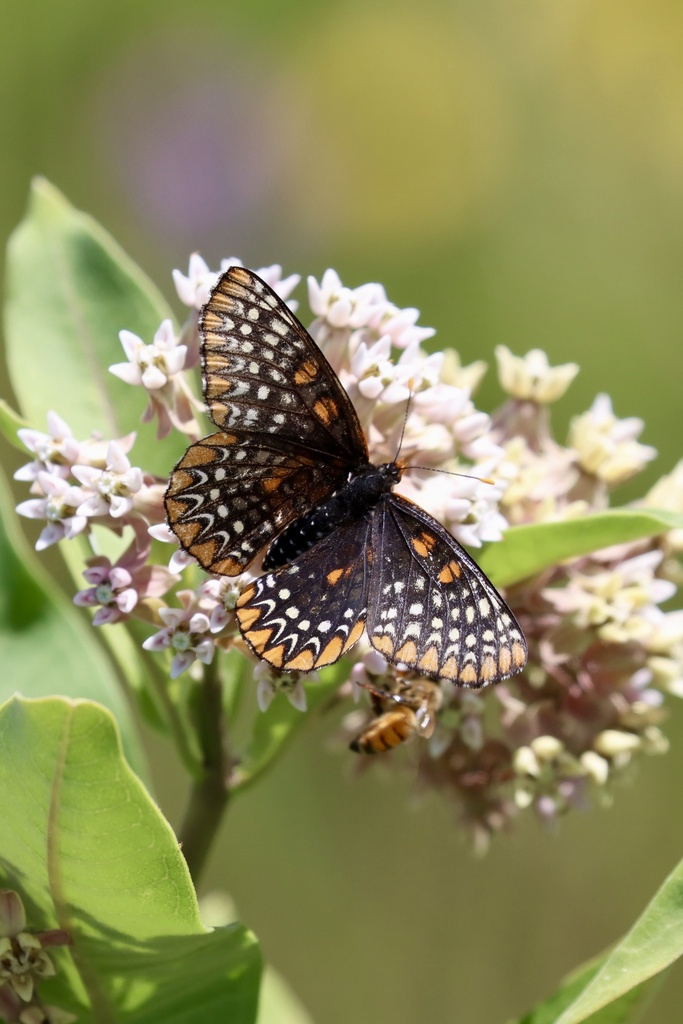
The Baltimore checkerspot is a North American butterfly in the Nymphalidae family. It lives from Canada through the Great Lakes region, the northeastern United States, and down the Appalachians. It requires early-successional wet meadow habitats.
Source: Wikipedia
How to recognize it
It is a butterfly of the family Nymphalidae.
Source: Wikipedia
Where it lives
It needs scarce early-successional wet meadow habitat.
Source: Wikipedia
What it eats
Larvae feed on the white turtle head plant, and also use English plantain and other plants.
Source: Wikipedia
Life cycle
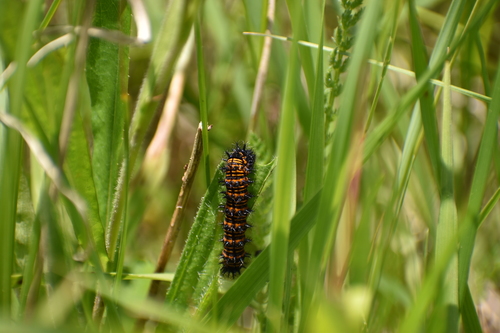
Unlike most butterflies, it overwinters as larvae. In late summer the caterpillars spin a pre-hibernation web, stop feeding, then later move to leaf litter to spend the winter.
Source: Wikipedia
When you see it
The pre-hibernation web is made in late summer, from July through September depending on location.
Source: Wikipedia
Where it is found in the US
Recorded in 35 of 51 states and DC. Most records: Michigan, New York, Vermont, Massachusetts, Wisconsin, Illinois, Ohio, Pennsylvania.
Darker = more records. Counts are museum and citizen-science records, not population size.
Source: GBIF
Status: native in North America; native in United States; native in Canada. Source: iNaturalist
Months it is reported in the US
Source: GBIF
More photos
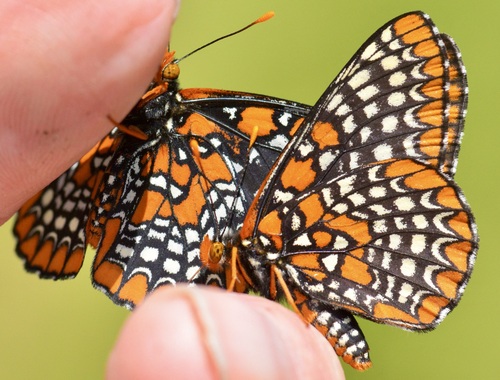
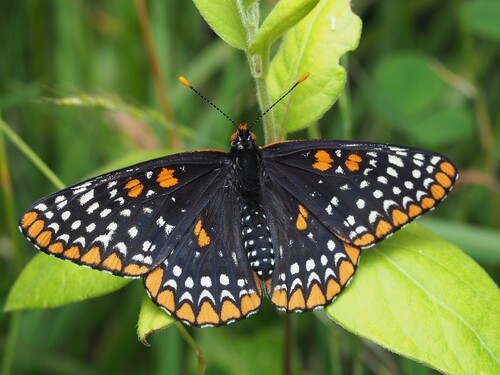
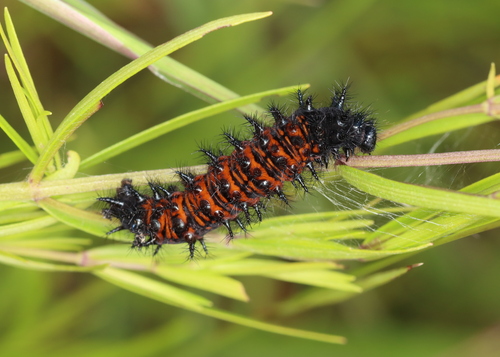
Questions people ask
When do the caterpillars prepare for winter?
They spin a pre-hibernation web in late summer and later move to leaf litter to overwinter.
Source: Wikipedia
What plants do the larvae feed on?
Their native host is white turtle head, and they also use English plantain and other plants.
Source: Wikipedia
Same family (Nymphalidae)






Sources
- Wikipedia: https://en.wikipedia.org/wiki/Baltimore_checkerspot
Look it up elsewhere: GBIF · iNaturalist · BugGuide · ITIS · Wikipedia
Text written 2026-10-23 from the sources above and checked sentence by sentence against them. Data fetched 2026-10-23.