 Bug FAQ
Australian Painted Lady
Vanessa kershawi · Order: Lepidoptera · Family: Nymphalidae
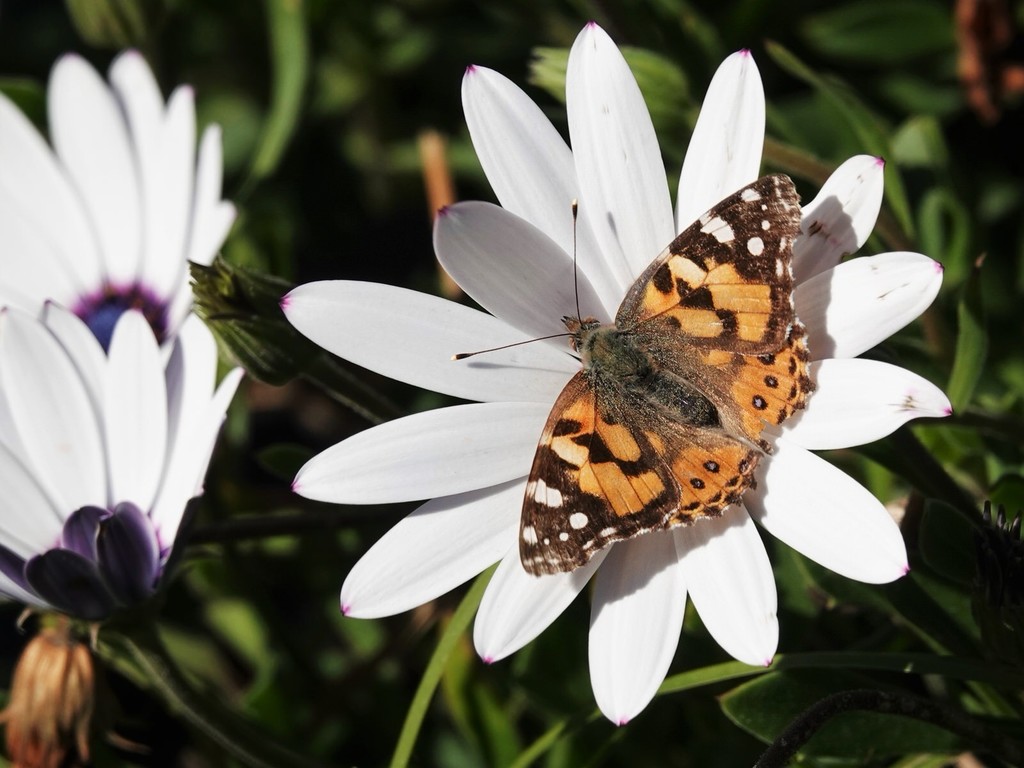
The Australian painted lady is a small butterfly, usually under 2 inches (5 cm) across, with brown bases on its wings that turn brick-red with black bands. It lives mainly in southern Australia, often in urban areas, and uses invasive carduine thistles as host plants. Adults feed on flower nectar, the life cycle lasts about 53 days in summer, and they migrate south in spring.
Source: Wikipedia
How to recognize it
The wing bases are brown, turning to a brick-red colour broken by black bands.
Source: Wikipedia
Size
It is smaller than the common painted lady, rarely larger than 2 inches (5 cm) across the wings.
Source: Wikipedia
Where it lives
It is found in urban settings throughout southern Australia, especially below the Tropic of Capricorn. In New South Wales it uses invasive carduine thistles as host plants.
Source: Wikipedia
What it eats
Adults sip nectar from flowers and may also eat flower parts if leaves are scarce.
Source: Wikipedia
Life cycle
The complete life cycle in summer takes about 53 days.
Source: Wikipedia
When you see it
In spring, large numbers migrate south from Queensland and New South Wales.
Source: Wikipedia
Where it comes from
The species is native to Australia and is mostly confined to that continent.
Source: Wikipedia
Lookalikes
It looks very similar to the painted lady (Vanessa cardui) and some experts consider it a subspecies.
Source: Wikipedia
Questions people ask
Are they a garden pest?
They feed on nectar and do not appear to damage plants, though they use thistles as host plants.
Source: Wikipedia
Same family (Nymphalidae)






Sources
- Wikipedia: https://en.wikipedia.org/wiki/Australian_painted_lady
Look it up elsewhere: GBIF · iNaturalist · BugGuide · Wikipedia
Text written 2026-10-22 from the sources above and checked sentence by sentence against them. Data fetched 2026-10-22.