 Bug FAQ
Atlantis Fritillary
Speyeria atlantis · Order: Lepidoptera · Family: Nymphalidae

The Atlantis fritillary has a wingspan of about 5 to 6.4 cm (2.0 to 2.5 in). It lives across northern North America, from Newfoundland’s Avalon Peninsula to northern British Columbia and south to Colorado and West Virginia, reaching as far north as James Bay.
Source: Wikipedia
How to recognize it
The underside is light brown and covered with many silvery-white spots.
Source: Wikipedia
Size
Wingspan ranges from 50 to 64 mm (about 2.0 to 2.5 in).
Source: Wikipedia
Where it lives
Its range extends northward to James Bay.
Source: Wikipedia
What it eats
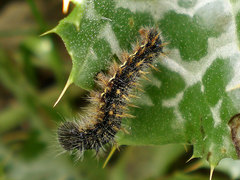
Caterpillars feed on violet plants.
Source: Wikipedia
Life cycle
The larvae develop on violets. Adult butterflies visit a variety of flowering plants for nectar, including milkweed, mint, and others.
Source: Wikipedia
Where it comes from
Native to northern North America, from eastern Canada to western Canada and the northern United States, reaching south to Colorado and West Virginia. Its northern limit includes James Bay.
Source: Wikipedia
Lookalikes
It can be confused with the Aphrodite fritillary, the Great spanged fritillary, and the Northwestern fritillary.
Source: Wikipedia
Where it is found in the US
Recorded in 30 of 51 states and DC. Most records: Vermont, New Mexico, Colorado, New Hampshire, Maine, New York, Minnesota, Alaska.
Darker = more records. Counts are museum and citizen-science records, not population size.
Source: GBIF
Months it is reported in the US
Source: GBIF
More photos


Questions people ask
Which butterflies look similar to the Atlantis fritillary?
It resembles the Aphrodite fritillary, the Great spanged fritillary, and the Northwestern fritillary.
Source: Wikipedia
Same family (Nymphalidae)






Sources
- Wikipedia: https://en.wikipedia.org/wiki/Speyeria_atlantis
Look it up elsewhere: GBIF · iNaturalist · BugGuide · ITIS · Wikipedia
Text written 2026-10-23 from the sources above and checked sentence by sentence against them. Data fetched 2026-10-23.