 Bug FAQ
Atala
Eumaeus atala · Order: Lepidoptera · Family: Lycaenidae
Also called: Atala Butterfly, Atala Hairstreak, Coontie Hairstreak, Florida atala hairstreak
Source: Wikipedia
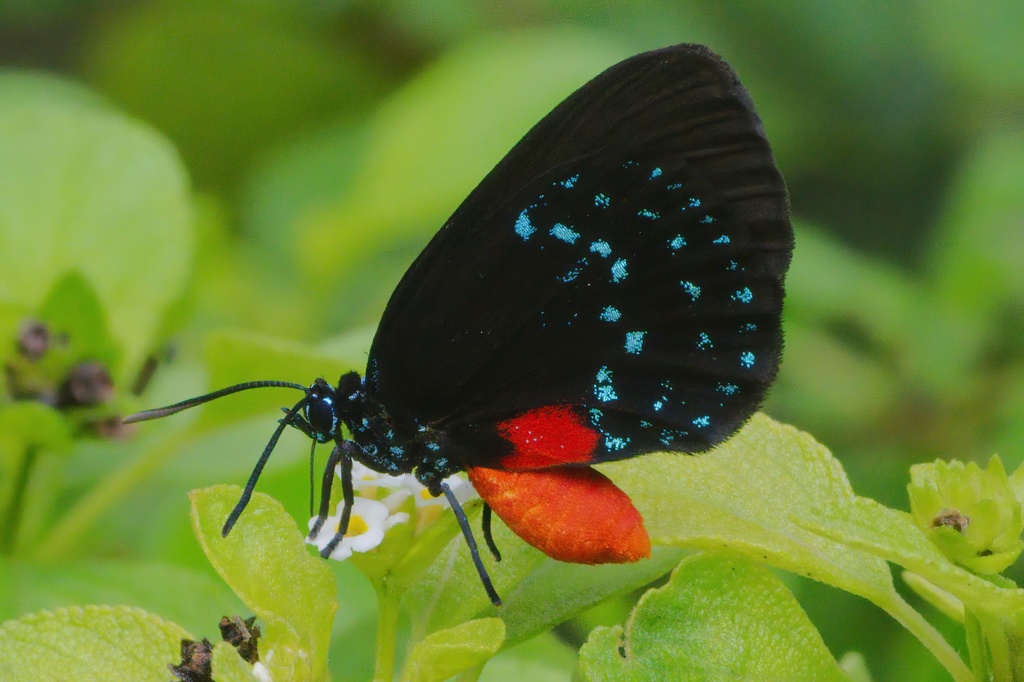
The Atala butterfly is a small, colorful lycaenid whose bright colors warn predators that it keeps plant toxins in its body. It lives in open brushy areas, tropical hammocks and pine woodlands of southeastern Florida and nearby islands, and it also thrives in suburban gardens with ornamental cycads. Caterpillars eat native coontie palms and other cycads, while adults sip nectar; they can become a garden pest by stripping leaves of these plants.
Source: Wikipedia
How to recognize it
The butterfly’s bright colors serve as a warning that it retains toxic chemicals from its host plants.
Source: Wikipedia
Size
It is a small, colorful butterfly in the Lycaenidae family.
Source: Wikipedia
Where it lives
It prefers open brushy areas, tropical hammocks and pine woodlands. It also lives in suburban areas where ornamental cycads are planted.
Source: Wikipedia
What it eats
Caterpillars feed on native coontie palms and other cycads, while adults drink flower nectar.
Source: Wikipedia
Life cycle
Females lay eggs in clusters of 10-50 on leaf tips of the host plant. Pupation usually occurs on the same host plant.
Source: Wikipedia
When you see it
Adults are on the wing for much of the year.
Source: Wikipedia
Where it comes from
It is native to southeastern Florida, including the Keys, as well as Cuba, the Bahamas and the Cayman Islands.
Source: Wikipedia
Where it is found in the US
Recorded in 4 of 51 states and DC. Most records: Florida, Kansas, New York, California.
Darker = more records. Counts are museum and citizen-science records, not population size.
Source: GBIF
Status: endemic in North America; native in United States. Source: iNaturalist
Months it is reported in the US
Source: GBIF
More photos


Questions people ask
Why are Atala caterpillars so brightly colored?
Their bright colors warn predators that they keep toxic chemicals from the cycads they eat.
Source: Wikipedia
Do Atala butterflies damage my garden plants?
Yes, their caterpillars feed on coontie palms and other ornamental cycads, which can harm those plants.
Source: Wikipedia
Same family (Lycaenidae)

Sources
- Wikipedia: https://en.wikipedia.org/wiki/Eumaeus_atala
Look it up elsewhere: GBIF · iNaturalist · BugGuide · ITIS · Wikipedia
Text written 2026-10-23 from the sources above and checked sentence by sentence against them. Data fetched 2026-10-23.