 Bug FAQ
Astyalus Swallowtail
Heraclides astyalus · Order: Lepidoptera · Family: Papilionidae
Also called: Broad-banded Swallowtail
Source: Wikipedia
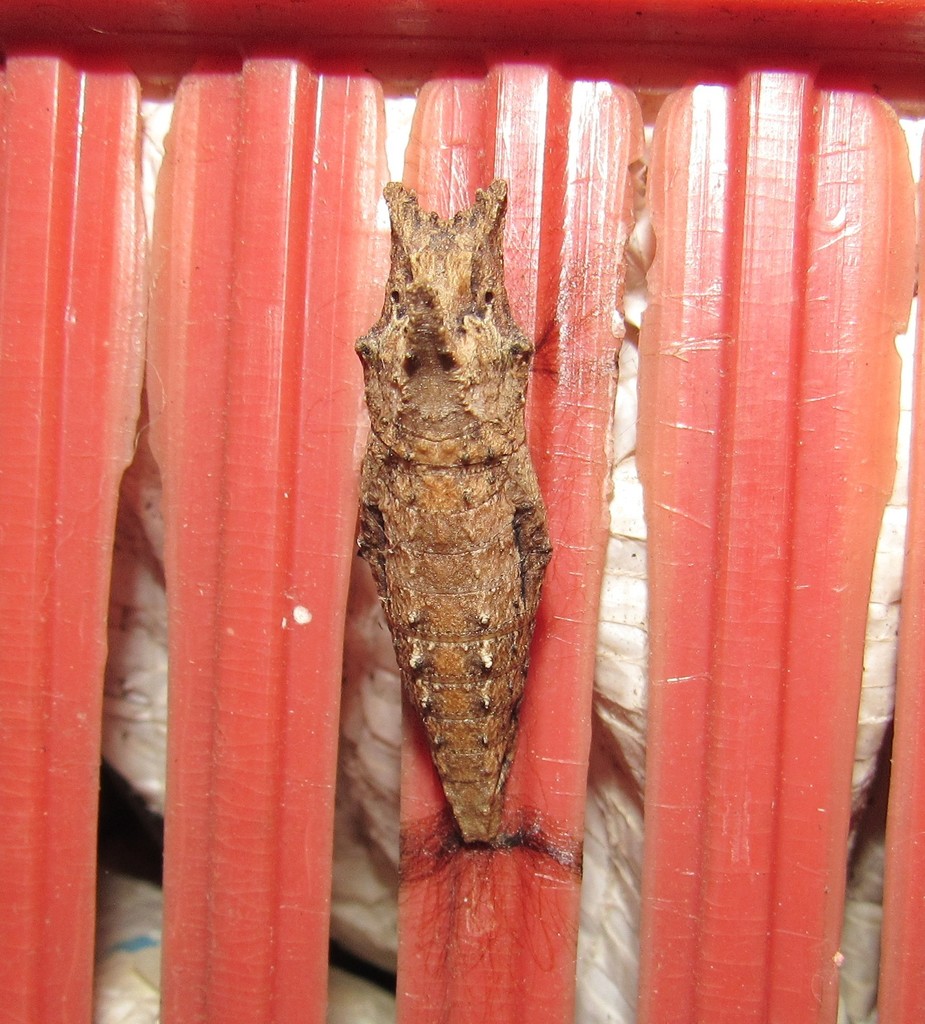
It lives from Mexico through Central and South America to Argentina, occasionally reaching southern Texas and rarely Arizona.
Source: Wikipedia
How to recognize it
Males have black wings with a broad yellow band on the forewings that is crossed by black veins. Females are darker and do not have the wide yellow band.
Source: Wikipedia
Size
The wingspan ranges from 117 to 120 mm.
Source: Wikipedia
What it eats
Adults sip nectar from various flowers, including Lantana species.
Source: Wikipedia
Life cycle
There are probably two generations each year. Adults are on the wing from April to October.
Source: Wikipedia
When you see it
Adults can be seen from April through October.
Source: Wikipedia
Where it comes from
Its native range covers Mexico to Argentina in the Neotropical realm.
Source: Wikipedia
Lookalikes
It looks very similar to Papilio thersites.
Source: Wikipedia
Where it is found in the US
Recorded in 3 of 51 states and DC. Most records: Texas, Arizona, New Mexico.
Darker = more records. Counts are museum and citizen-science records, not population size.
Source: GBIF
Months it is reported in the US
Source: GBIF
Questions people ask
When are adult Astyalus Swallowtails active?
Adults are on the wing from April to October.
Source: Wikipedia
How can I tell a male from a female?
Males have a wide yellow band on the forewings; females are darker and lack that band.
Source: Wikipedia
Where might I see this butterfly in the United States?
Occasionally it is reported in southern Texas and very rarely as far north as southern Arizona.
Source: Wikipedia
Same family (Papilionidae)

Sources
- Wikipedia: https://en.wikipedia.org/wiki/Papilio_astyalus
Look it up elsewhere: GBIF · iNaturalist · BugGuide · ITIS · Wikipedia
Text written 2026-10-23 from the sources above and checked sentence by sentence against them. Data fetched 2026-10-22.