 Bug FAQ
Asiatic Garden Beetle
Maladera formosae · Order: Coleoptera · Family: Scarabaeidae
Also called: Asian Garden Beetle

Adults are small reddish-brown beetles with an iridescent shine and are active at night in summer. The white C-shaped larvae feed on plant roots and can harm lawns, gardens and many crops.
Source: Wikipedia
How to recognize it
Adults have a sturdy, reddish-brown body with an iridescent sheen and a concealed labrum. Larvae are white with a C-shaped body and a brownish-orange head.
Source: Wikipedia
Size
Adult beetles measure about 8 to 9 mm long. Grubs grow from roughly 1.4 mm up to 19 mm as they develop.
Source: Wikipedia
Is it a pest in the house?
It is usually a minor pest of turf and ornamentals, but can become a major nuisance when abundant.
Source: Wikipedia
How to get rid of it
Changing soil moisture, temperature and canopy cover can reduce egg laying. Research on its pheromones may help control mating and oviposition rates.
Source: Wikipedia
Where it lives
Females lay eggs in moist, cool, shaded soil under canopy cover.
Source: Wikipedia
What it eats
Adults feed on the leaves and flowers of over 100 plant species.
Source: Wikipedia
Life cycle
It undergoes complete metamorphosis with one generation per year, timing depending on temperature and humidity. Its life cycle is similar to other white-grub pests such as Japanese beetles.
Source: Wikipedia
When you see it
Adults are active in summer, feeding on foliage and flowers and are most active at night.
Source: Wikipedia
Where it comes from
It is native to East Asia, including Taiwan, China, Japan, both Koreas and eastern Russia.
Source: Wikipedia
Lookalikes
It is often confused with other scarab beetles but can be told apart by its body shape, color, antenna segments and leg features.
Source: Wikipedia
Where it is found in the US
Recorded in 34 of 51 states and DC. Most records: Pennsylvania, New York, Massachusetts, Virginia, Vermont, Maryland, New Jersey, Michigan.
Darker = more records. Counts are museum and citizen-science records, not population size.
Source: GBIF
Status: introduced in North America. Source: iNaturalist
Months it is reported in the US
Source: GBIF
More photos
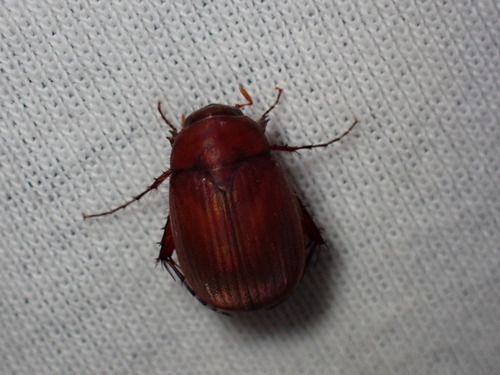
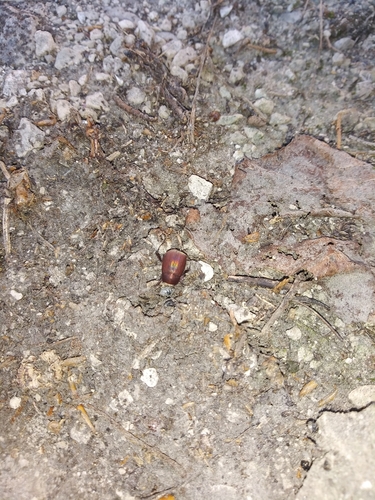
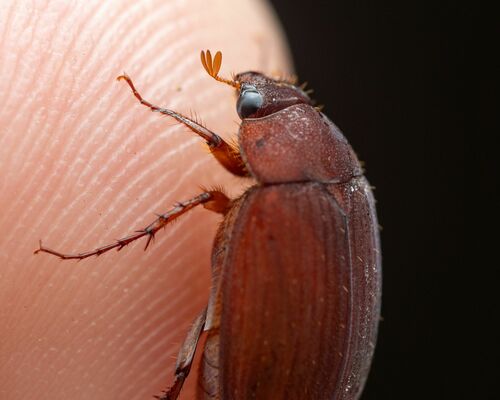
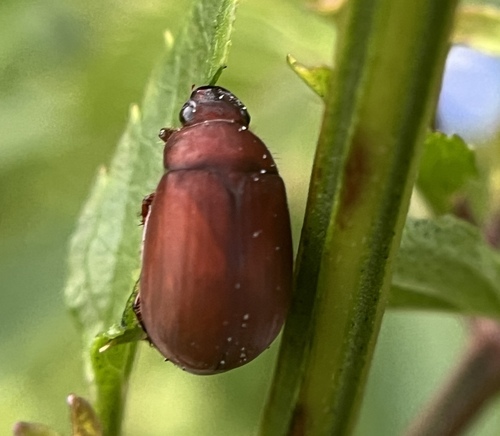
Questions people ask
When are the adult beetles most active?
Adults are most active at night during the summer months.
Source: Wikipedia
How can I reduce their numbers in my garden?
Keep soil cool, moist and shaded to discourage egg laying, and consider pheromone-based monitoring or control methods.
Source: Wikipedia
Same family (Scarabaeidae)
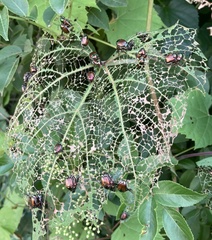 Japanese BeetlePopillia japonicaDamages trees, gardens or crops
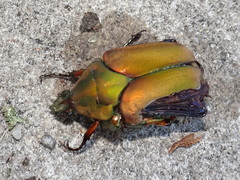 Common Green June BeetleCotinis nitidaDamages trees, gardens or crops
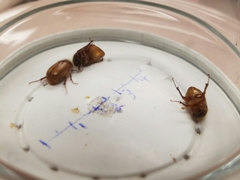 Phyllophaga crinitaPhyllophaga crinitaDamages trees, gardens or crops
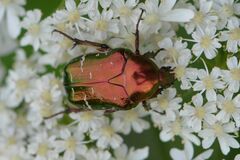 European Rose ChaferCetonia aurata
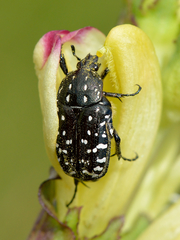 Mediterranean Spotted ChaferOxythyrea funestaDamages trees, gardens or crops
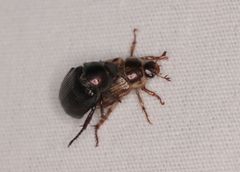 Oriental BeetleExomala orientalisDamages trees, gardens or crops
Sources
- Wikipedia: https://en.wikipedia.org/wiki/Maladera_formosae
Look it up elsewhere: GBIF · iNaturalist · BugGuide · Wikipedia
Text written 2026-10-22 from the sources above and checked sentence by sentence against them. Data fetched 2026-10-22.