 Bug FAQ
Asian Mud-dauber Wasp
Sceliphron curvatum · Order: Hymenoptera · Family: Sphecidae
Source: Wikipedia
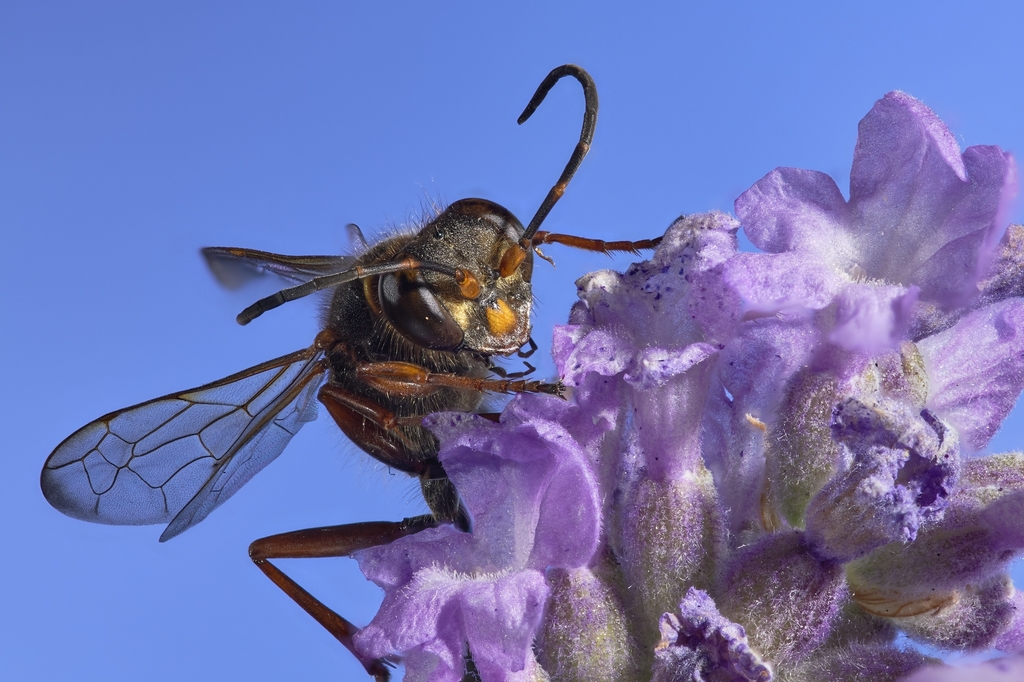
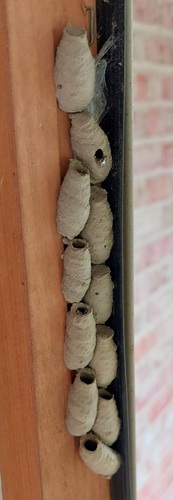
The Asian mud-dauber wasp is 15 to 25 mm long and builds mud nests on walls and inside homes on books, clothes or furniture (size; habitat ). It is native to parts of Asia, especially the Himalayas, Karakoram and Pamir regions (native_range, ). Each nest is stocked with paralyzed spiders for the larvae, and the wasp is not aggressive unless threatened (diet; bite_sting ).
Source: Wikipedia
Size
Adults measure 15 to 25 mm (0.6 to 1.0 in) in length.
Source: Wikipedia
Is it a pest in the house?
Mud nests can damage books, clothing and furniture inside homes.
Source: Wikipedia
Does it bite or sting?
They are not aggressive and will only sting if threatened.
Source: Wikipedia
What it eats
Nests are filled with paralyzed spiders that feed the developing larvae.
Source: Wikipedia
Life cycle
They are solitary wasps that construct mud nests for their offspring.
Source: Wikipedia
Where it comes from
Originally found in India, Nepal, Pakistan, Kazakhstan and Tajikistan, especially in high mountain ranges.
Source: Wikipedia
Where it is found in the US
Recorded in 23 of 51 states and DC. Most records: New York, Michigan, Ohio, Illinois, Pennsylvania, Colorado, Utah, Massachusetts.
Darker = more records. Counts are museum and citizen-science records, not population size.
Source: GBIF
Status: introduced in North America; introduced in United States. Source: iNaturalist
Months it is reported in the US
Source: GBIF
More photos

Questions people ask
Do Asian mud-dauber wasps bite or sting?
They only sting when provoked and are otherwise not aggressive.
Source: Wikipedia
Can they damage my belongings?
Yes, their mud nests can ruin books, clothes and furniture.
Source: Wikipedia
Where do they come from?
They are native to parts of Asia, especially mountainous regions like the Himalayas.
Source: Wikipedia
Same family (Sphecidae)
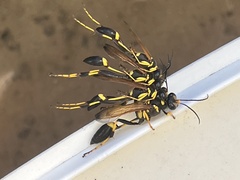 Yellow-legged Mud-dauber WaspSceliphron caementariumCan sting
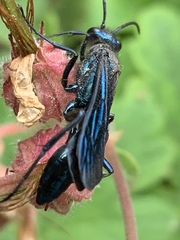 Common Blue Mud-dauber WaspChalybion californicumCan sting
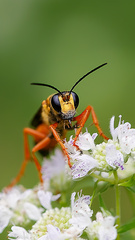 Great Golden Digger WaspSphex ichneumoneus
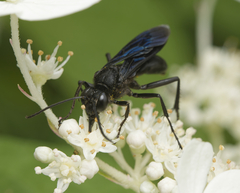 Great Black Digger WaspSphex pensylvanicusCan sting
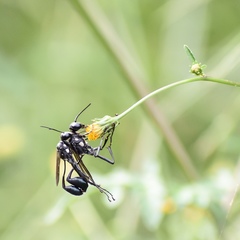 Gold-marked Thread-waisted WaspEremnophila aureonotata
 Mexican Grass-carrying WaspIsodontia mexicana
Sources
- Wikipedia: https://en.wikipedia.org/wiki/Sceliphron_curvatum
Look it up elsewhere: GBIF · iNaturalist · BugGuide · ITIS · Wikipedia
Text written 2026-10-22 from the sources above and checked sentence by sentence against them. Data fetched 2026-10-22.